admin
admin
 Lenny Makuyana: Cool Lifestyle Writer
There are very few monuments in the world that have attracted such varied controversial and emotive interpretations as the Great Zimbabwe monument, south-east of the modern day town of Masvingo.Scholars fail to eat in one plate of opinion with regards to the interpretations on why and when the stone walls were built.
A recent visit to the monument by Vista Vision College students was indeed an eye-opener.
For students of History and any other interested parties, the tour of the Hill Complex unravelled and put to rest a lot of misconceptions by most people.
There is a debate about the Hill Complex which was purportedly built for defensive purposes. A tour of the “more easily” accessible northern slope which is not similarly protected would come as good evidence to further dispute and dispel the security myth about the Hill Complex.
The top of the Hill Complex used to be the King’s court as well as the iron smelting sites by the early blacksmith. It is claimed that the king and his sister lived there. It is here that the “original bird” of the now Zimbabwe Bird was found.
The Eastern Enclosure on the hill complex is presumably the spiritual heart of the Great Zimbabwe monument. Undoubtedly it had immense religious significance.
It is here that probably national ceremonies like rain-making and appeasement of ancestors and Mwari were conducted.
Shona legends also suggest that the stone-filled depression found there is a sealed entrance to an underground tunnel (ninga in Shona) where the kings, probably eight of them from archaeological evidence, kept their precious minerals and were buried there. Oral sources claim that the tunnel runs probably to the Chinhoyi caves or the sacred caves of Matopos.
The Great Enclosure mystery
This is the largest, finely constructed and decorated and most impressive of all the complexes at Great Zimbabwe. The magnificent Great Enclosure is only said to be rivalled by Pyramids of Giza in Egypt. Judging by its fine walls, it was probably the last structure to be constructed as the crafter would have gained centuries in masonry experience. Several theories have emerged over the years about the function of the enclosure all but with little archaeological evidence to support.
Some senior historians supported by oral sources are of the view that it was the residence of the king’s senior wife, vahosi in Shona or queen. It is claimed living in this enclosure was the only befitting way to acknowledge her increasingly political and customary status matching her to that of the male leaders occupying the Hill Complex.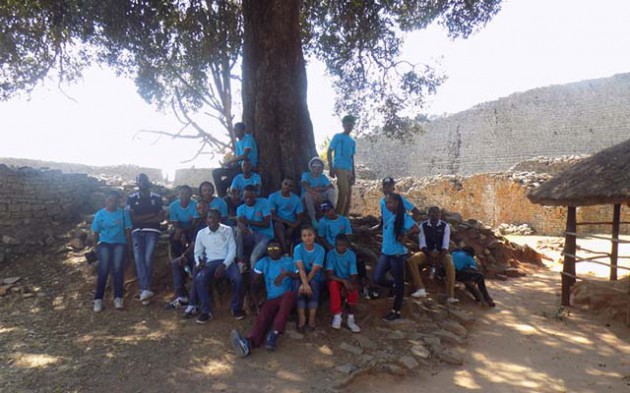
Another school of thought suggested that it was an initiation centre for the young girls. Archaeological evidence supported the idea of it being an initiation centre. Socially it might lead with little doubt about the masculine and patriarchal nature of the people of the Great Zimbabwe. The decorations of the enclosure would suggest that it may also have had association with fertility.
The writer is Lower Six student at Vista Vision College.



 Online Reporter