

 admin
admin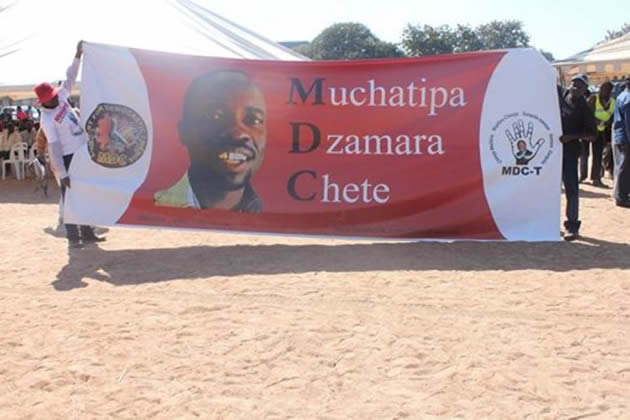
Ranga Mataire-Writing Black
What a comic spectacle! We had Douglas Mwonzora holding an anniversary for the supposed birth of the opposition MDC party at Morgan Tsvangirai House formerly Harvest House, comically claiming that he is going to be the next President of Zimbabwe with 66 percent of the votes come 2023.
We had on the other hand, the ever clownish Nelson Chamisa claiming that theirs is not a political party, but a “culture” — whatever that means. I just wonder who puts these unrefined ideas into the young politician’s head. While he speaks with vigour, the words sound very hollow and meaningless.
So we had two factions — each claiming authenticity, each valorising Morgan Tsvangirai and each could not miss the chance to throw a verbal blow at the other.
Mwonzora dissed the other group for ever whining without a plan and Chamisa accused the other side of having illegitimate MPs and councillors. What was supposed to be an anniversary turned into a slanging match.
If the idea of the anniversary was to reinvigorate their respective constituencies, then the ultimate outcome was the opposite.
The two events, one in Harare and the other in Matabeleland came out as a damp squib. Their respective audience looked weary, uncertain and unconvinced. It is surely a recipe of what is to come in 2023 where walloping by the governing party is a certainty.
Everyone is allowed to dream. Dreams are free, but dreams remain dreams. What is so wrong with the MDC is apparent. As long as they don’t revoke their umbilical cord of birth as a party whose genesis was in Western capitals, they can continue dreaming of ever being a governing party.
Zimbabwean voters are highly enlightened people. The majority knows what the MDC stands for, a repudiation of the foundational ethos.
Besides being a rootless Western puppet party, one other handicap of the MDC is its lack of a durable ideological foundation.
All over the world, effective political organisations have never been sustained by hollow political rhetoric or simple popular disgruntlement. Successful political parties have always been sustained by genuine practical grievances framed within a shared enduring ideological foundation.
Sporadic popular discontent can be catalysts for change, but beyond that political parties need to harness periodic disillusionment through ideological framework that binds like-minded individuals.
This was not the case with MDC at its birth and as they say curses are like chickens, they are definitely coming home to roost as the centre is no longer holding.
Without a binding ideological foundational framework coupled with perennial electoral failures, individual interests are getting the better of a party which at its first electoral test gave the governing Zanu-PF party a run for its money.
But while lack of an ideological framework form part of the main malaise afflicting the opposition party, other critical issues have propped up and are threatening to render the party redundant.
What are these issues?
The first issue is that the MDC for a long time survived on scapegoating Mugabe as the major impediment to their being in power.
For years, the “Mugabe Must Go” mantra became almost like an anthem. It resonated well within and among its supporters who personified the country’s problems in Mugabe.
The “Mugabe Must Go” mantra won the MDC sympathisers beyond the country’s borders. Donors stampeded in funding the opposition party and with his roots in trade unionism with Morgan Tsvangirai being touted a malleable leader ready to embrace the West, which at the time was Mugabe’s nemesis.
The party’s identification with the West and the apparent open support it got from former white commercial farmers became cannon fodder for the ruling Zanu-PF party which projected it as a front for neo-colonial interests.
On its part, the MDC never attempted to repudiate the tag of being a Western puppet party for fear of chasing away its traditional donors, most of whom were domiciled in Western capitals.
The aftermath of Operation Restore Legacy saw the ruling party’s electoral ratings soaring while the opposition’s standing went down as people attributed the New Dispensation to Zanu-PF. The frenzied attempt by some within the opposition parties to lobby for an inclusive government explains the yearning for relevance.
The hope was that an inclusive government would dilute the popular momentum of Zanu-PF and in turn project the opposition as having played an active role in the New Dispensation. Realising that an inclusive government was a hard-sell, the MDC readily accepted an invitation by the United States to offer its opinion on the new political dispensation.
PDP leader Tendai Biti and Nelson Chamisa (MDC vice president) were dispatched to the States. The trip was to be the Achilles’ heel of the opposition party’s residual support.
A massive social media backlash ensued as people condemned the Biti’s submission at a Congress Committee. Some called the sojourn “the Trip of Shame”.
The attempt to reverse the positive goodwill for the New Dispensation by insisting that the economic sanctions imposed by US and European Union stay was received with revulsion by most Zimbabweans who interpreted the move as a selfish and desperate move.
The second issue that has risen in the fall of Mugabe is the one raised by the party’s former policy coordinator general and MP for Bulawayo South, Eddie Cross. Cross was a key strategist for the party, so when he speaks, we must pay attention.
On 7 October 2017, Cross penned a piece on his blog site titled; “Life is not fair.” The key input from Cross’ piece was that the opposition is in “shambles” and is in sixes and sevens unable to offer a new nuanced paradigm different from the “Mugabe must go” mantra.
Cross was to repeat his statements in an interview with Star FM’s George Msumba almost a week later.
He described the situation within the MDC as a situation similar to “herding cats” with people running in every direction and that it’s almost as if there is no centre calling shots anymore. He attributed the leadership vacuum to Tsvangirai’s ailing health.
It may be too late for the MDC to try and formulate an enduring ideological framework able to glue the fractious groups together who from the onset represented divergent interests.
It might also be very late for the MDC to have a paradigm shift divorced from speaking out about hollow issues meant to please benefactors to real issues that give hope to their supporters.
It is practically impossible owing to the lack of a body of ideas that binds all.



 Online Reporter