


 Online Reporter
Gibson Mhaka, Zimpapers Politics Hub
PHILOSOPHIES and mantras are crucial for national development because they serve as unifying principles that shape a nation’s identity, drive collective action, and provide a clear vision for the future.
They are powerful tools for communicating complex goals in a simple, memorable way, mobilising citizens toward a common purpose.
These philosophies help a nation define its core values and aspirations. By distilling a country’s vision into a memorable phrase, leaders can create a sense of shared identity and purpose that unites diverse populations behind a common cause, from economic development to social reform.
This shared understanding fosters a spirit of patriotism and national pride, encouraging citizens to work together for the collective good.
For example, John Locke, an English philosopher and physician regarded as the “Father of Liberalism,” articulated the idea of natural rights, life, liberty, and property — which profoundly influenced the American Declaration of Independence and modern democratic thought.
Similarly, Karl Marx’s critique of capitalism and his theories on class struggle laid the groundwork for communism and socialism, altering the course of 20th-century history.
Echoing these foundational principles, President Mnangagwa has emerged as a leader providing the conceptual blueprints for Zimbabwe’s economic transformation.
Since assuming office in 2017, he has spearheaded the Second Republic by introducing philosophies that are creating a powerful, transformative promise.
These guiding ideas are the bedrock of Vision 2030, which aims to transform Zimbabwe into an upper-middle-income economy.
The philosophies of “leaving no one and no place behind” and “nyika inovakwa nevene vayo/ ilizwe lakhiwa ngabanikazi balo” have proven to be vital driving forces steering the economy. They underscore the Second Republic’s commitment to equitable development across all of Zimbabwe’s provinces and communities, while emphasising that the nation’s destiny lies in the hands of its own people, not external forces.
These philosophies are not mere slogans; they are consistently reiterated at every major national event to underscore their importance.
Whether at Heroes’ Day commemorations, Defence Forces Day celebrations, or the launch of critical infrastructure projects, Government leaders frequently invoke these mantras to connect every national endeavour to the core values of inclusivity and self-reliance.
This constant emphasis ensures that all citizens understand their role in the nation’s journey towards a prosperous future, reinforcing that every collective achievement is a direct result of these guiding principles.
Leaving No one and No Place Behind
The defining development philosophy of “leaving no one and no place behind” is a cardinal guiding principle as Zimbabwe moves towards attaining Vision 2030.
President Mnangagwa is championing this philosophy that has a global context and is at the heart of the country’s socio-economic growth.

This principle is a core commitment of the UN’s 2030 Agenda for Sustainable Development and its Sustainable Development Goals (SDGs).
According to UN Women, “Leaving no one behind represents the unequivocal commitment of all UN member-states to eradicate poverty in all its forms, end discrimination and exclusion, and reduce the inequalities and vulnerabilities that leave people behind…
It not only entails reaching the poorest of the poor, but requires combating discrimination and rising inequalities within and among countries, and their root causes.”
Under the leadership of President Mnangagwa, this philosophy has become a transformative promise of the Second Republic.
Traditionally, development projects were concentrated in major cities, leaving rural and marginalised areas to lag behind.
This new approach seeks to reverse that trend by investing in provincial economies, ensuring resources are directed to all 10 provinces.
This move is designed to make sure that infrastructure projects, industrialisation, and job creation benefit people nationwide, including projects in healthcare, education and social services.
The Government is actively working to bring development to areas that were previously overlooked. This includes remote rural communities and individuals with disabilities, broadening economic participation to create opportunities for all citizens, regardless of their location, gender, or background.
Locally, “leaving no one behind” is a statement that has been accompanied by actions, which have led to a paradigm shift among rural communities.
The dreams and ambitions of people living in rural areas are being reshaped, as despair is replaced by a new belief and massive confidence that these areas will, in no time, become the places to be. This constant emphasis ensures that all citizens understand their role in the nation’s journey towards a prosperous future, reinforcing that every collective achievement is a direct result of these guiding principles.
Nyika inovakwa nevene vayo/ ilizwe lakhiwa ngabanikazi balo (A Philosophy of Self-Determination)
The philosophy of “nyika inovakwa nevene vayo/ ilizwe lakhiwa ngabanikazi balo”, which translates to “a country is built by its owners,” is a powerful call for self-reliance and collective responsibility.
While the meaning and purpose of this mantra may be misunderstood by some due to political or other differences, its roots are deeply embedded in Zimbabwe’s ancient and modern history, and it has become the central ideology of the Second
Republic’s development agenda.
President Mnangagwa, who is championing the mantra, postulates that it is an ideology of self-determination and national responsibility.
The President urges Zimbabweans to build their country “brick by brick; stone upon stone and step by step across and beyond the nation’s territory.
This philosophy also holds elements of freedom and security, asserting that people cannot develop their own country when they are oppressed.
Freedom and security are prerequisites for peace and progress, as people in an independent state can only make progress when they are not gripped by internal or external conflicts.
By fostering a secure and peaceful environment, the mantra allows for the national focus to shift to development and growth, which in turn influences every nation to chart its own course.
The philosophy is also the driving force behind a new culture of homegrown solutions.
The Government encourages local innovation and the use of domestic resources to solve national challenges, which promotes industrialisation and reduces dependency on imports.
It also promotes collaboration between the Government, private sector and communities to drive development projects.
This instils a sense of ownership and accountability among citizens, encouraging them to actively participate in building their own communities and contributing to national growth.
The philosophy ultimately emphasises that Zimbabwe’s destiny lies in the hands of its own people, not external forces.
Guiding Principles of Vision 2030
The philosophies of “leaving no one and no place behind” and “nyika inovakwa nevene vayo/ ilizwe lakhiwa ngabanikazi balo” are absolutely central to the attainment of Vision 2030, serving as its core guiding principles.
The philosophy of “nyika inovakwa nevene vayo/ ilizwe lakhiwa ngabanikazi balo” provides the driving force for economic growth by emphasising self-reliance, local ownership and homegrown solutions, encouraging Zimbabweans to be the primary architects of their own development.
This focus on domestic resources and local ingenuity is crucial for building a self-sufficient and resilient economy.
At the same time, the philosophy of “leaving no one and no place behind” acts as the moral compass for this growth, ensuring that the benefits of development are shared equitably across all 10 provinces and among all citizens, including previously marginalised communities.
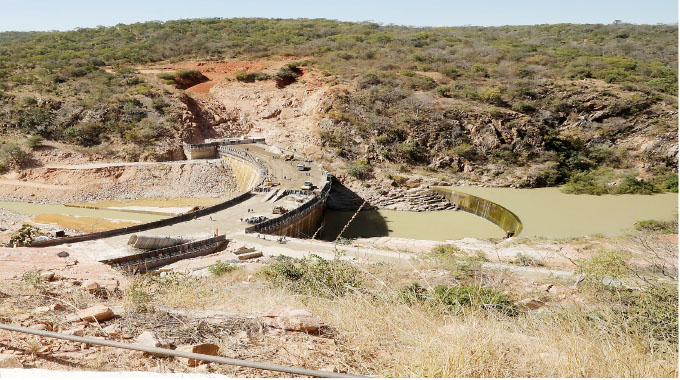
By working together, these two philosophies form a powerful, integrated strategy: one provides the engine for internal development, while the other guarantees that this progress is inclusive and benefits every corner of the nation, thereby transforming Vision 2030 from a political goal into a truly collective and achievable reality.
Building Zimbabwe’s Future: A Dual-Pronged Approach
By championing these philosophies President Mnangagwa has laid a new, transformative foundation for the nation.
This dual-pronged approach provides both the engine of self-reliance for economic growth and the moral compass of inclusivity to ensure that progress is shared by all.
As these principles are woven into every national event and policy, they are transforming Vision 2030 from a political aspiration into a collective, national commitment, ensuring that a prosperous, resilient, and self-sufficient Zimbabwe is built from within, for all its people.



 Bongani Ndlovu