Chronicle Editor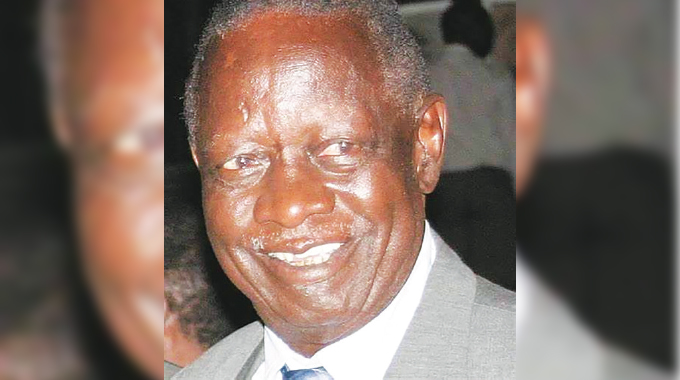
Walter Muchinguri
THE late Vice-President Joseph Wilfred Msika, a revered national hero, left an indelible mark on Zimbabwe’s history. He was not only a prominent figure in Zanu PF, but also a devoted family man — a father, brother and grandfather.
His life’s journey, from his early days to his fight for liberation, exemplifies unwavering dedication to his nation.
Born in 1923, Cde Msika’s formative years were shaped by a thirst for knowledge.
Despite his family responsibilities, he excelled in his studies, attending Howard Institute and Mount Selinda School. His ambition is evident in his completion of a Junior Certificate by correspondence while also working to support his family.
Cde Msika’s talents extended beyond academics. He was a gifted football player, rising through the ranks of school teams and even playing for the national team, the Rhodesia Pick, alongside legends like Freddy “Dusty King” Gotora.
However, his passion for social justice ultimately led him to prioritise the fight for liberation.
His professional journey included diverse roles, from carpentry teacher to administrative officer. These experiences exposed him to the realities of life under colonial rule, fuelling his desire for change.
In 1954, he joined the Textile and Allied Workers’ Union (TAWU), becoming a vocal advocate for workers’ rights.

Cde Msika’s leadership qualities were evident in his role within TAWU. He played a key role in uniting unions and led the Bulawayo chapter during the pivotal 1958 national strike.
He was instrumental in the formation of a semi-federation of unions at a local level in Bulawayo called the Federation of Bulawayo African Workers Union (FBAWU).
The FBAWU leadership was behind the crippling 1958 national strike. His dedication to the cause extended beyond local leadership, as he became president of the Federation of Southern Rhodesia trade union, a major force in the fight against oppression.
Through his involvement in trade unionism, Cde Msika crossed paths with other liberation movement founders like Joshua Nkomo and was inspired by Pan-Africanist leaders like Jomo Kenyatta. These influences solidified his commitment to Zimbabwe’s independence.
Cde Msika’s legacy transcends his political achievements. He was a man of many talents, a dedicated family man, and a leader who inspired others to fight for a just Zimbabwe. His life story serves as a testament to the unwavering spirit that led the nation to freedom.
Cde Msika left an indelible mark on Zimbabwe’s history. Beyond his political achievements, he was a man of dedication — to his family, to the fight for liberation, and to the development of his nation.
Cde Msika’s political journey began in Bulawayo, where he played a key role in establishing the first African National Congress (ANC) branch.
This organisation later merged with the Salisbury Youth League to form the Southern Rhodesia ANC, with Joshua Nkomo as president and Cde Msika as treasurer.
His unwavering commitment to the cause led to his imprisonment alongside other prominent figures like Orton Chirwa and Daudi Yamba. During this period, he also met a young Robert Mugabe, who would become a lifelong comrade.
Following his release, Cde Msika actively participated in newly formed nationalist parties like the National Democratic Party (NDP) and the Zimbabwe African People’s Union (Zapu).
He remained loyal to Nkomo throughout the party splits and internal disagreements, even walking out of a meeting where Nkomo’s leadership was challenged.
Cde Msika’s involvement extended beyond political organisation.
He played a crucial role in mobilising rural communities and organising covert activities like the “Madiro parties” — gatherings used to raise funds and plan acts of resistance against the white regime.
He actively supported the recruitment and training of guerrilla fighters and oversaw the smuggling of arms into the country.

As the liberation struggle intensified, Cde Msika embraced diplomacy. He participated in key conferences, including the ill-fated Victoria Falls Bridge Conference and the Lancaster House negotiations that ultimately paved the way for Zimbabwe’s independence.
Cde Msika recognised the importance of national unity beyond independence.
He was instrumental in the signing of the Unity Accord in 1987, which merged Zanu and Zapu into the unified Zanu-PF party.
He served in various ministerial capacities, focusing on natural resources, housing and local government development.
His dedication to his nation extended beyond official roles. Cde Msika championed the land reform programme and actively supported healthcare initiatives, as evidenced by his contributions to the construction of Ekusileni Medical Centre and Chikombedzi Hospital.
He also believed in empowering the youth and provided them with a platform to learn about the struggles of the past.
Cde Msika’s life exemplifies unwavering dedication to the liberation and development of Zimbabwe.
He was a leader who combined political will with a deep compassion for his people. His legacy is one of unity, service, and a commitment to building a better future for all Zimbabweans.


 Online Reporter