Online Reporter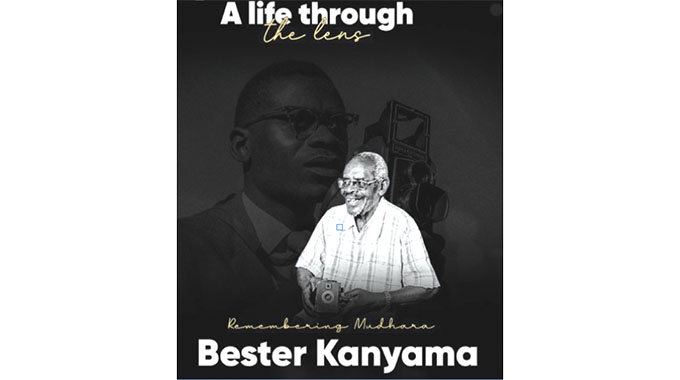
Philip Mataranyika
IN my early adulthood, photography was more than a pastime; it was a force that shaped the way I saw the world, a medium through which I forged connections that continue to influence my life to this day.
I picked up a camera for the sheer joy of capturing moments, fascinated by how a single image could freeze time, preserve a memory and tell a story that transcended language, geography and generations.
I bought my first camera with my very first salary and learned the craft through trial and error, discovering early on that patience, curiosity and attention to detail were just as important as technical skill.
During my 15 years at Old Mutual (1986-2001), I earned the affectionate title of resident photographer, quietly chronicling everyday celebrations, weddings, graduations and candid moments of colleagues.
Behind the lens, I became part of people’s lives in ways that words could never capture.
Among those photographed was my idol, the late Reverend Elison Kamupira, whose wedding to Chipo (Mai Kudzi) I had the honour of documenting in April 1992.
While these personal encounters deepened my love for the craft, it was the life and work of Mudhara Bester (Johnnie Walker) Kanyama that truly shaped my understanding of photography’s deeper purpose.
Mudhara Bester breathed his last on Tuesday, August 19, 2025, at the ripe age of 93, leaving behind a legacy that spans generations, decades and continents.
Growing up in Highfield, I had the privilege of walking in the shadows of this gentle giant, a quiet trailblazer whose orbit included artists, political activists, leaders and cultural visionaries.
I admired him for using his craft to gain not only fame and fortune, but also deep respect.
I held him in high regard for his sober habits, remarkable given that his profession often placed him in social settings awash with wines, whiskies and cocktails.
At first, I could not understand how he came to be nicknamed John Walker, particularly since he did not drink.
Legend has it that while serving as chief photographer at the Ministry of Information, Mudhara Bester frequently accompanied then Prime Minister Robert Gabriel Mugabe on official international trips.
On one such occasion, the Prime Minister noted Bester’s abstinence and turned to his security detail, quipping that they should behave like Bester, who does not drink.
That humorous remark birthed the affectionate nickname Chirambakusara Johnnie Walker, playfully likening him to the famous whisky brand despite his teetotalism.
Later, as a gesture of respect and camaraderie, the Prime Minister gifted him a bottle of Johnnie Walker Red Label on a festive occasion.
This moment, and the autographed photograph that commemorated it, became a treasured keepsake in Mudhara Bester’s home.
His story felt like a fairy tale: a man whose camera took him across continents, into corridors of power, and helped fatten his bank balance, all the while remaining true to his values.
Inspired, I took up photography myself.
Though I later left the craft, Mudhara Bester stayed the course and soared even higher.
He became one of Zimbabwe’s most celebrated freelance photographers, with a career spanning from the 1940s into the digital age, positioning himself as a vital figure in shaping the country’s visual culture.
His studio, Foto Bester Kanyama Studios, located at Machipisa in Highfield, was both a creative hub and a community landmark.
It was not only the base of his commercial photography, but also the set for the iconic Parade Foto Action series.
Bester was more than a photographer. He was both a visionary and entrepreneur, committed to nurturing talent and promoting culture.
Alongside his beloved wife Hilda, he ran a record bar, four discos under the Bes Disco brand and a modelling agency that launched the career of Kubi Chaza, later known internationally as Kubi Indi.
In 1978, his success allowed him to move his family to Southerton, making him one of the first black homeowners in the area, a symbolic milestone in a nation approaching transformation.
Still, his roots remained firmly planted in Highfield, where it all began.
Bester’s photographic journey began in 1947, with a camera gifted him by his father.
That passion soon became national service.
Through Parade Foto Action, he documented pivotal moments in Zimbabwe’s liberation struggle.
His lens took him into politically sensitive territories, including the detention centres of Gonakudzingwa and Whawha, where he risked much to document the truth. His bravery and artistry earned him global recognition: in 1965, he placed fourth in the Asahi Pentax International Photo Contest; in 1983, he claimed second prize in the USSR International Photo Contest; and in 1987, he was awarded the Excellence in Visual Arts honour by the National Gallery of Zimbabwe.
In 1970, he authored Kutora Mifananidzo, a groundbreaking photography manual in Shona, one of the first of its kind.
During Zimbabwe’s Silver Jubilee in 2005, he was honoured by the National Arts Council of Zimbabwe for his lifetime contributions to the visual arts.
Through his camera, Mudhara Bester forged enduring ties with the country’s nationalist leaders, many of whom he photographed during their incarceration and activism.
His work is embedded in Zimbabwe’s visual memory, a lens through which the nation continues to see itself.
What set him apart was not merely the length of his career, but his remarkable ability to evolve.
While others were left behind by the march of technology, Bester embraced it.
He mastered digital photography, understood the power of visual storytelling and shared his knowledge generously.
He mentored generations of young photographers and journalists, many of whom speak of his patience, humility and immense skill.
At the Harare Polytechnic, students of photojournalism regarded him not only as a teacher, but a guardian of their craft.
Among those he inspired was the late Crispen Masuka, a respected photojournalist whose iconic image of Bob Marley in Zimbabwe became a cultural touchstone, later featured in the Foto-Wizard calendars.
Tragically, dementia clouded Bester’s final years, dimming the sharpness of a mind once so visionary.
Yet even as memories faded, his impact remained vivid — in people, in the profession and in the nation’s collective consciousness.
I take comfort in knowing that during those twilight years, his devoted wife Hilda, his life partner since 1954, helped preserve the precious fragments of his past.
Mudhara Bester was not merely a photographer.
He was a storyteller, a custodian of memory and a pioneer who used his lens to document, preserve and humanise Zimbabwe’s unfolding story.
His images endure — etched in archives, albums and the hearts of those whose lives he touched.
His legacy lives on in those he trained, inspired and mentored.
For those of us who once stood behind or before his lens, we carry a piece of him in every frame — in every frozen smile, in every shuttered second of joy, history or remembrance.
May he rest in peace — his life, forever framed in honour.
Philip Mataranyika is a co-founder and CEO of Nyaradzo Group.