admin
admin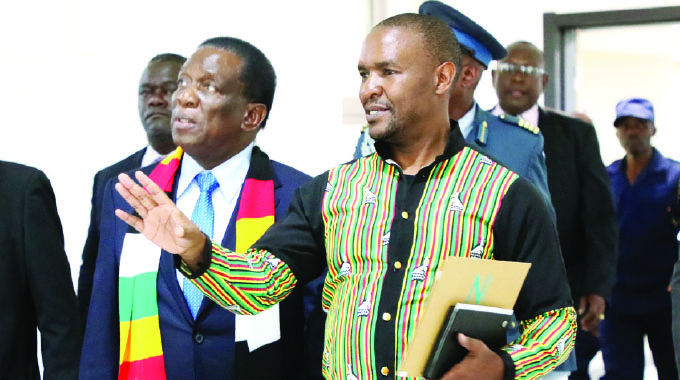
Elliot Ziwira Senior Writer
Travelling is seeing, and seeing is learning, those of us who have gone beyond their backyards are alive to this fact.
They are aware that journeying is not about moving from one place to another, for whatever reasons, but it is an experience in which dreams are shared.
Therefore, every step that one takes, every kilometre that one covers, and every sea one may need to cross to reach out to where one’s heart leads, goes a long way in the transformation of relations, which is the alpha in the realisation of shared dreams.
Since relationships are vital cogs in the transportation of dreams from one station to another, within a country or beyond its borders, airports are resplendent markers of the power of vision and hospitality in fostering ties.
In a world that has become increasingly interconnected into a single village, airports are the bridges that enhance the appreciation of linkages as vehicles of change, which give other modes of connectivity impetus.
All journeys start from the heart, which informs the faith that it is possible to reach out to others. And, there is no better way to get to the station of dreams than taking the initiative to fly on the wings of the benu (the divine bird of blessings and eternity).
Travelling is all that it takes to mend relations, kindle ties, unlock dreams, appreciate the joy of life and open up limitless horizons; all for the greater good. Journeying is an experience, nay, an unforgettable one that carries with it myriad expectations.
It has to be done in style.
President Mnangagwa is not lost to that reality, the reality which conveys the Zimbabwean dream to remain a friend to all in the community of nations.

Travellers check in at Robert Gabriel Mugabe International Airport new terminal recently
Zimbabwe is a beautiful country, not so much because it is home to one of the seven wonders of the world—the mighty Mosi-oa-Tunya (The Smoke that Thunders), known to the world as the Victoria Falls, her wildlife heritage or stunning scenery, but her people.
Zimbabweans are compassionate and hospitable people who can go the whole nine yards in accommodating visitors.
There is so much the people of Zimbabwe can give, so much more than meets the eye. However, there is one thing they cannot let go, for it is close to their hearts—their freedom—their independence.
But, that didn’t come on a silver platter. It was begotten of blood, violence, lead, iron, limb and sweat in a protracted engagement in the trenches of struggle.
No matter what happens, the people of Zimbabwe cannot simply overlook, even in their hospitable way, the tortuous journey they embarked on to reclaim their heritage, for hospitality is guided by ethos.
As the philosopher Jacques Derrida affirms, unconditional hospitality as an ideal is impossible. Hospitality is always informed by set conditions that clearly distinguish between the host and the guest, with the host reserving the right to stretch out his/her hand as can possibly be done, and withholding that which he/she considers non-shareable, even under duress.
Isn’t that what sovereignty means?
It is the right for a people to collectively determine their destiny leveraging on their ancestral heritage—the land, and all that it encompasses; wildlife, water bodies, rivers, mountains, forests, minerals and all that permanently grows on it.

Travellers disembark from a shuttle bus at the newly refurbished Robert Gabriel Mugabe International airport recently
Therefore, it is only appropriate to reflect on how the Second Republic, under the stewardship of President Mnangagwa, has been able to ward off human and natural vagaries trained at the motherland, and create opportunities for citizens using their collective heritage.
In this recognition of collective memory, Robert Gabriel Mugabe features prominently, among other luminary sons of the soil, living, like the President, or dearly departed.
Hence, the modernisation of the Robert Gabriel Mugabe International Airport, which is one of the flagship projects implemented since 2018, scores on more than one front.
Firstly, the recognition of collective struggle embodied in the late national hero and former President Mugabe, and resilience against colonial and neo-colonial onslaught, personified in President Mnangagwa, the servant leader, are reprised in the colossal airport.
Secondly, the realisation that Robert Gabriel Mugabe International Airport is the gateway into Zimbabwe cannot be overemphasised. It, therefore, stands to reason that an airport built by colonists in 1957 cannot project a true picture of Zimbabwe and its people.
The US$153 million expansion of the symbolic airport, which began in 2018, through a loan from China EximBank, speaks to the desire to tell the Zimbabwean story without really shouting, for action has a way of speaking—silently.
A familiarisation tour of the refurbished airport by the President recently, ahead of its official opening this Friday, revealed that the contractor, China Jiangsu International, has spared no effort to deliver magnificence to the people of Zimbabwe.
The enthusiasm, the anxiety and electric feeling, which accompany the partaking in history making, hang precariously above the collective wintry atmosphere that one could easily slice through.
Those who have had the opportunity to traverse the globe understand that travelling equates to convenience, and that beauty, though widely believed to reside in the eye of the beholder, cannot be doubted where it exists.
Opened to enthusiastic travellers on July 1 this year, the revamped RGM International Airport personifies both convenience and aestheticism. It, indeed, ticks all the right boxes in meeting global aeronautical standards.
Upon entry into the wowing building, the eye gets captivated in either direction by the ambiance of magnificence, freshness, boundless comfort and warmness exuded.
Even though capacitation is set to increase from about 2,5 million to over six million passengers annually, what strikes one is the absence of queues as 14 more checking counters have been added to the existing 28.
There are four new aerobridges, one capacitated to handle an A380 aircraft, a secondary radar system, a VIP pavilion, airfield ground lighting, and a new fire station, all newly equipped.
Also, competing for visual, aural and olfactory sensory attention are an onpoint communication system, four softly swishing baggage carousels, gyms, salons and coffee bars.
Top-notch information technology, which has seen the modernised airport being installed with world class fire-fighting, air conditioning and cooling technologies, a docking system, a children’s play centre, and scanners, completes the route for excellence.
All this has made it possible for the airport to accommodate seven aeroplanes at a time, attract more airlines and more passengers as well as entice tourists to the country.
With neither effort nor expense spared, the new look RGM International Airport has not escaped notice from locals and foreigners alike who gleefully extolled it.
Basil Hameed, a member of the United Arab Emirates national cricket team, who, alongside his mates, was flying back home after participating at the ICC Men’s Cricket World Cup Qualifiers in Zimbabwe, was mesmerised by the “new baby”.
“This has a fresh look, and looks very neat and tidy, so much like the Dubai experience. We are the UAE cricket team. It’s good to have Wi-Fi and all these other facilities,” he said, beaming with excitement.
Another traveller, Jane Gumunyu, who was bound for the island of Bermuda in the North Atlantic Ocean, said the transformation of the airport made her proud as a Zimbabwean, since it now holds its own at the worldwide stage.
“It is immense, beautiful, and comfy. You can move around unrestricted, unlike it was before,” she said with a glint of pride in her eyes.
Gumunyu was outside the country for a year, and has been around for the past nine months.
“We are getting there. As Zimbabweans, we are happy that things are getting better for the common good,” she added.
To Emmanuel Muzenda, who was heading for Johannesburg, South Africa, the Second Republic has been spot on in leaving no stone unturned in its developmental trajectory.
“This is the third time I have been here, and looking at the situation now, I would say everything is totally different. There is a lot of improvement, so I would like to thank the Government, especially President Mnangagwa for this great development,” said Muzenda.
“There has been a significant developmental trail since the commencement of the Second Republic. You can see the influx of people here. It speaks to all that progress. There is no congestion as compared to the old terminal.
“So, I would like to thank the President for a job well done, calling on him to keep eyes on the ball, while attending to other areas that require attention.”
Airports Company of Zimbabwe Private Limited board chairman, Devnanda Popatlal, said the familiarisation tour by President Mnangagwa was momentous for the history of aviation in Zimbabwe, and for the people of Zimbabwe, which would be celebrated for generations to come.
“An airport is an entry point. This is a unique airport where you see children playing. They are so happy here, which you don’t see at other airports in the world. We created a green zone in front of this airport that can be viewed from the upper floors of the building,” said Mr Popatlal.
“Imagine this airport was built in 1957; what happened to that generation when this airport was built? Today, we want to overtake that excitement. But we don’t want to destroy it. We want people and future generations to compare what it was in 1957, and what it is now; what was Rhodesia and what Zimbabwe is.”
Reflecting on the heights Zimbabwe has scaled, through its resilient and capable people, Mr Popatlal said plans are afoot to construct a library at the airport to document its evolution.
“Very soon, a high level delegation from Iran will be visiting Zimbabwe. So, that impact will give us returns, because when they come here, they are a prosperous country, and definitely we will benefit from their visit.
“It’s not just a visit to a garland of flowers. It’s much more than that—it’s economic cooperation. That is what we need,” he added.
ACZ public relations and communications manager, Tonderai Mangombe summed it up: “Now I am getting more engagements, not only from Zimbabweans, but even from outside the country.
“People out there are keen to know what is happening here. They ask, ‘You guys have come up with this beautiful thing; what’s the good news’? Everyone is now curious to come and do business with the Airports Company of Zimbabwe.
“Our brand as ACZ has been enhanced because of this new beautiful building.”
Mr Mangombe pointed out that as the gateway to Zimbabwe, the Robert Gabriel Mugabe International Airport was investors, tourists and any other traveller’s first contact with the country. As such, it plays on the psyche, either in the positive or negative way, depending on how it is projected.
Citing the example of Qatar Airways, which began flying into the country following news of the renovation of the airport, he highlighted that image means a lot in decision making.
“Just imagine an investor coming to invest in Zimbabwe seeing a shattered airport as his first port of call. He will start thinking of withholding his investment. The moment he sees the airport now, he will be reassured that he will recover his money, for it shows that something is happening in the country,” he said.
Following the Qatari example, many other airlines joined. Three new airlines embraced the Zimbabwean skies in the past six months, while three more are expected to join before year end.
As the number of anticipated travellers has exponentially grown from 2,5 million to six million annually, employment opportunities have also been created for hundreds of citizens.


 Online Reporter