Vusumuzi Dube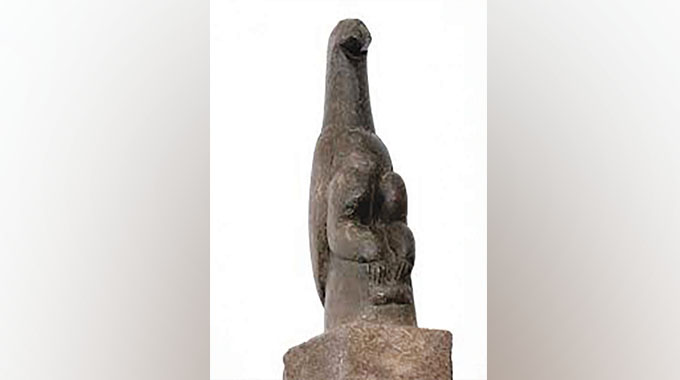
Sifelani Tsiko, [email protected]
THE return of ancestral human remains and the Zimbabwe Bird — a priceless artefact that forms part of a revered collection of eight birds identified by historical records as central to the ceremony and spirit of Great Zimbabwe — marks a long awaited restoration of heritage to the brilliant cultures that created them. It is a moment heavy with meaning, one that reaches far beyond stone and bone, into memory, dignity and identity.
In a profound cultural gesture, South Africa this week handed back to Zimbabwe ancestral human remains together with a centuries old soapstone carving of the sacred Chapungu (Eagle) — a national emblem of immense spiritual and symbolic value, looted by early colonial plunderers more than a century ago. Its return signals a turning of the tide, a quiet but powerful reversal of history.
The development comes at a time when pressure is mounting globally for the return of Africa’s irreplaceable cultural artefacts, many of which remain unlawfully housed in European museums. These objects were taken during the colonial era, stripped from their contexts and communities. In recent decades, several African nations have begun to reclaim fragments of this stolen inheritance, step by painstaking step.
The homecoming of ancestral human remains, returned in eight coffins draped in the Zimbabwean flag, lays bare the cruel reality of racist colonial exploitation and the commodification of African bodies. The solemn handover at a Cape Town museum, attended by officials from both Zimbabwe and South Africa, echoed the tragic history endured by countless Africans torn from their humanity.
Their story resonates painfully with that of Sarah Baartman, the South African woman exploited in European freak shows two centuries ago. Although she died in December 1815, her indignity continued long after, with a Paris museum displaying her brain, skeleton and sexual organs until 1974. Only in March 2002 were her remains returned and buried in Hankey, Eastern Cape, 192 years after her forced departure for Europe.
Similarly haunting is the fate of Zimbabwean freedom fighters executed and beheaded by colonial British forces during the first Chimurenga in the 1890s. Their skulls are still displayed in institutions such as the Natural History Museum in London and the University of Cambridge. Descendants of these heroes have begun formally pressing for the return of at least six sets of remains, offering DNA samples to assist identification. Investigations by The Guardian have revealed that UK universities, museums and councils collectively hold at least 11 856 African human remains, with Cambridge alone holding more than 6 000, and the Natural History Museum over 3 000.
For decades, Zimbabwe has pursued the repatriation of these remains — freedom fighters whose memory continues to suffer indignity through exhibition and storage in foreign collections. Their continued warehousing stands as a chilling reminder of colonial violence and exploitation.
Parallel to this struggle is the story of the Great Zimbabwe soapstone birds. The Chapungu, including the Bateleur eagle, are among the most cherished of these carvings, once revered by Shona speaking communities at Africa’s largest and most impressive archaeological site — the Great Zimbabwe Monument. Built of granite, adorned with towers, turrets and sculpted stairways, the ancient city bore soaring testament to local ingenuity and craftsmanship.
Among its most exquisite creations were the iconic soapstone birds — carved with unrivalled skill and symbolic depth. The artistry and design of these birds, perched in silent watch over the city, reflected a civilisation rich in spiritual imagination.
Yet curiosity and colonial greed proved destructive. Archaeological accounts by Edward Matenga trace the beginning of plunder to the inquisitive pursuits of white trader hunter Willi Posselt in 1889. The birds were then under the protection of Haruzivishe, the Duma Chief Mugabe appointed custodian of the Great Zimbabwe shrine. Despite firm resistance, bribery prevailed. Blankets and trinkets were exchanged for one of the birds — a moment that opened floodgates.
Posselt took the bird to South Africa, offering it first to Transvaal President Paul Kruger. When Kruger delayed, the bird was taken to Cape Town where Cecil John Rhodes, then prime minister of the Cape Colony, acquired it.
“Rhodes is said to have been highly sentimental about his precious acquisition, which he kept at his official residence at Groote Schuur in Cape Town and many replicas were made, some of them planted at his original home in England.
After his death in 1902, the bird remained at his residence, as his will dictated,” Matenga wrote in 2004.
In total, five birds were removed and taken to South Africa in 1891. Of the original eight, only one never left Zimbabwe. Historians believe there may have been as many as ten originally, their symbolic power woven into national consciousness.
Zimbabwe’s push to reclaim the birds has always been deeply tied to issues of identity and sovereignty. Their gradual return from Europe and South Africa has repeatedly been met with celebration, each homecoming reinforcing national renewal.
Historians argue that repatriation was crucial in reshaping a post Independence Zimbabwe, rehabilitating Great Zimbabwe as a symbol of African achievement and resilience.
“The desire was inspired by the belief that the potency of Great Zimbabwe as the guardian of the spirit of the nation lies in its possession of sacred artefacts such as the conical tower and the Zimbabwe Birds. It was imperative to bring back the bird emblems in order to re equip and revive the shrine of Great Zimbabwe.”
In 1980, the Zimbabwe Bird was elevated to national emblem, appearing on the flag, currency and official insignia. Together with the returned human remains, the birds now form essential fragments of collective memory — delicate but powerful anchors of history.
The process of recovery was painstaking. A 1979 parliamentary motion laid groundwork for negotiations. After Independence, the National Museums and Monuments of Zimbabwe engaged the South African Museum. Despite political hostility with apartheid Pretoria, five birds were returned in 1981 in exchange for a unique entomological collection.
The second breakthrough came in May 2003 with the return of the lower portion of a Zimbabwe Bird from Germany. Former President Robert Mugabe received the artefact in Harare.
“Like our land reform programme, today’s ceremony allows us to proudly assert ownership over our national resources and treasures. What makes this day special is the fact that the lower half that was exiled is now back home and firmly and permanently re united with the top half. Never again shall the bird be severed in two and never again shall any part of the bird find its way to foreign territory,” said Cde Mugabe.
The final bird — held at Groote Schuur — returned on April 15 this year, alongside ancestral remains, following a directive from South African President Cyril Ramaphosa.
“The cooperation by our brothers and sisters demonstrate the power of pan African solidarity,” said President Mnangagwa.
Today, the Zimbabwe Bird once again stands where it belongs — a bridge between past and present, an emblem that allows Zimbabweans to see themselves whole.


 Online Reporter