

 admin
admin
Ranga Mataire Group Political Editor
With no visible structures on the ground where it matters, and no viable counter CCC argument to sell, there is a likelihood that the governing party is likely to broaden its support base.
As temperatures warm up ahead of elections next year, it is becoming clear what platforms the two main parties will campaign on; one on its achievements, and the other on the same old rhetoric.
Only ZANU-PF and the CCC have hit the ground running, raising expectations from their supporters.
The ZANU-PF party is ramping up its campaign, and the signs are there telling us how the party will campaign.
Wherever President Emmerson Mnangagwa commissions a development project, multitudes of supporters are in tow to render support. On the other hand, the CCC — an offshoot of the MDC — is also holding what it is calling “Thank You” rallies, as it tries to establish itself as a “new” political outfit.
However, without grassroots structures, it is becoming clear that the Nelson Chamisa led outfit’s main target is not to win elections, but only to establish itself as the “biggest” opposition.
The prize is to spite Douglas Mwonzora, whose entity has failed to make a visible impact on the ground. For journalists covering CCC rallies, it is proving a tall order to extract substance from bluster as the party is yet to articulate its alternative policies.
You can see this by how pro-opposition dailies try to desperately squeeze news out of CCC rallies, such as claims by one paper of an as yet to be shown “hand grenade” being thrown at the last Chinhoyi rally.
Besides having to sit through comical political jibes, journalists have also been at the mercy of violent goons who at the Chinhoyi rally attacked a female journalist.
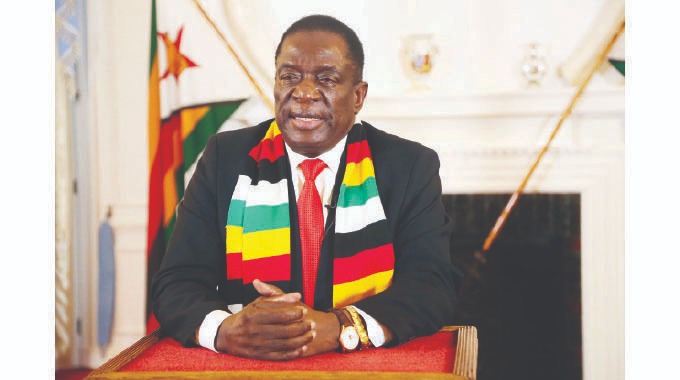
The Zanu-PF candidate, President Mnangagwa, is living up to his inauguration promise of making the political environment less toxic by preaching peace and tolerance.
He has read the riot act to party supporters and leaders to be peaceful and desist from inciting or using hate language in their conduct.
He has not veered off from emphasising that the greatest challenge facing the country is economic growth. The President has consistently urged his lieutenants and every citizen to redouble efforts in rebuilding an economy long battered by economic sanctions.
The President has shown he is not one to shy away from issues that many critics had thought he would shy away from.
He has had to deal with contentious issues, such the Gukurahundi matter in Matabeleland.
The President himself has tackled the issue head-on by traveling to speak with and listen to traditional leaders and civil society organisations to identify urgent priorities needing addressed.
He has gone there to listen, more than talk. In earlier listening sessions, one of the main issues raised in this matter was that many in the region who may have lost parents during the disturbance did not have identity documents.
The President responded by directing relevant departments to go into those affected communities to ensure that documents were issued to all who need them.
Many more contentious issues still need to be addressed, but the President’s resolve to personally deal with the matter is being appreciated by most citizens.
And as part of efforts to come up with home-grown solutions to deal with any internal political matters, the President has reached out to his political opponents in the previous presidential race to be part of the Political Actors Dialogue (POLAD)- platform where they can contribute ideas on how to carry the country forward.
Although CCC’s Nelson Chamisa snubbed POLAD, the dialogue platform has produced what his own MPs have not managed; a set of reform proposals on how to make our elections better than they already are.
On the economic front, President Mnangagwa has made infrastructural development his administration’s priority.
He envisions infrastructural development as a catalytic springboard for the attainment of Vision 2030 of becoming an Upper Middle Income society.
In its statement at the conclusion of its last virtual mission to Zimbabwe, the IMF noted “authorities’ efforts to stabilise the local currency and lower inflation,” and said additional efforts were needed to solidify the stabilisation trends and accelerate reforms.
While getting kudos from the IMF is not a yardstick for judging economic growth, it is a rare praise from an organisation known for its negative attitude towards Harare.
No prizes for guessing why the opposition are quick to discredit any signs of price stability.
The Zanu-PF candidate has much to sell to his base; he has completed dams in areas where many lacked reliable water sources for generations.
These include Marowanyati in Buhera which will open new farming areas. On innovation, he has commissioned the Medical Oxygen Plant in Mutare.
He has rolled out irrigation projects at a rate unseen in our history. Today, dry areas such as Bubi that were never known for irrigated cropping now share wheat harvests. Roads have been repaired by our own companies, sustaining jobs and growth in support industries.
While the opposition laughed, he commissioned piped water to villages in arid Chivi.
This is what he will sell to his voter base. For the CCC’s voter base, what they will get is the same rhetoric of old, and we saw this in Chinhoyi.
According to Chamisa, speaking at the rally, he will count votes on his own and simply walk into State House. This is the sort of rhetoric that he has fed his supporters.
But if recent by-election results can be used as a barometer of what is to come in 2023, it would appear that the odds are in favour of the incumbent and his party.
A trend seems to be developing across constituencies either urban or rural. Where Zanu-PF has recently won, especially in its strongholds, it has done so decisively.
Where the CCC has won- even in its traditional constituencies, it has won marginally.
In a recent national assembly by-election for Gokwe-Kabuyuni constituency, Zanu-PF candidate Spencer Tshuma won by 10 727 votes while the CCC party’s candidate Constin Mugutu polled 4 800 votes. It was a decisive win for Zanu-PF not comparable to what the CCC managed to do in another 2022 national assembly by-election for St Mary’s constituency in Chitungwiza.
CCC’s candidate won by 5 830 while the Zanu-PF representative managed to garner 4 483- a marginal victory for the opposition in an urban constituency largely regarded as its forte.
In summary, nothing is likely to tilt Zanu-PF’s popularity. In fact, with no visibility of opposition structures on the ground where it matters, and no viable counter CCC argument to sell, there is a likelihood that the governing party is likely to broaden its support base.
Opposition parties depend solely on intermittent voter disgruntlement over some unfulfilled promises. Yet, this is no match for Zanu-PF’s organisational structures, an inheritance of its mobilisation prowess during the liberation struggle.
Soon, the opposition shall learn again that depending on intermittent voter frustrations is not a sustainable political ideology.


 Online Reporter