daniel chigunwe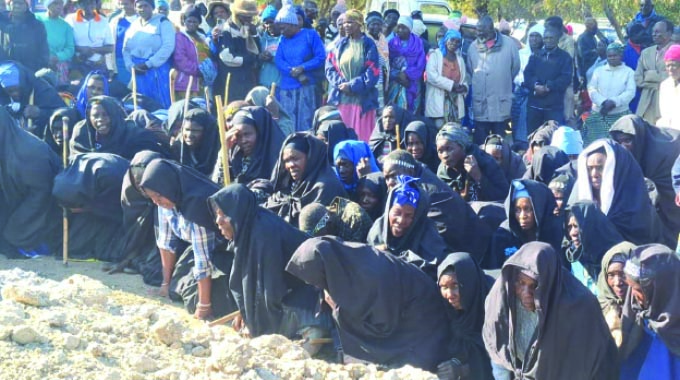
Mkhululi Ncube
Bulawayo Bureau
THE burial of Button Dube, a respected rain-maker and custodian of the Manyangwa rain mountain shrine, was a unique blend of tradition and modernity when he was laid to rest at his homestead last Saturday.
Hundreds of mourners, including chiefs and spiritual leaders, whosanas, from Zimbabwe, Botswana, and South Africa, gathered to pay their respects.
Whosanas, typically clad in black and blue, are believed to have an ancestral connection to rain-making and frequent shrines like Manyangwa during droughts. Mr Dube was seen as their leader, a bridge between the community and the mountain where spiritual pronouncements originated.
Mr Dube’s burial did not follow Christian practices. Instead of Bible readings and hymns, the ceremony was led by whosanas in their traditional attire.
Due to his significance, his body was taken to Bulawayo to facilitate visits from international mourners.
The arrival of the Manyangwa delegation at the funeral parlour in Bulawayo was marked by the distinctive sounds and dances of the AmaWhosana, a testament to their commitment to honouring Mr Dube through traditional rites.
Explaining their adherence to tradition, Twoboy Manyangwa said Mr Dube held an extraordinary place in their community.
“He was a big person and before they could wash him, we performed some rites including ukumkhunga. Even the mortuary staff were afraid to handle him due to his status. After dressing him the whosanas came in and performed rites before his body was loaded into the car.
“While for many deaths, the car carrying the body leads the way, with him it was AmaWhosana who led the way till arrival at home. When we got home we performed some rites again to report his arrival. During the night, the whosanas took over singing and dancing throughout till the morning,” he said.
The burial was held early in the morning to avoid the afternoon heat, a stark contrast to most burials where mourners often seek shade from the scorching sun.
The ceremony itself incorporated familiar elements like eulogies from speakers.
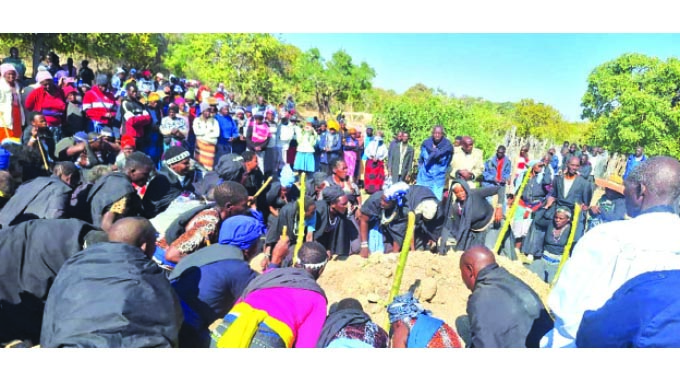
However, a unique tradition unfolded as the body was brought out of the homestead’s characteristic grass-thatched hut. Atop Mr Dube’s coffin lay a reed (umhlanga), a walking stick, and a traditional knobkerrie – items imbued with symbolism that spoke to his role as a rainmaker.
Another tradition steeped in meaning involved the whosanas. Before the coffin was carried out, they veiled themselves with folds of their garments, their faces covered until the coffin was lowered into the grave behind the kraal, the livestock enclosure.
The viewing of the body was also limited. Only close relatives and a select group of whosanas, also referred to as oThobela, were granted this final opportunity to pay their respects.
Manyangwa explained the significance of the reed stick placed on every whosana’s coffin, a symbolic reminder of their responsibility to plead for rain.
“Whosanas are the people who ask for the rain in our culture and all of them are accompanied with the reed stick. You get the reed stick only in the river with water as whosanas are our rain makers. That reed is like a flag when a hero is buried because whosanas are our heroes in our culture.
“The stick was his walking stick when he was unwell while induku yakhe was his tool of trade and he requested that he be buried with it,” he said.
Unlike most burials where the coffin is completely sealed, Mr Dube’s was left open at the face “to allow his spirit to move freely”. This tradition reflects the belief in the afterlife and the deceased’s continued journey.
While bodies are typically removed through a temporary opening created in the hut, Mr Dube’s body was carried out through the main gate. This seemingly simple change held a deeper meaning. The mourners feared that anyone succeeding Mr Dube as rain-maker might exploit the temporary opening to perform rituals, potentially stealing his powers.
The ceremony incorporated specific rituals linked to Mr Dube’s role. Before lowering the coffin, a bucket of water, prepared specifically for the burial, was poured inside. Additionally, bags of sand, symbolising his connection to rain-making ceremonies, were placed in the grave. Finally, water from a special container called an “iqhaga” was poured onto the grave, followed by another pouring of water after the grave was filled. These acts served as a final tribute to Mr Dube’s legacy as a rain-maker.
“After the burial is done, an aunt, brother, or even sister take iqhaga with water and pours the water on the side where the head of the late is located. As he pours the water, he utters something and then after iqhaga is broken and placed on the grave,” he said.
Six small reeds were placed on the grave, a poignant representation of the six children Mr Dube left behind. This simple act served as a final farewell and a reminder of his legacy.
The whosanas, deeply respectful of their traditions, were understandably cautious about photographs being taken during the ceremony. This reporter, recognising their wishes, made a respectful request for permission, which was eventually granted.
Following the burial, the whosanas performed a final act of devotion. They remained alone, circling the grave in traditional dances and ceremonies. This sombre yet powerful display served as their final expression of respect for their departed leader.


 Online Reporter