malvernmugadzikwa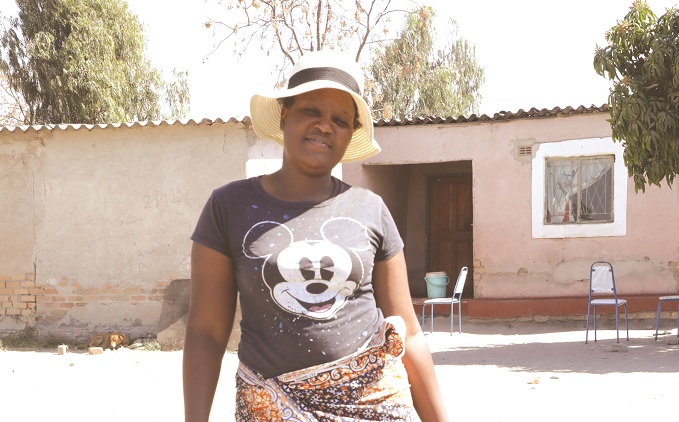
No compensation after road traffic accident
Fatima Bulla-Musakwa
On a typically hectic afternoon on September 14, 2021, Ms Nomsa Makaniko, a single mother and diligent househelp working in Belvedere, Harare, was eager to return home, where she stayed with her three children in the sprawling township of Epworth.
Her day had been long, but the prospect of reuniting with her family always brought a sense of relief and expectation.
Little did she know that her journey home that day would change her life forever.
She boarded a commuter omnibus near a local fuel station, joining a large number of weary commuters making their way to the city’s outskirts.
As the vehicle made its way along the Mutorandishe stretch, a seemingly ordinary afternoon took a terrifying turn.
After a passenger disembarked at St Patrick’s bus stop, the commuter omnibus took off at full speed.
However, a stationary bus, partially obscured, loomed directly in its path.
There was no time to react. With a deafening crash, the vehicle hit the bus.
The impact was catastrophic, sending shock waves through the vehicle and its occupants.
Ms Makaniko was among the injured.
The force of the accident threw her forward, her body enduring the brunt of the impact.
Her legs were fractured.
Eight lives were tragically lost.
The accident marked the beginning of a harrowing odyssey for Ms Makaniko, who was admitted to Sally Mugabe Central Hospital.
“When police officers came to the hospital to give us our phones, which had been recovered at the scene of the accident, I asked them if there was any way we could be compensated,” she told The Sunday Mail.
“But they said we would receive no assistance since the commuter omnibus was not contracted to Zupco (Zimbabwe United Passenger Company) and was operating illegally.
“And since we boarded it voluntarily, no one was to blame.
“So, I did not get any help, including from the owner of the commuter omnibus.”
She had to rely on the generosity of her father and siblings, among other relatives, who pooled funds to cover her medical bills.
Discharged from hospital after weeks of agonising recovery, Ms Makaniko faced a new battle for survival.
Her once-independent life was now defined by limitations.
Walking became a painful ordeal, relying on crutches to navigate even short distances.
The once-vibrant mother of three was now a fragile figure, dependent on the kindness of others.
After months of arduous rehabilitation, she managed to discard one of her crutches, a small victory in what felt like an endless battle.
Desperate to provide for her children, she embarked on a new venture — selling dried kapenta and firewood. She had to rely on a friend to source stock from the Mbare Market.
The small business was in some way a means to regain a sense of purpose amidst the overwhelming challenges.
However, the physical demands of even this limited enterprise were taxing.
The pain in her legs, exacerbated by long hours of sitting, was a constant reminder of the accident’s enduring impact.
Heartbreak
A turning point came when the strain of caring for the children became too much for Ms Makaniko to bear alone.
With a heavy heart, she made the difficult decision to allow her children to live with their father.
The arrangement offered them a more stable environment and access to better care.
While the separation was painful, Ms Makaniko knew it was in their best interest.
“So, the children transferred to live in Belvedere,” she said.
“I realised that there was no point holding on to the children when they could be taken care of much better by their father.
“They do visit me on holidays.”
Her health, however, continued to deteriorate.
The metal rods implanted in her legs to aid in healing began to cause problems.
One leg started to dislocate, and subsequent medical examinations revealed that the bone in her hip had dislocated and was gradually eroding due to friction.
The recommended treatment — a total hip replacement — carried a hefty price tag of US$1 500.
Once again, Ms Makaniko turned to her family for help. With their support, she underwent the surgery.
But her ordeal was far from over.
The other leg, still bearing a metal rod, began to cause her unbearable pain.
An X-ray revealed that the bone had healed sufficiently, and the rod needed to be removed.
Having the procedure required another US$1 500.
“They also wanted US$1 500 and, as usual, I was worried about where I would get that money,” she recounted.
“I, however, was introduced to a nurse working at Chitungwiza Hospital, who directed me to a specialist doctor.
“The doctor told me to raise US$400 and with that, I went through the final surgery on May 23.”
Then came the physiotherapy, which was necessary for her to regain her strength and mobility, but the costs were prohibitive.
The artificial hip replacement had resulted in one leg being shorter than the other, forcing her to rely on a crutch and limiting her ability to carry heavy objects.
The once vibrant and independent woman was now confined to a sedentary life, unable to provide for her children or engage in the activities she once enjoyed.
The accident had not only stolen her physical health but also her ability to earn a living and care for her family.
Despite the overwhelming challenges, Ms Makaniko’s spirit remains unbroken.
“I have been rendered jobless due to reckless driving and now I need assistance to start something that can give me income,” she said.
“First, people should not drink and drive.
“There is no harm in stopping and observing what is taking place on the roads before one makes a decision when driving.
“I encourage drivers to be patient and that they keep it in mind that they have people’s lives in their hands.”


 Online Reporter