Gibson Mhaka recently in Moscow, Russia
THERE are moments when one discovers that national identity does not always need an introduction. Sometimes, it is written on the clothes we wear, expressed through the languages we speak and displayed in the symbols we proudly carry.
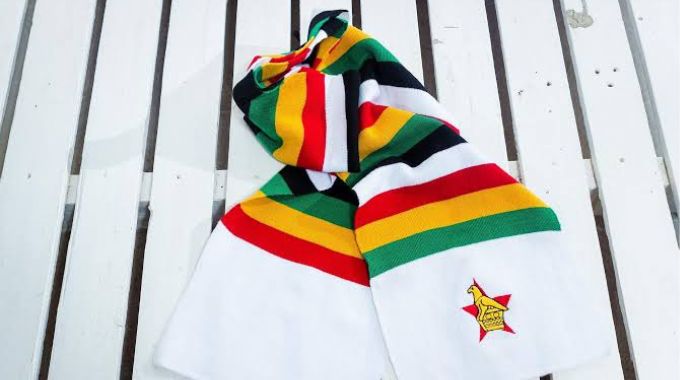
My recent experience in Moscow, Russia brought this realisation home in a rather remarkable way, a simple scarf in the colours of the Zimbabwean flag became my unmistakable identity card in a foreign land.
As African journalists attending the Third Russia-Africa Summit and Economic and Humanitarian Forum, we were taken on a cultural tour of Moscow, where we visited some of Russia’s most iconic historical landmarks, including the Kremlin, Red Square and the State Kremlin Palace. The excursion, organised as part of the summit’s cultural programme, was intended to help us appreciate Russia’s history, traditions and national identity.
But beyond the magnificent architecture, impressive historical monuments and ceremonial displays, I found myself reflecting on something much closer home, the significance of the scarf that had become an increasingly recognisable feature of Zimbabwean national identity.
In Russia, identity was everywhere. It was reflected in the imposing architecture of the Kremlin, the historic significance of Red Square, the changing of the mounted and foot guards and, perhaps most importantly, the Russian language.
As we moved around Moscow, one could not help noticing that traffic signs and much of the public information were written in Russian. The language was not merely a means of communication, it was an expression of belonging, history and national pride.
It reminded me that language is one of the strongest markers of identity. It connects people to their heritage, distinguishes communities and carries the stories of generations.
Russia appeared confident in presenting its language and culture to international visitors without feeling compelled to abandon its identity.
Guiding us through the Kremlin, museum research fellow and tour guide Irina Obydenkova explained its historical significance, describing it as both an ancient fortress and a town.
“The Kremlin is the centre of Moscow. Moscow is the capital of Russia, ancient Russia and modern Russia, and our President works on the territory of the Kremlin,” she said.
She further explained that the complex contained unique monuments that had survived different periods of Russian history.
“The walls of the fortress, churches and part of the palace were built by Italians,” she added.
Her explanation demonstrated how architecture can preserve a nation’s historical memory, even as influences from other cultures become part of its development. Standing amid these remarkable structures, I began to appreciate that national identity is not necessarily communicated through grand speeches or political declarations. Sometimes, it is preserved through everyday practices, familiar symbols and the willingness of a people to celebrate what makes them different.
Interestingly, while Russia’s identity was expressed through its language, architecture and traditions, mine was being communicated through a scarf.
President Mnangagwa has popularised the wearing of scarves in Zimbabwe’s national colours, making the accessory an increasingly familiar feature of his public appearance.
Whether attending official engagements, addressing gatherings or travelling abroad, the President is hardly ever seen without one around his neck, regardless of the prevailing weather conditions. What might appear to some as a simple fashion statement carries a deeper national message.
The scarf brings together the colours of the Zimbabwean flag, transforming an ordinary clothing accessory into a visible expression of patriotism, national pride and belonging.
I experienced this first-hand in Russia.
As I walked around Moscow wearing my Zimbabwean-coloured scarf, I was surprised by how easily people identified where I came from. Some Russians would enthusiastically call out, “President Mnangagwa! President Mnangagwa!”
Others would approach, smiling and requesting photographs.
It was an unexpectedly exciting experience. In a country thousands of kilometres away from home, where language, traditions and everyday experiences were different from those I was accustomed to, the scarf provided an immediate connection.
I did not need to explain that I was Zimbabwean. The colours around my neck had already introduced me. What made the experience particularly interesting was the excitement with which some people recognised the scarf and associated it with President Mnangagwa.
Their reactions turned ordinary encounters into memorable moments, creating opportunities for conversations and photographs. For me, this was more than an amusing travel experience. It demonstrated the power of national symbols in representing a country beyond its geographical borders.
The experience also reminded me of Zimbabwean students studying in Russia, many of whom regularly wear scarves in the national colours whenever they venture outside.
Even thousands of kilometres away from home, they maintain a visible connection with their country. For these students, the scarves are more than accessories designed to protect them against Russia’s cold weather.
They are reminders of home, expressions of belonging and a way of maintaining their Zimbabwean identity while navigating life in a foreign environment. In a multicultural society, such visible symbols can also create opportunities for interaction, recognition and solidarity among people from different backgrounds.
Of course, a scarf alone cannot define an entire nation.
Zimbabwe’s identity is much broader, encompassing its languages, music, traditional practices, history, values and diverse communities. Equally, national pride should not be reduced to what someone wears.
However, symbols matter because they make identity visible. They provide an accessible way of communicating national belonging, particularly in places where people might otherwise struggle to recognise or understand one another.
The lessons from Russia, therefore, went beyond appreciating beautiful buildings and historical monuments. They challenged us as Africans to think more deeply about how we present ourselves to the world and how deliberately we preserve our cultural heritage.
My account of the journalists’ tour captured this reflection, particularly through the observation that Russia had managed to preserve its identity and culture over generations. The country’s confidence in its language and historical heritage offers an important lesson for African nations.
We should be equally deliberate about celebrating our indigenous languages, protecting historical landmarks and promoting symbols that represent our collective identity.
As the Russia-Africa engagement continues to create opportunities for cultural exchange and cooperation, such experiences remind us that diplomacy is not only about agreements, trade and political relationships.
It is also about people discovering one another’s histories, cultures and identities.
I travelled to Russia expecting to learn about its landmarks and culture. I returned with a renewed appreciation of the little piece of Zimbabwe I had carried around my neck.
The Kremlin may stand as a powerful symbol of Russian history, while the Russian language gives expression to the country’s cultural confidence. For me, however, the Zimbabwean-coloured scarf became a similarly powerful statement of belonging.
In a foreign land, it spoke before I could introduce myself. And sometimes, that is the beauty of identity, even when thousands of kilometres separate you from home, something as simple as a scarf can remind the world exactly where you come from.