Online Reporter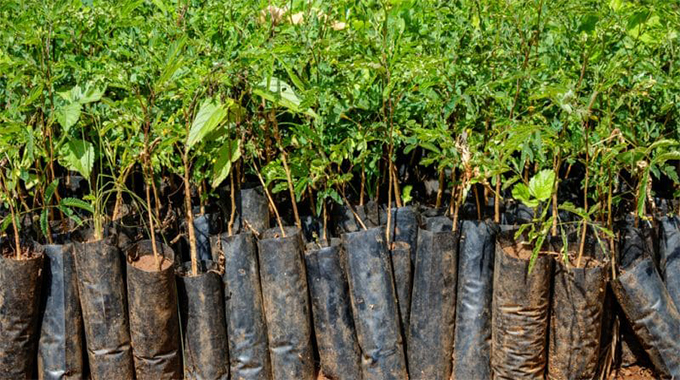
Stephen Mpofu, Perspective
YOU (yes, you) add to the above proverb the saying that “Prevention is better than cure” and you have to take action on boomerang effects such as recurrent droughts on deforestation not only in Zimbabwe but across the African landscape that have resulted, in the case of our country, in scarce foreign exchange being spent on food imports to save lives.
A local private radio station reported earlier this week that millions of trees will be planted in parts of Mashonaland Province, where vandals have wreaked deforestation havoc and with parts of Matabeleland South Province, where veld fires have destroyed vast tracts of woodlands, obviously needing the same reforestation attention as that being given to the other parts of the country.
In light of the above, the question that begs response is, why do Zimbabweans lack environmental protection on which our very lives depend?
People recklessly cut down trees for firewood to sell in urban areas for money or to extend their farmlands, while others and/or hunt with fire, thereby causing environmental havoc.
Carbon gases from veld fires, as well as from smoke from coal mines, rise higher into the atmosphere and erodes the ozone, the layer that protects Earth from the dangerous rays of the sun, causing recurrent droughts such as have been experienced in our own country, with crops being destroyed and people going hungry as a result.
Floods in eastern Zimbabwe as well as in other parts of the world have also occurred after the ozone layer was eroded.
Trees play an important role in preventing the havoc in point in this discourse because trees absorb and sink the carbon gases mentioned above, rendering them ineffective as a result.
But do people in the countryside, where massive environmental destruction takes place, know exactly that they tie nooses around their necks with their reckless actions?
Do the chiefs and other traditional leaders who superintend the lives of the people under them know the effects of environmental destruction?

If they do, why then do we experience the environmental degradation that takes place with trees being recklessly cut down?
Do members of parliament in whose constituencies environmental protection is a far cry concern themselves with swaggering around in the August House while back home their constituents wallow in environmental protection ignorance, an ironic tragedy?
Schoolchildren can play an environmental role by educating their parents and/or guardians back home.
But is environmental protection prioritised as a must in human and wildlife education for the children to pass on to their parents and guardians for both our human and wildlife at large?
Communities must be given practical alternatives to chopping down trees for income or cooking fuel.
Small-scale programmes that supply affordable, fuel-efficient stoves and promote communal woodlots can reduce pressure on natural forests while keeping household costs down. Local councils can link villagers to markets for sustainable crops and fuel sources so that short-term survival does not mean long-term destruction.
At the same time, national policy must make environmental crime unattractive. Stronger enforcement against illegal logging and setting aside funds for rapid reforestation after veld fires will help. Training chiefs and local leaders with simple environmental science can turn them into allies in conservation.
When village leaders understand the link between trees and rain, they can lead local solutions that make sense to their people.
All of us unmitigated patriots must pull out all stops to prevent the desertification of our beautiful motherland.