Christopher Nyika [email protected]
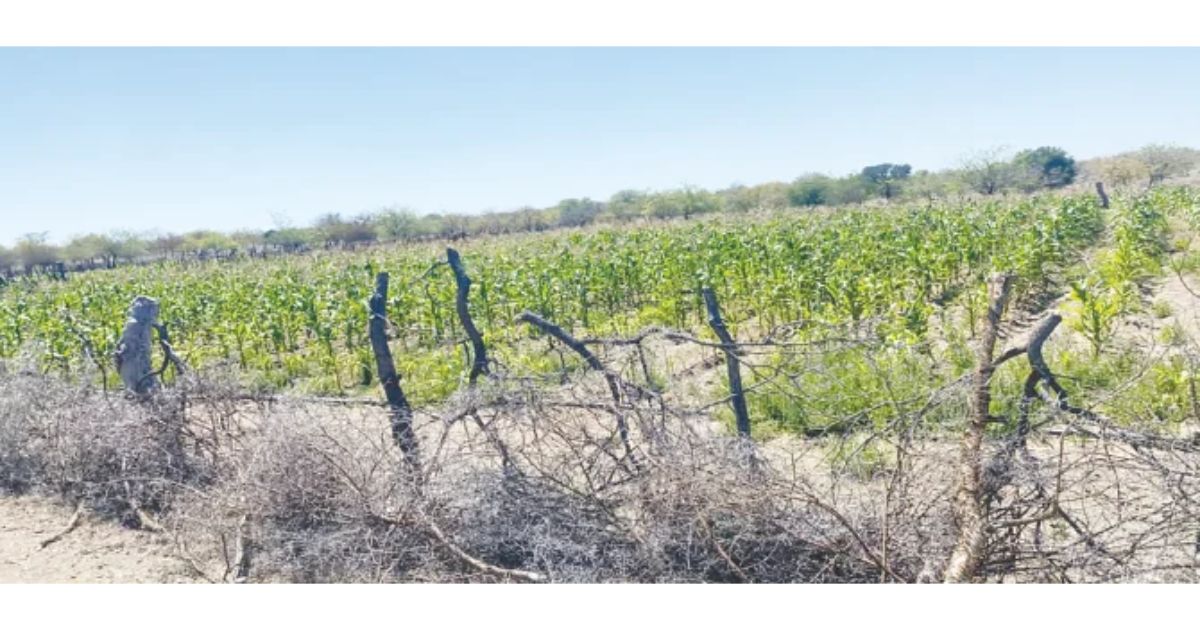
THE scorching sun beats down on the dry landscape of Shashe in Beitbridge District, Matabeleland South, where thorny bushes, dusty paths and vast grazing areas have traditionally defined a community better known for cattle ranching than crop farming.
Yet, against the predominantly brown terrain, patches of green maize and vegetable fields are beginning to tell a different story.
Across parts of Beitbridge West, villagers are increasingly turning to irrigation farming, sinking boreholes and installing JoJo water storage tanks to produce food beyond the traditional rainy season.
For farmers in Ward 8, access to water is gradually changing their relationship with agriculture, offering an opportunity to grow crops even when the rains fail.
The shift is particularly significant in Beitbridge, one of Zimbabwe’s driest districts, which falls under Natural Region 5, characterised by low and erratic rainfall, high temperatures and limited potential for conventional rain-fed crop production.
The district receives an average annual rainfall of about 336mm, with some areas experiencing prolonged mid-season dry spells, making farming heavily dependent on reliable water supplies and drought-adaptation strategies.
The challenge could become more pronounced during the 2026/27 agricultural season, with the developing El Niño phenomenon expected to increase the likelihood of below-normal rainfall, prolonged dry spells and warmer-than-normal temperatures across much of Zimbabwe.
The seasonal climate outlook points to an erratic start to the rainfall season, with southern and western parts of the country facing normal to below-normal rainfall during the January-to-March 2027 period.
For farmers in Shashe, this outlook reinforces the importance of finding ways to produce food without relying entirely on rainfall. Their growing investment in boreholes and irrigation is therefore not only changing the appearance of the landscape but also helping households prepare for increasingly uncertain weather conditions.
Ward 8 councillor Alderman Luka Ndou said villagers were embracing community-driven development by making use of available resources to improve their livelihoods.
“People in Ward 8 are very hardworking. They are changing their own land into an agricultural hub by 2030. The people are adopting this initiative and are taking advantage of the fact that we live between two rivers, the Limpopo and the Shashe,” he said.
Alderman Ndou said villagers were increasingly realising that they could not depend entirely on rainfall to sustain crop production.
“People have realised that they cannot simply wait for the rains. They are using the resources available to them to change their situation and improve their livelihoods,” he said.
Government support, particularly through agricultural extension services, is also helping farmers improve their production methods.
The councillor said agricultural extension officers were visiting communities to provide
technical guidance and monitor farming projects.
“The Government is helping our people by giving them enough knowledge. Agriculture officials are coming to teach our farmers and monitor these projects. This is helping our people to understand better ways of producing crops,” said Alderman Ndou.
He expressed optimism that the emerging green fields would continue expanding as more households invested in water infrastructure and irrigation.
“If you come back in 2027, the green portions that you are seeing today will be more because our people are continuing to develop. They are working hard and adopting new ways of farming,” he said.
For local farmer, Ms Gamu Moyo, the growing interest in irrigation farming reflects a change in attitude among villagers.
She said what began as an initiative by a few households was gradually spreading as more residents sought to secure reliable water supplies for their gardens and fields.
“These projects started with a few people, but now almost every home is fighting to have a borehole. People want to plant at their homes and produce food even in winter,” she said.
Ms Moyo said access to water had given villagers greater control over when they could plant, reducing their dependence on seasonal rainfall.
“Once you have water, you can plant. You don’t have to wait for the rainy season. That is why more people are now interested in having boreholes,” she said.
The benefits are extending beyond household food production, with some farmers beginning to explore opportunities to sell surplus crops to neighbouring households and surrounding communities.
Maize and vegetables are being grown on small plots, providing families with fresh produce while creating opportunities to earn additional income.
The increased availability of locally produced vegetables could also reduce the need for residents to travel long distances to buy fresh food.
For a community where cattle remain central to livelihoods, irrigation farming is emerging as an additional source of food and potential income, helping households diversify their agricultural activities.
However, the transformation will depend on the sustainability of the water sources and the ability of farmers to maintain their irrigation systems.
In a region where water is a precious resource, the growing investment in boreholes and storage tanks presents an opportunity to strengthen local food production, but also makes responsible water management essential.