


 Online Reporter
Muchaneta Chimuka
MOTHER’S DAY commemorations are invariably emotional and intriguing.
This year was no exception for the day, which is celebrated on the second Sunday of May.
However, many people believe women should be celebrated every single day, especially given their significance, as well as the critical role they play in communities and society.
But there are mothers and women who really stand out, like Jules Daudi, who is, however, a foster parent.
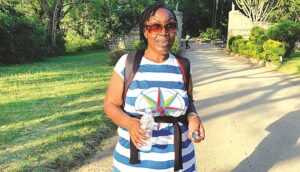
Despite being visually impaired, she has not only managed to overcome all challenges associated with her disability but contributed immensely to education and other life pursuits.
With over three decades of teaching experience and advocating gender and disability rights, she has dedicated her life to promoting inclusive education and social justice.
“Although I do not have biological children, I am a foster parent. Tears of joy are flowing down my cheeks simply because I have been recognised; I never expected this,” she said in an interview with The Sunday Mail Society.
“Despite being visually impaired, I am expected to perform normal daily chores like my able-bodied colleagues, and I am managing. We are shaped by our society, hence we must endure all the hard work and pain while never losing love. I strive to balance work and household responsibilities in every way possible.”
Daudi has been a teacher at Mabelreign Girls High School for 27 years and at Highfield 2 High School for four years.
“Despite my visual impairment, I achieved a 100 percent pass rate for learners at Advanced and Ordinary Levels in 2024. Furthermore, I pioneered inclusive education for learners with visual impairments in Harare high schools starting in 2009,” she said.
In addition, this veteran educator has championed inclusive education for young learners with visual impairment at the early childhood development (ECD) stage.
Daudi is a co-founder of the Zimbabwe Blind Women Trust and Women Vision Africa, where she advocates gender and disability rights.
“Through these initiatives, I advocate access to information through braille transcription, audio materials and translation into Shona and other local languages.”
She is a devoted Christian, who holds a Master’s degree in Women’s Law from the University of Zimbabwe (2018), an executive certificate in Monitoring and Evaluation (2013), a Graduate Certificate in Education (1997) and a Bachelor of Arts Degree from the University of Zimbabwe (1994).
She attended Waddilove primary and high schools and hails from Rusape.
In her spare time, she enjoys music.
She can play the acoustic guitar and mbira.
“I am also a writer and a poet. I have written several poems and songs and am currently working on a book. I enjoy doing ‘crazy’ things. This year, I took on the task of training learners at my school for their provisional driver’s licences. I also train braille writing and reading for persons with visual impairments and I provide counselling, academic and research coaching.”
Daudi, best described by her colleagues and relatives as soft-spoken and reserved, is fond of reading the Bible.
She participated in the “Forgotten Tribe” research project, where she amplified the voices of persons with disabilities.
Due to her outstanding achievements and contributions, she received an international accolade — the Roul Wallenberg International Research Academy Award — in 2023.
Another interesting aspect of her life is her active presence on social media platforms, like Facebook, X, Instagram and LinkedIn.
Elisa Ravengai, who is also visually impaired, shared her story as well.
“I am grateful for this opportunity to inspire others. I got married in 2015. Since then, and even before, I played a motherly role as a foster parent, raising wonderful sons and daughters. My family has been instrumental in my success,” said Ravengai.
She commended her parents for supporting her education and career choices.
This, she believes, was a significant milestone in the fight against stigma and discrimination among persons with disabilities, especially women.
“I hold a Master’s degree and have 15 years of teaching experience in mainstream schools. I have had the privilege of shaping young minds. My passion for inclusivity led me to venture into disability rights advocacy, where I have found my purpose,” she said.
“As a Christian leader, I strive to serve and inspire others at church, at work and in my community. I am a trainer and mentor with significant expertise, and I am committed to making a difference.
“I am a proud mother who is always independent, well-organised and capable of taking care of herself. I can wash, cook and travel unsupervised.
“As a mother, I am proud to be a role model to my children, teaching them resilience and empathy. To fellow mothers with disabilities, I say believe in yourselves; do not allow your disability to limit you. Be proactive, seek support and never give up,” added Ravengai.
Another inspiring story is that of Sinikiwe Kademaunga-Zhiva, who has congenital absence of the patella, a rare condition where the kneecap either does not form or is abnormally small, as well as other disabilities that make walking and performing certain tasks difficult.
However, she has been fortunate to receive family support in the form of education.
Recently, she wedded her husband, Rueben Zhiva, in Mabvuku.
The couple was later blessed with a bouncing baby boy.
She believes disability is not inability.
Kademaunga-Zhiva is a public speaker and studied Social Studies at a university in South Africa.
“I am a proud mother who happens not to be a charity case. However, when people see me, some offer to donate money and goods, and I do not hesitate to accept them,” she
said.
“Unfortunately, some question my husband about why he chose to marry someone like me, with disabilities, but we are now used to it because we understand the level of knowledge deficiencies that our communities face regarding disability issues.”
Just like her colleagues, she is also active on social media.
Dr Rasha Kelej, the chief executive officer of Merck Foundation, who is spearheading the “More Than a Mother” campaign, has applauded the roles that women play in shaping communities.
Kelej, who is also the president of the Merck Foundation First Ladies Initiative (MFFLI), said they have supported several women who face various challenges in their lives.
Their aim, she said, is to empower infertile and childless women through access to information, education and a change of mindset.
The campaign supports the definition of policies and interventions to build quality and equitable reproductive and fertility care capacity, break infertility stigma and raise awareness about infertility prevention and male infertility.



 Online Reporter