Online Reporter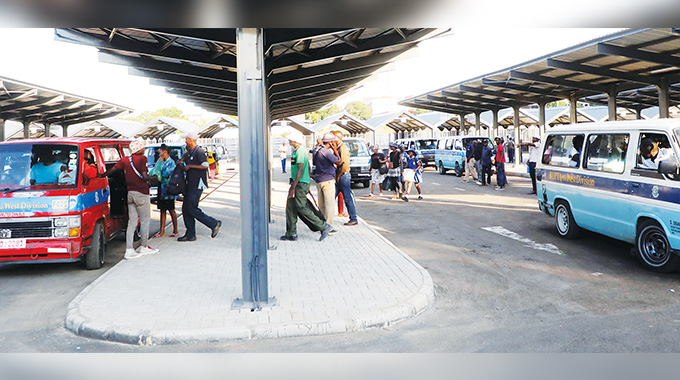
Mashudu Netsianda, [email protected]
BULAWAYO’S daily commuter rush tells a tale of two taxi ranks — one orderly and lawful, the other illegal, chaotic and now scarred by tragedy. On Wednesday night, the long ignored dangers of the unsanctioned 6th Avenue rank exploded into grim reality when a commuter omnibus lost control and ploughed into informal traders, killing two vendors instantly and injuring several others. The crash rippled through the central business district, shocking a city that has grown weary of warning after warning, and reigniting demands for decisive action against the mushrooming illegal ranks that have turned certain streets into corridors of danger.
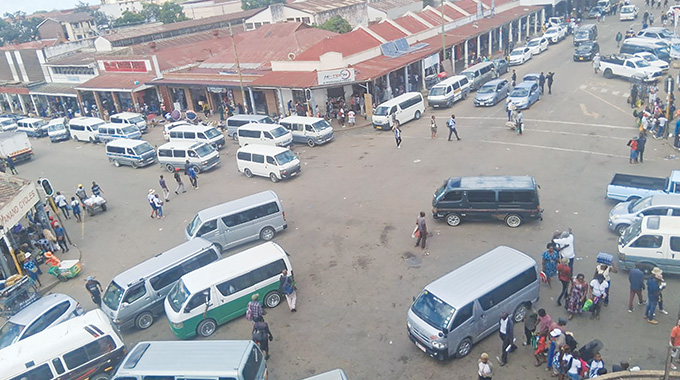
Just a few blocks away, at Egodini, a completely different world unfolds. There, minibuses queue in tidy lines, marshals direct traffic with calm authority, and commuters board in peace — a serene parallel to the disorder that defines 6th Avenue. The contrast is impossible to ignore. For years, the illegal rank along 6th Avenue has operated without council approval, spilling messily onto pavements and roads. Vehicles stop wherever they please, touts bellow destinations with unrestrained zeal and pedestrians must navigate a gauntlet of moving metal. Pirate taxis, rogue kombis and intercity buses picking up passengers at random spots have created a lawlessness that has become normalised in the city centre.
At peak hours — mornings, afternoons and after work — traffic regulations feel optional, dismissed even in the presence of Tendy Three Investments (TTI) parking marshals. It was inside this daily bedlam that Wednesday’s tragedy struck. Eyewitnesses described how a kombi veered sharply off the road, slamming into traders positioned near the rank. Stalls crumpled, goods scattered across the tarmac, and horrified onlookers watched in helpless silence as emergency responders fought to stabilise the scene.
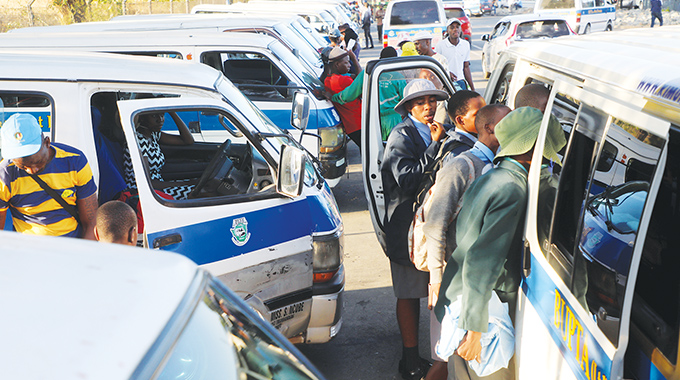
“We have been warning that something like this would happen. Cars and kombis are everywhere here. There is no space for people. Now two lives are gone,” said Nomsa Dube, an informal trader who works nearby.
For a moment, the chaos paused. Traffic halted, traders fled, and grief hung like a heavy cloud. But as dusk deepened and the city’s restless rhythm reclaimed its streets, the kombis returned. Passengers gathered again at the roadside, and within hours, what had been a scene of loss slipped back into a familiar — if unsettling — normality.
For many commuters, convenience still triumphs over caution.
“It’s closer to my workplace. Yes, it’s disorderly, but if I go to the legal rank, I have to walk further and sometimes wait longer,” said Sipho Ndlovu, a security guard who uses the rank daily.
This desperation for quick access has nourished the illegal rank’s survival, even as it tears at the city’s safety fabric and undermines urban planning efforts.
Meanwhile, Egodini stands as a working example of what transport management can be. Vehicles depart one at a time, drivers respect the system and commuters move freely, without the constant fear of being clipped by a speeding kombi.
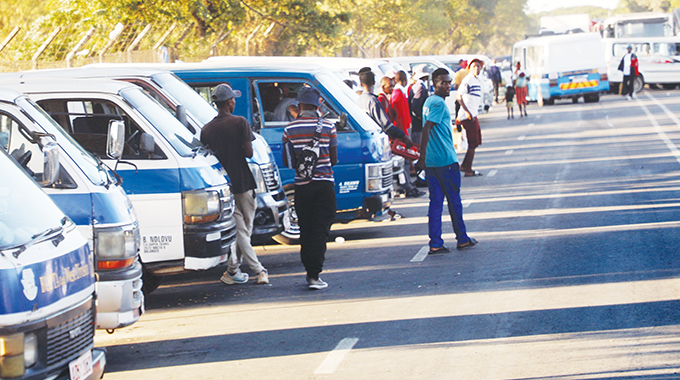
“This is how it should be. You know where to stand, you know which taxi is next, and there is no pushing or shouting,” said Mrs Thandeka Dlamini, waiting to board a ride to Nkulumane.
Urban planning expert Dr Nicholas Muleya believes the glaring contrast between the two ranks exposes deep failures in both planning and enforcement.
“An illegal taxi rank is not just a traffic problem — it is a planning disaster. When transport, vending and pedestrians are forced into the same unplanned space, fatalities become almost inevitable,” he said.
He added that Egodini shows what is possible when fundamentals are respected.
“At Egodini, there are clear loading zones, pedestrian walkways and controlled vehicle movement. That separation of functions is fundamental in urban planning and where it exists, safety improves,” he said.
But Muleya cautioned that dismantling illegal ranks without offering commuter friendly alternatives will not cure the problem.
“People go where transport is convenient. The solution is not only enforcement, but decentralising and expanding legal ranks closer to where commuters need them,” he said.
Drivers at the legal ranks understand this better than anyone.
“When everyone follows the rules, accidents are reduced. What happened on 6th Avenue is painful, but not surprising,” said Mandla Sibanda, a kombi driver who operates from an approved terminus.
Back at 6th Avenue, congestion remains the default. The illegal rank routinely clogs roads, forcing motorists to crawl through the CBD or make abrupt detours. Arguments flare, horns erupt and on the rare occasions when traffic officers appear, they quickly find themselves outnumbered, outshouted or simply ignored. By day, the 6th Avenue and Lobengula Street intersection doubles as an informal market; by night, it transforms into a lawless loading zone.
Kombis jostle for passengers while vendors cluster around the pavements, creating the sense of a city centre surrendered to disorder.
Michael Ndiweni, Director of the Bulawayo Vendors and Traders Organisation (BVTO), explained why vendors gravitate to the area.
“We encourage traders to use designated areas, but vendors follow traffic. That is why 6th Avenue is overcrowded — the traffic volume is huge,” he said.
He urged the Bulawayo City Council to expedite work at Egodini to ease congestion and restore order.
The BCC and Zimbabwe Republic Police (ZRP) have repeatedly warned against illegal ranks, citing congestion, safety risks and revenue loss. Yet enforcement continues to falter under the weight of commuter demand and strained transport infrastructure. Bulawayo police spokesperson Inspector Nomalanga Msebele has been unequivocal in her stance.
“As police in Bulawayo, we will continue conducting raids on offenders, including the kingpins behind illegal taxi ranks. No one is above the law,” she said.
Bulawayo officially recognises only four public passenger transport operators — Tshova Mubaiwa, the Bulawayo United Passenger Transporters Association (Bupta), Bulawayo City Transit and the Vuka Uzimele Taxi Association (Vuta). They are bound by council by laws which require registration, adherence to designated pick up and drop off points, and operation strictly along approved routes. Yet illegal operators — the ubiquitous mshikashika — continue to openly defy the rules at 6th Avenue.
Until those realities are confronted with both firmness and foresight, Bulawayo will remain divided between two taxi ranks — one a symbol of the order the city strives for, the other a stark reminder of the chaos it has yet to conquer.