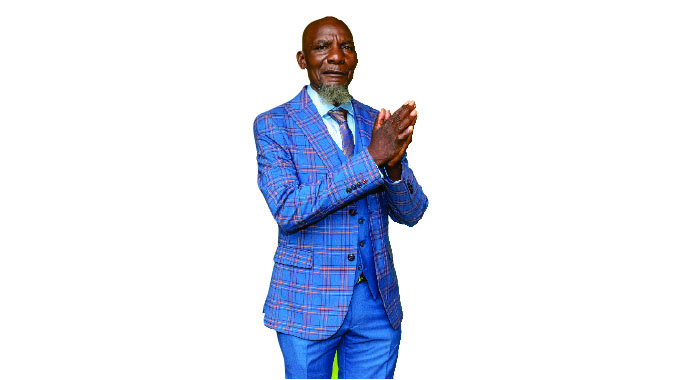
Trust Freddy
Arts Correspondent
In the vibrancy of Zimbabwe’s music tapestry, there exists a single thread woven with 48 years of dedication, talent and unwavering discipline — that thread is Nicholas Zakaria.
Known by an array of names — Madzibaba, Senior Lecturer, Professor, Sungura Godfather — Zakaria’s journey through the music industry is a testament to resilience and passion.
Former Türkiye president,Mustafa Kemal Atatürk once remarked: “A good teacher is like a candle — it consumes itself to light the way for others.”
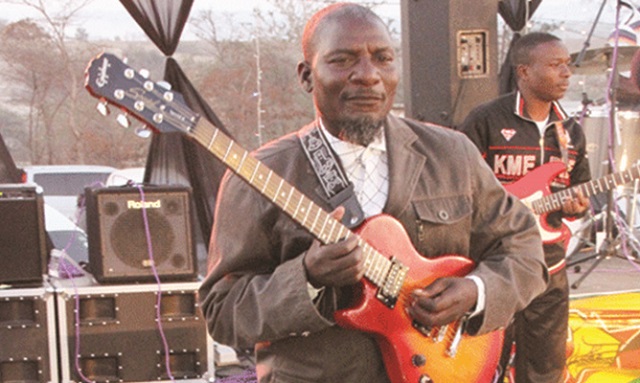
One would typically think of “Professor” or “Senior lecturer”, as titles reserved for academia. Well, that is not the case for Madzibaba – a Grade Seven dropout turned successful musician who earned the titles through his commitment to music and the teaching others.
Like a candle, he has given of himself and groomed countless musicians, earning him the well deserved moniker “Senior Lecturer!”
From grooming legendary sungura musicians like Aleck Macheso and Cephas Karushanga to supporting the late frontman of Chazesa Challengers’ lead guitarist System Tazvida, drummer Silas Chakanyuka and Aaron Chinamira, his impact on the music scene is undeniable.
It’s a tapestry of sound, woven by bassist Simon Mutambi and countless other musicians. There are indeed a thousand stories, all connected by a single thread.

Born at Belgownie Estate in Mazowe, Mashonaland Central in 1956, Zakaria’s first foray into music was not a deliberate choice, but rather a discovery of his hidden talent.
After dropping out of school while in Grade Seven and having nothing to do, he turned to playing the guitar.
A self-taught guitarist, he honed his skills in secret, stealing moments with his father’s instrument until the melodies he crafted could no longer be contained within the walls of his home.
In an exclusive interview last Friday, Madzibaba recounted his musical journey as he celebrated his 68th birthday.
“I lived on a farm in Mazowe, where my father used to play a box guitar at some beer halls at surrounding farms.
“He did not want me to play his guitar, but I would often sneak it from him while he was working in the fields and play it by myself.
“Eventually, my mother caught me practising and she noticed that I had been teaching myself how to play the guitar. She informed my father, who was angry at first, but later recognised my passion for music and allowed me to continue playing.”
Little did he know that playing his father’s guitar was the start of his journey into the musical industry.
When Zakaria first started playing the guitar, it was not considered a respectable or admirable profession. His father would play at local parties for only a few cents, often at events where people met and drank home-made beer.
“I was very shy and did not feel comfortable playing the guitar in front of others. I preferred to practice at home instead of performing in public. My father would play his box guitar at beer binges, but I disliked attending these events.
“ I felt embarrassed by the crowds and the attention, so I would often play the guitar in my room instead.”
As Zakaria’s guitar skills developed, he gained a reputation among the community as a talented guitarist.
People began to gather around to watch him play, and eventually the owner of the estate where he lived decided to invest in a PA system so that he could perform for more people.
At 19, Zakaria and the now late Robson Kaitano formed The Green Mangoes band.
“In 1975, we formed a band called the The Green Mangoes. We played at local shops because the estate owner had purchased a public address system and gave us permission to use it to entertain the patrons at his bar.
“As our reputation grew, we started to receive invitations at play at surrounding farms. We would travel to these areas and put on performances for the local communities.”
When Zakaria moved to Harare, he left behind the Green Mangoes band in Mazowe.
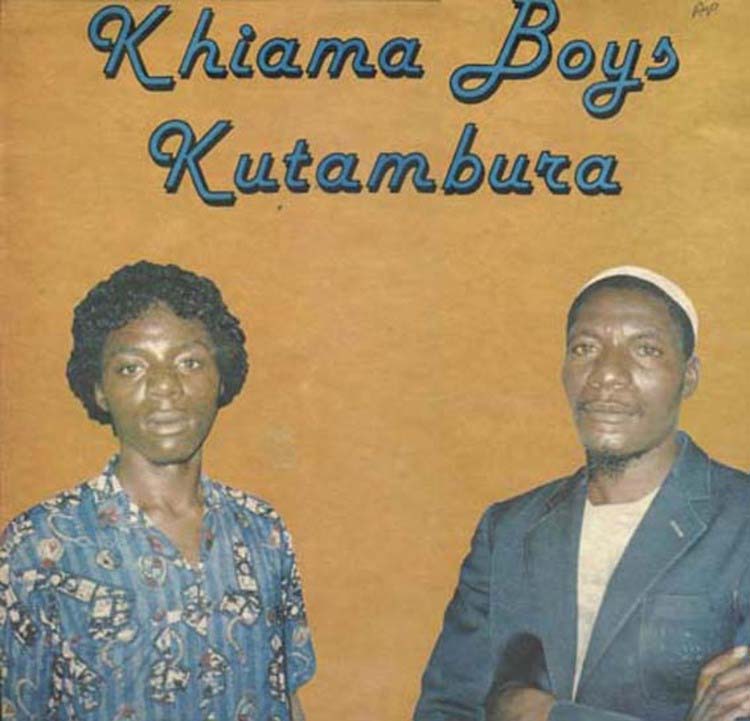
He then joined Vhuka Boys in Harare around 1980 before co-founding Khiama Boys, his current band, in 1984.
The group was made up of the now late Cephas Karushanga, Levison Chakanyuka, the late Tineyi Chikupo, Alick Macheso, System Tazvida, and wife Margaret Gweshe. These iconic figures later shaped the music trajectory in Zimbabwe as they became household names.
In 1997, the Khiama Boys split, and Alick Macheso formed Orchestra Mberikwazvo, which would go on to become one of Zimbabwe’s most popular groups.
During this period, Zakaria took a step back from music to focus on his work as a haulage truck driver.
However, he made a comeback in 2003 and started to release albums.

Some of the group’s hit songs include “Mabhauwa”, “Mabvi Nemagokora”, “Chikumbiro”, “Mazano”, “Tsamba”, “Ida anokuda” and “Zomvelamvela.”
While university graduates are still dreaming of owning a car, Madzibaba, a Grade 7 school dropout, is driving a 2024 Toyota Fortuner he was recently gifted by the businessman Wicknel Chivayo.
“I had never received such an expensive gift in my life, and it’s a testament to the generosity of Wicknel Chivayo. Businesses need to support the music industry, and this gesture should inspire others to follow suit.
“Without this kind of support, it’s difficult for musicians to pursue their passions and achieve success.”
The Khiama Boys frontman has seen it all and matured musically such that he does not feel threatened by the new crop of musicians.
While many artistes of his age have struggled with fame and fallen victim to its perils, Zakaria has been able to remain grounded for decades.
“In order to be successful in the music industry, discipline and faith are essential. You have to stay focused and prioritise your relationship with God above all else.”
While many people retire from the music industry by age 65, Zakaria has no plans to slow down.
In fact, he says that he will be with music “till death do us apart”.
Despite clocking nearly half a century in the music industry, Madzibaba is still as energetic as ever.
“I have just turned 68, and I still have the energy to play for hours. I can perform for up to four hours non-stop, and afterwards I can play for another hour. I’m grateful to have such stamina and energy at my age.”
The sungura kingpin is busy crafting new tunes and working on his 30th album, which he plans to release in June.
“I am still in the process of writing, so I have not decided on a final track list, but I am aiming for six tracks.”
Throughout his life, Zakaria has remained committed to sobriety and has been influenced by a variety of religious traditions.
From his roots as a Muslim to his conversion to Roman Catholicism and Johane Masowe Apostolic Church and finally to the pentecostal His Grace International Ministries Church, he has always been on a spiritual journey.
“Being a Madzibaba was part of my spiritual journey, but I stopped fellowshipping there in 1999 and I now go to His Grace International Ministries Church.
“Though I no longer worship with the Johane Masowe Apostolic Church, the nickname ‘Madzibaba’ has become a part of my trademark.
“My bald head and beard are just for fashion and have nothing to do with my religion.”

Despite the success of his many albums, Zakaria has not received the recognition he deserves from the music industry.
While his achievements are there for everyone to see, he has won few awards, which is surprising given his hard work and success.
However, the veteran composer and singer’s fortunes have recently turned for the better as evident by the latest gift worth over US$85 000, a gesture that demonstrates his enduring influence and popularity.
Despite all these obstacles, the Senior Lecturer lives a relatively humble life.
He owns a house in Chitungwiza and Norton, and drives the latest Toyota Fortuner and a Mazda BT-50, both gifts from others in the industry.
In 2008, Gramma Records gifted him the Mazda as part of their efforts to retain talented musicians.
Despite his long and illustrious career, he is often overlooked in favour of more well-known artistes.
But make no mistake – Madzibaba is a force to be reckoned with.