Online Reporter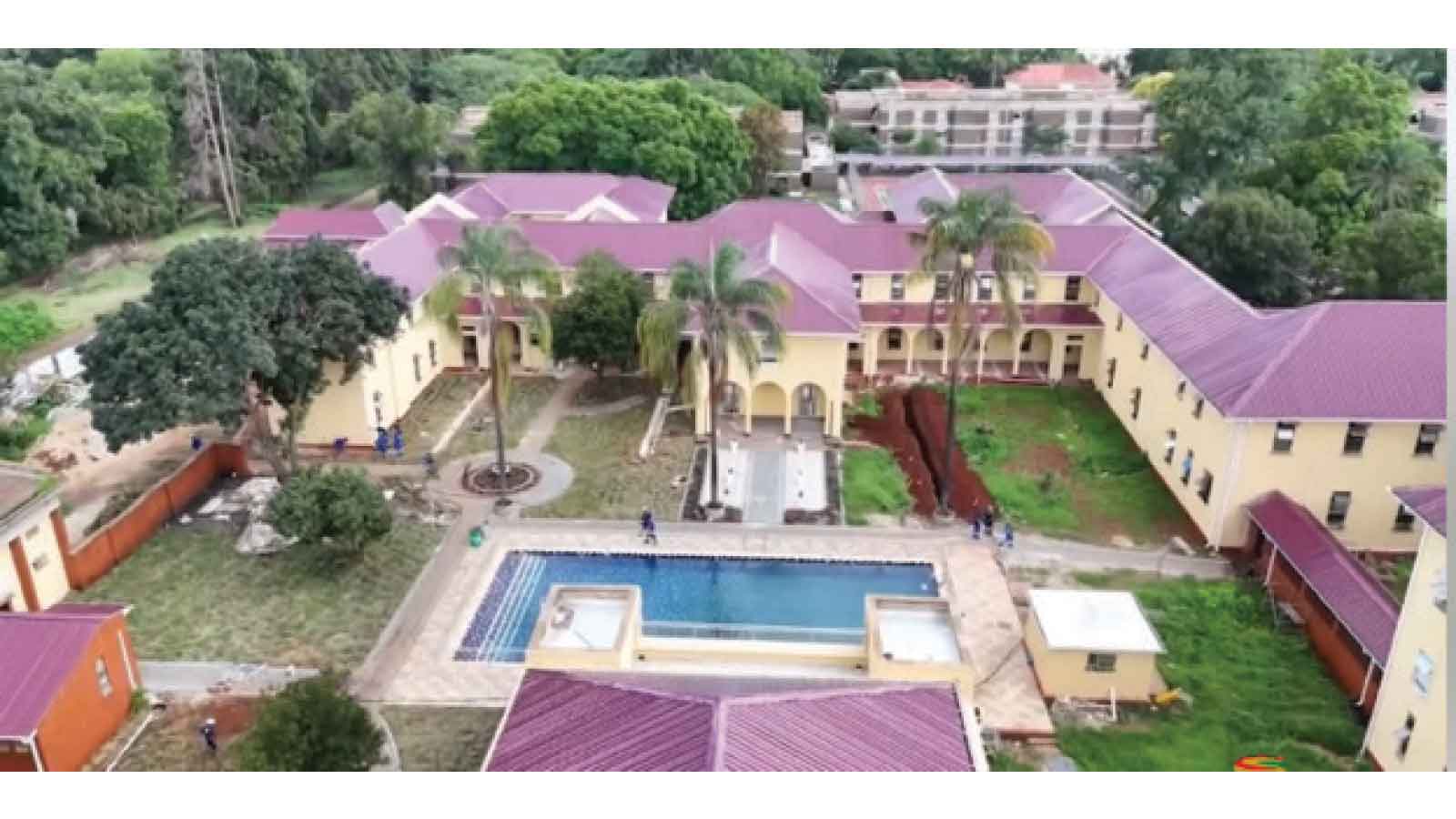
Richard Muponde-Zimpapers Politics Hub
Zimbabwe’s march towards Vision 2030 is anchored on a clear understanding that modern infrastructure is the lifeblood of national development and economic renaissance.
While roads, energy and industrial assets often dominate the discourse, healthcare infrastructure occupies a uniquely moral and strategic space.
President Mnangagwa’s Presidential Hospital Rehabilitation Programme reflects a leadership conviction that no nation can prosper when its hospitals mirror decay rather than dignity.
The programme situates healthcare modernisation as a core pillar of national transformation, inseparable from economic growth, human capital development and social justice.
For decades, Zimbabwe’s public health institutions bore the heavy scars of sustained neglect.
Major referral hospitals such as Parirenyatwa Group of Hospitals and Sally Mugabe Hospital, among others in both urban and rural areas, deteriorated into distressing conditions defined by dilapidated infrastructure, obsolete equipment and overstretched accommodation facilities.
The decay was systemic, rooted in years of deferred maintenance and inadequate capital investment.
Once-proud centres of excellence became daily reminders of institutional fatigue, placing both patients and medical professionals in environments unfit for modern healthcare delivery.
The turning point arrived in June 2025 when President Mnangagwa conducted an impromptu visit to Parirenyatwa Group of Hospitals and Sally Mugabe Central Hospital.
Rejecting ceremonial inspections, the President confronted the reality on the ground.
This decisive act of leadership reaffirmed his long-standing governance philosophy of hands-on engagement and accountability.
Consistent with his oft-stated principle of “leaving no one and no place behind,” the visit catalysed immediate corrective action, giving birth to the Presidential Hospital Rehabilitation Programme.
The neglect of public hospitals had far-reaching consequences.
Some Zimbabweans were forced to seek medical assistance outside the country, not by choice but by necessity.
South Africa and other destinations became default referral centres, draining scarce foreign currency and undermining national confidence in domestic systems.
This exodus symbolised a deeper crisis — a perception that the State had lost the capacity to care for its people. Reversing this trend became both a healthcare and sovereignty imperative for the Second Republic.
Parirenyatwa as flagship of a national reawakening
Under the Presidential Hospital Rehabilitation Programme, Parirenyatwa Group of Hospitals has emerged as the flagship of renewal.
The refurbishments of Adlam House, nurses’ accommodation and the Mbuya Nehanda Maternity Ward have transformed once-derelict spaces into modern, functional facilities approaching international standards.
The scale of the intervention underscores Government’s seriousness in restoring dignity to public healthcare.
During a recent assessment visit, Minister of Health and Child Care, Dr Douglas Mombeshora, confirmed the advanced stage of works.
“After touring, I can say Adlam House is 99 percent complete. What is just left is cleaning up and we should be good to go,” Dr Mombeshora said.
His remarks offered tangible confirmation that the programme is delivering measurable results rather than rhetorical promises.
Infrastructure renewal as human capital investment
The rehabilitation has expanded accommodation capacity, modernised utilities and improved training environments for nurses and medical students.
These upgrades are critical in strengthening the health workforce, improving morale and reducing skills flight.
Patients attending Parirenyatwa, which handles thousands daily, are already experiencing improved service delivery, reinforcing the link between infrastructure and quality of care.
Beyond Harare: A nationwide health sector transformation
Crucially, the Presidential Hospital Rehabilitation Programme is not a Harare-centric intervention. Across Zimbabwe, central hospitals, district hospitals and clinics in both rural and urban areas have been refurbished or newly constructed during the Second Republic.
Devolution funds have enabled provinces and local authorities to upgrade facilities in line with local needs, ensuring that modern healthcare is not confined to metropolitan centres.
This decentralised approach reflects President Mnangagwa’s development mantra “Nyika Inovakwa Neve Vayo / Ilizwe Lakhiwa Ngabanikazi Balo,” emphasising citizen ownership of national development.
President Mnangagwa has repeatedly underscored the need to restore public institutions to functional excellence, noting that development begins with fixing what already exists. In line with this thinking, the rehabilitation of hospitals represents a broader effort to reclaim State assets and reposition them as engines of service delivery.
The transformation of Parirenyatwa and other hospitals signals a decisive break from a culture of neglect towards one of maintenance, modernisation and accountability.
Globally admired health systems such as those in the United Kingdom, Germany, Singapore and Cuba did not emerge by accident.
They were built through sustained political will, long-term public investment and strategic collaboration with the private sector.
President Mnangagwa has consistently encouraged Zimbabwe’s private sector to complement Government efforts, whether through equipment procurement, infrastructure investment or structured public-private partnerships. Such collaborations expand capacity while reinforcing national ownership of strategic health assets.
The people’s role in building a resilient health system
The refurbishment programme also serves as a call to citizens to protect and sustain public infrastructure. Modern hospitals thrive when communities, professionals and institutions collectively safeguard them.
This participatory ethos aligns seamlessly with the Second Republic’s belief that development is a shared national responsibility rather than a State-only obligation.
The Presidential Hospital Rehabilitation Programme stands as one of the most consequential social infrastructure interventions of the Second Republic.
Through confronting inherited decay and replacing it with modern, dignified facilities, President Mnangagwa is reshaping Zimbabwe’s healthcare landscape in line with Vision 2030.
The programme is restoring confidence, reducing medical migration and affirming the principle that quality healthcare is a right, not a privilege. Indeed, the transformation underway confirms that Zimbabwe’s public health institutions are being elevated to top-class standards, laying a durable foundation for national well-being and inclusive development.