Nyasha Simbisai and Doris Mpala
FARMERS have planted more than 22 000 hectares of tobacco, representing an increase of 28 percent compared to the same period last year, as the 2026/27 season advances.
This comes as the Tobacco Industry and Marketing Board (TIMB) is urging farmers to invest in irrigation and to plant manageable hectares in line with available resources.
The latest Agricultural Development Advisory Services (ADAS) weekly update shows that farmers had planted 22 918 hectares of tobacco by October 30, compared to 17 867 hectares during the corresponding period last year.
A total of 19 998 hectares have been put under irrigation, while 2 920 hectares are under dryland crop.
Irrigated tobacco accounts for approximately 87 percent of the national planted area, reflecting the significant contribution of irrigation to the current production programme.
Mashonaland East is leading other provinces with 7 949 hectares put under tobacco. These comprise 7 271 hectares under irrigation and 678 hectares under dryland production.
Manicaland follows with 7 148 hectares planted, comprising 6 442 hectares under irrigation and 706 hectares under dryland production, while Mashonaland Central has recorded 4 274 hectares, comprising 2 755 irrigated hectares and 1 519 hectares under dryland production.
Farmers in Mashonaland West have so far planted 3 530 hectares, made up of 3 513 hectares irrigation crop and 17 hectares dryland tobacco.
Matabeleland North has recorded 17 hectares of irrigated tobacco.
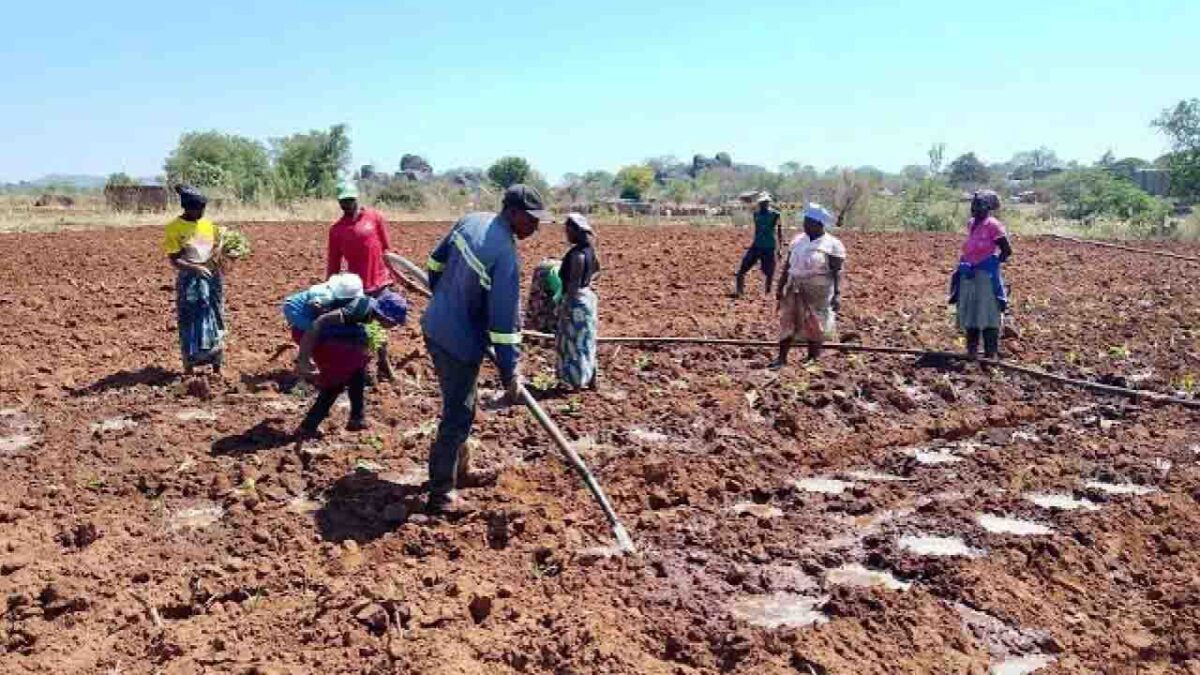
Meanwhile, irrigated tobacco growers are presently tending to their crop, while the major activities are watering and hardening seedbeds for the dryland crop.
Zimbabwe Tobacco Growers Association (ZTGA) president Mr George Seremwe said dryland tobacco farmers were currently hardening their seedbeds to ensure seedlings were ready for transplanting once sufficient rains are received.
“Farmers are also preparing ridges, mobilising inputs and maintaining their seedbeds as part of efforts to ensure a successful start to the season.
“The challenge is the dry spell. Water bodies are also a bit of a challenge, and the weather is sometimes too hot and destroying the crop in some areas,” said Mr Seremwe.
He said rainfall patterns would play a critical role in determining both quality and output.
With the 2027 tobacco production season underway and El Niño-related dry conditions posing some risk to crop development, TIMB encouraged growers who can afford to invest in irrigation and adopt moisture conservation practices.
“Irrigation reduces dependence on unpredictable rainfall, promotes uniform crop growth, improves leaf quality and helps growers achieve higher weight per hectare,” said TIMB.
Tobacco Farmers Union Trust president Mr Edward Dune said dryland tobacco seedling maintenance remained a major activity, with most farmers also engaged in land preparation.
“High capital and input costs continue to affect smallholder farmers.
“Despite the El Niño phenomenon, tobacco farmers remain hopeful that the crop will still rebound from the price collapse seen last season. We just keep our fingers crossed that good quality leaf will be delivered this season,” Mr Dune said.
He urged farmers to observe recommended agronomic practices to produce quality leaf that meets the requirements of their preferred markets, particularly as most of the tobacco crop was grown under contract arrangements.
Mr Dune said TIMB, as the industry’s regulator, had established a minimum compliance standards framework covering input packages and other production requirements.
“We need our farmers to understand the whole environment so that we are able to mitigate against any vagaries that may arise as we navigate forward,” he said.
Tobacco remains one of the major agricultural export commodities, contributing to foreign currency generation, employment and livelihoods across the agricultural value chain.