Online Reporter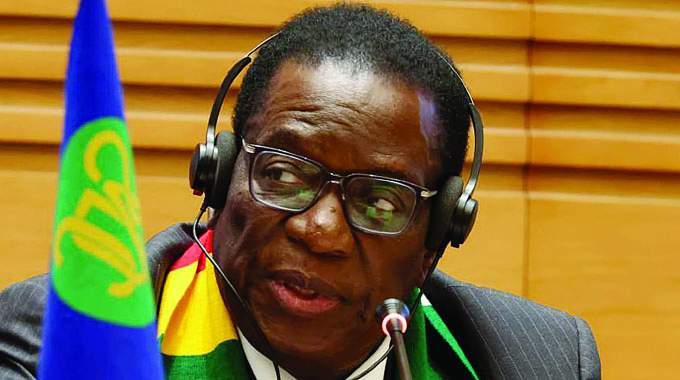
Marilyn Mutize, Correspondent
As Zimbabwe’s tenure at the helm of the Southern African Development Community (SADC) nears its conclusion, there is cause to reflect on what has been a momentous year for the country and the region.
President Mnangagwa officially assumed the SADC Chairmanship on August 17, 2024, during the 44th Ordinary Summit of SADC Heads of State and Government held in Harare, marking a symbolic and strategic return of leadership to Zimbabwe. What followed was a year defined not by rhetoric, but by quiet, determined action focused on industrialisation, food security, peace and regional unity.
The theme adopted by Zimbabwe during its chairmanship, “Promoting Innovation to Unlock Opportunities for Sustainable Economic Growth and Regional Integration,” was more than just a slogan; it was a strategic call to action. It signalled Zimbabwe’s intent to steer the bloc toward self-reliance, knowledge-based economies, and the deepening of regional value chains.
This vision aligned strongly with SADC’s Industrialisation Strategy and Roadmap (2015–2063), which aims to transform the region from a primary product exporter into a knowledge-driven industrial hub.
Throughout its tenure, Zimbabwe placed industrial development at the core of its agenda. It promoted value addition across sectors, such as mining, agriculture and manufacturing, emphasising the importance of beneficiation in mineral-rich economies. Zimbabwe convened several technical meetings and ministerial engagements aimed at fast-tracking the implementation of regional value chains, while advocating for the removal of non-tariff barriers that hinder intra-SADC trade.
The emphasis was not just on growth but on inclusive development that uplifts communities across borders.
A key strength of Zimbabwe’s leadership lay in its insistence on regional ownership of development pathways.
President Mnangagwa consistently called for increased investment in innovation, skills development, and the harnessing of Africa’s youthful population. The chairmanship actively supported regional science and technology initiatives, advocating for research collaboration, among SADC universities and innovation hubs. While such efforts may not make daily headlines, they lay critical foundations for long-term competitiveness and resilience.
Another hallmark of Zimbabwe’s chairmanship was its attention to food security, particularly in light of worsening climate shocks across the region. Drought, erratic rainfall, and extreme weather events placed millions at risk of food insecurity, prompting Zimbabwe to advocate for stronger early warning systems, sustainable irrigation and joint grain reserves. The Government’s domestic investments in climate-smart agriculture and the Pfumvudza/Intwasa programme served as examples of low-cost, high-impact interventions that could be replicated across the region.
Under Zimbabwe’s guidance, the SADC Regional Agricultural Policy gained new momentum. Member states were urged to enhance collaboration on cross-border food movements, reduce post-harvest losses, and increase domestic financing of agriculture. Zimbabwe’s leadership helped reposition food security not just as a humanitarian concern but as a central pillar of regional stability and economic resilience.
In terms of political stability and governance, Zimbabwe approached its chairmanship with a calm, diplomatic style that prioritised dialogue and consensus-building. During its term, SADC monitored elections in several member states, including the Democratic Republic of Congo and Madagascar. Zimbabwe supported the deployment of SADC Election Observation Missions (SEOMs), reinforcing the bloc’s commitment to transparency, democratic values and regional peace.
President Mnangagwa’s administration also continued to advocate for the lifting of illegal economic sanctions imposed on Zimbabwe, framing them as detrimental not just to the nation but to the broader SADC economy. The bloc reaffirmed its solidarity in this regard, having already designated October 25 as “Anti-Sanctions Day,” further entrenching regional support for Zimbabwe’s call.
Importantly, Zimbabwe’s chairmanship coincided with growing calls for deeper financial integration within the region. The country pushed for more effective implementation of the SADC Free Trade Area, the strengthening of the SADC Development Fund, and alignment with the broader African Continental Free Trade Area (AfCFTA). As global economic headwinds intensified, Zimbabwe stressed the importance of intra-African trade and regional resilience in the face of external shocks.
Infrastructure development also featured prominently during the chairmanship. Zimbabwe advocated for greater investment in energy, transport corridors and digital infrastructure as enablers of trade and industrialisation.
Progress was made on regional projects, such as the North-South Corridor and the Southern African Power Pool, although financing constraints remain a significant challenge.
What distinguishes Zimbabwe’s SADC chairmanship is not so much its grandeur but its measured pragmatism. There were no sweeping declarations or dramatic policy shifts. Instead, there was a focus on continuity, institution-building, and the patient advancement of regional goals. Zimbabwe proved that effective regional leadership does not require flamboyance; it requires consistency, clarity of vision, and an understanding of regional dynamics.
As Zimbabwe prepares to hand over the SADC chairmanship to another member state during the upcoming 45th SADC Summit, it does so having demonstrated capable and focused leadership. Its tenure has helped consolidate key regional processes, renewed commitment to industrialisation and food security, and provided steady support for peace-building initiatives.
The challenge now will be to sustain the momentum built under Zimbabwe’s leadership. Industrialisation must translate into jobs. Food security must go beyond policy into practical resilience. Peace must be maintained through stronger regional co-operation. And SADC’s place in the global economy must be elevated through trade, innovation and co-operation.
Zimbabwe’s SADC chairmanship will be remembered as a year of steady, focused and effective leadership. It was a year in which the country reasserted itself as a credible actor on the regional stage, proving that even amid domestic pressures, it could contribute meaningfully to collective progress. The baton may soon pass, but Zimbabwe’s imprint on SADC’s path forward will endure.