Online Reporter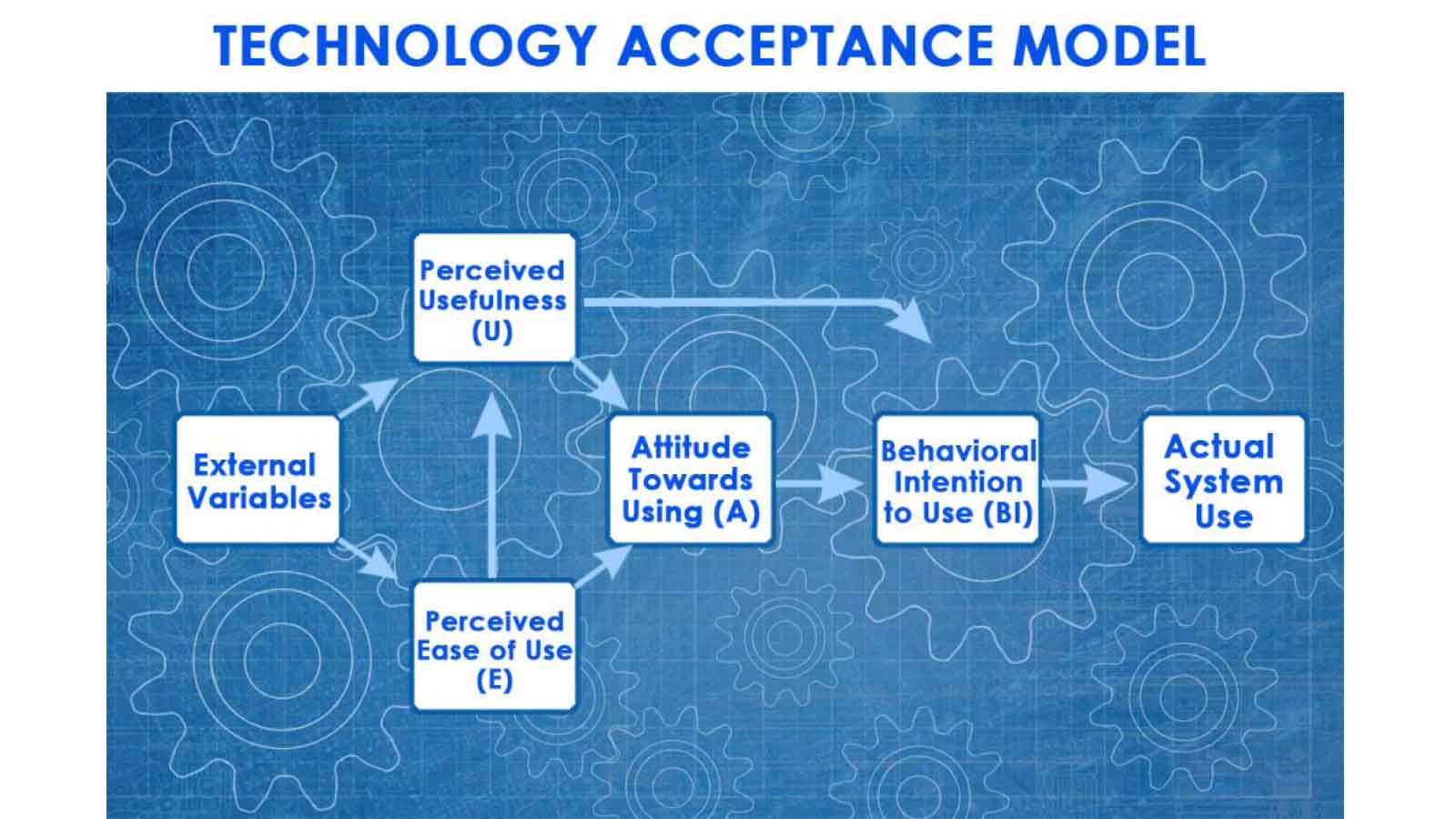
Godknows Hofisi
Business Law
In this article, I look at technology and its adoption by individuals and organisations.
Space permitting in the future, I wish to write more on Artificial Intelligence (AI) as its practical realities on businesses and life generally can no longer be ignored. AI is now part of us and we have to embrace it.
Theories on the adoption of technologies
There are existing theories in academic research which explain why individuals and organisations adopt new technology at different rates.
The same theories are being extended to the adoption of Artificial Intelligence (AI). I summarise below some of the key theories to help readers of my articles, policymakers, business leaders, and educators design better strategies for technology adoption.
Diffusion of Innovations (DOI) theory
This explains how new ideas and technologies spread through populations over time.
According to DOI, the rate of adoption depends on the following five key attributes of the innovation:
- Relative advantage, whether the new technology is better than what it replaces.
- Compatibility, if the technology fit with existing values, experiences, and needs.
- Complexity, whether the technology is easy to understand and use.
- Trialability, if people can experiment with the technology before committing.
- Observability, whether the benefits are visible to others.
DOI also identifies different types of adopters, from “innovators” who eagerly try new things to “laggards” who adopt only when necessary. This theory is especially useful for understanding how technologies spread across industries, communities, or countries.
Technology-Organisation-Environment (TOE) Framework
When the focus shifts from individuals to organisations, the Technology–Organisation–Environment (TOE) framework becomes particularly relevant.
TOE posits that technology adoption in firms is shaped by three contexts, as explained below.
Technological context
The characteristics of the technology itself, such as its cost, compatibility with existing systems and perceived benefits.
Organisational context
Internal factors like firm size, management support, financial resources, and employee skills.
Environmental context
External pressures, including competition, customer demands, regulatory requirements and industry norms.
By way of example, according to the TOE framework, a Zimbabwean manufacturing firm may adopt AI-powered inventory management not only because the technology is advanced (technological), but also because leadership supports digital transformation (organizational) and competitors are already using similar tools (environmental). TOE is widely used in studies of enterprise systems, cloud computing and emerging technologies like artificial intelligence.
Resource-Based View (RBV)
Commonly viewed as looking at internal capabilities, the RBV adds another layer by focusing on a firm’s unique resources and capabilities. According to RBV, companies that possess valuable, rare and hard-to-imitate resources—such as skilled data analysts, robust IT infrastructure, or strong data governance — are more likely to successfully adopt and leverage new technologies. RBV helps explain why two firms facing the same external pressures may have very different adoption outcomes based on their internal strengths.
Institutional Theory
This is considered to look at external pressures. Institutional Theory emphasises how organisations respond to external expectations. Firms often adopt technologies not just for efficiency, but to gain legitimacy.
This can happen through the following:
- Comply with regulations or industry standards (coercive isomorphism or pressure).
- Conform to professional norms or stakeholder expectations (normative isomorphism or pressure).
- Imitate successful peers under uncertainty (mimetic isomorphism or pressure).
For example, in sectors such as financial services, where trust and compliance are critical, institutional pressures can be powerful drivers of technology adoption.
Technology Acceptance Model (TAM)
This model is one of the most widely used to explain technology adoption at the individual level. It suggests that two key beliefs determine whether someone will use a technology.
- Perceived usefulness (PU), whether the tool will help the person do his or her job better.
- Perceived ease of use (PEOU), whether the tool will be easy to learn and operate.
If users believe a technology is both useful and easy, they are more likely to form a positive attitude toward it, intend to use it, and ultimately adopt it.
Theory of Planned Behaviour (TPB)
This theory expands on TAM by adding social influence (what others think) and perceived behavioural control (whether users feel they have the resources and ability to use the technology).
TPB is particularly helpful when social norms and access to training or infrastructure play a major role.
Unified Theory of Acceptance and Use of Technology (UTAUT)
UTAUT integrates eight models, including TAM, TPB and DOI, into a unified framework. Core determinants of usage intention and behavior are:
- Performance expectancy (similar to PU).
- Effort expectancy (similar to PEOU).
- Social influence.
- Facilitating conditions (infrastructure, support, compatibility).
UTAUT also considers moderating factors such as age, gender, experience and whether use is voluntary.
UTAUT2
UTAUT2 adds hedonic motivation, price value, and habit for consumer contexts and is useful for consumer technologies.
Conclusion
Technology adoption is a complex process influenced by technological features, organisational capabilities, environmental pressures, and individual perceptions. By drawing on theories like DOI, TOE, RBV, Institutional Theory, TAM, TPB, and UTAUT, stakeholders can better anticipate barriers, design effective interventions and accelerate the uptake of innovations that drive economic and social progress. As technologies like artificial intelligence continue to evolve, these frameworks will remain essential tools for navigating the digital future.
Disclaimer
This simplified article is for general information purposes only and does not constitute the writer’s professional advice.
Godknows (GK) Hofisi, LLB(UNISA), B.Acc(UZ), Hons B.Compt (UNISA), CA(Z), ACCA (Business Valuations) MBA(EBS, Heriot- Watt, UK) is the Managing Partner of Hofisi & Partners Commercial Attorneys, chartered accountant, insolvency practitioner, commercial arbitrator, registered tax accountant and advises on deals and transactions. He has extensive experience from industry and commerce and is a former World Bank staffer in the Resource Management Unit. /He writes in his personal capacity. He can be contacted on +263 772 246 900 or ghofisi@ hofisilaw.com or gohofisi@ gmail.com. Visit www//:hofisilaw.com for more articles.