Londile Moyo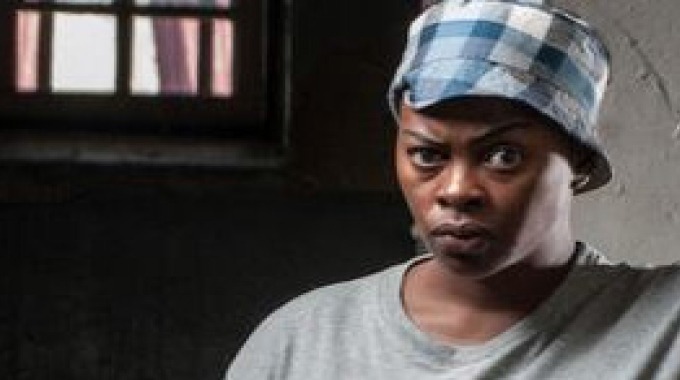
Melissa Mpofu/Mbulelo Mpofu
“For the sake of my five children, I have resolved not to accept roles and characters that require me to act nude, unless it’s a historical piece. This is because I am a mother — mother to my children, mother to the industry and mother to the nation — and that’s a huge responsibility.”
With that firm declaration, South African acting powerhouse Dawn Thandeka King, who spent the past two weeks in Zimbabwe attending the Imiklomela KaDakamela Cultural Festival in Nkayi and exploring the country, set the tone for a deeply personal and reflective masterclass held at Amakhosi Cultural Centre in Bulawayo last week.
The event, titled Masterclass with Dawn Thandeka King, went beyond a standard industry engagement, unfolding into an emotional exchange, mentorship platform and cultural affirmation.
A mother of five, King — known for her roles in Uzalo, Lockdown and Shaka iLembe — said her on-screen choices are inseparable from her identity as a parent and role model.
“It’s very important as an actor to identify yourself. Some actors are neutral, they can do anything. I haven’t had roles I’ve refused to take. But in my recent role on Black Gold (BET telenovela), where I played Florence, there were certain things that I was concerned about. There were certain things that made me cringe as a mum, which I knew I wouldn’t be comfortable doing, like the half-nakedness.
“Then I realised as you grow older and become a mom of teenagers, you have to think not only about yourself, but them too. I’ve realised now that I won’t take roles that require me to be naked in any way, not unless it’s half naked for a historical production, maybe in a role where I’m a slave, but nothing sexual,” she said.
“I need not subject my children to any harm and I won’t take any roles that require me to strip down. I’m glad that I haven’t been offered such a role in the past.”
Her children, she said, remain largely unaffected by her fame and are more interested in spending time with her than anything else.
“It bores them to death when people come to me when we’re out, maybe at the mall or restaurant and want to take pictures. They feel like telling people, ‘it’s not her, it’s her twin’”, because all they want is time with their mom.
“This is because I’m a mom in different ways – industry mom, nation’s mom and my kids’ mom. Each role I play has a different aspect to it.”
She also encouraged parents to support children pursuing creative careers.
“What we do as creatives is a calling and a passion. You can pay for someone to study and become a doctor, but this calling haunts you. That person will not be happy. As a parent, you’ll have a doctor with money but a very unhappy person because it’s something that lives within you that you need to express, as art is a form of expression. So, if a person wants to explore it, just allow them. Don’t be the one to determine whether it pays or not.”
King went on to share how she treats her acting career as a calling rather than a profession.
“Acting is a calling, it’s not just a job. I don’t work; my duty is to heal people — mentally, physically and emotionally. When you watch me, something happens to you, it moves you, motivates you and inspires you to be a better version of yourself,” she said.
Her journey into acting, she revealed, was born out of personal struggle and spiritual awakening.
“I left the corporate world to pursue my calling after constantly falling ill. I was always depressed because I wasn’t doing what I was called to do. I had to embrace my gift of healing through acting,” she said.
She further opened up about her spiritual path as a traditional healer.
“I am sure most, if not all of you, know that I’m a traditional healer, ngathwasa mina. It’s a calling to me as a spiritual person.”
Reflecting on her breakthrough in the acting industry, she recalled her early days on Mzansi Magic’s Inkaba in 2012, where she played a silent supporting role.
“I was meant to be a featured extra. When you are cast like that, you don’t say anything, you’re just there, passing, but you’re on set all the time. When I booked this job, I worked with legends only, the likes of Baby Cele. What I appreciated about not speaking for the first couple of weeks was that I was learning how to be on set as someone who was coming from a theatre background.
“Two months in, the producer said, ‘You cannot have a maid in the house that doesn’t say anything. They love gossip’. I was then given lines I wasn’t originally meant to have. I moved from a featured extra to a supporting cast member as I now had a storyline.
“Because I can speak Xhosa, I asked that they write my lines in Xhosa as I wanted to use Zulu when I eventually get a lead role. At that point, I was just speaking, not knowing what would happen in the future.
“As fate would have it, that lead role came, and it was the MaNgcobo that people know today and love. So I manifested that role two years before.”
She said her portrayal of MaNgcobo on Uzalo led to a stream of maternal roles across productions, including DiepCity and Nkalakatha: The Life of Mandoza.
“From my role as MaNgcobo, I always have a child or children. What I get to show audiences is different types of mums and all this has nothing to do with me being a mom. I’m not the same mom to my children that people see on television. My five kids don’t take the mum roles I play on TV seriously,” she said.
King urged aspiring artistes to embrace patience and humility in their journeys.
“Patience and humility are very important in the arts. I didn’t wake up one day as uMaNgcobo. I had to work my way up from a supporting actress to a lead role, and that takes patience. I was trained in theatre, not film, and the two are different, but I’m grateful to have mastered acting for the camera and to be consistently working, which isn’t always the case for many,” she said.
Beyond performance, King highlighted structural challenges facing African actors, particularly the lack of royalties.
“It’s a painful reality that we pour our blood, sweat, and tears into roles that live on for years, yet we don’t see the royalties that reflect that longevity. The African film fraternity must evolve. We cannot continue to be a continent that celebrates its stars while leaving them financially vulnerable once the cameras stop rolling.
“We need to get paid for on-demand content even after the shows have been done.”She revealed she is building multiple income streams beyond acting, including her fashion brand.
“‘Izandla by Dawn Thandeka King’ (a thriving fashion brand specialising in handmade crochet clothing) is a very personal initiative aimed at expanding my income streams. I’m very passionate about it. I have to take care of my children, and people should know that every hat ordered carries my personal touch — I crochet them myself.
“I also work with Indalo Enhle Herbs and Beyond, where I promote healthy living. That’s how I support my children besides acting,” she said.
Bulawayo Deputy Mayor Councillor Edwin Ndlovu, who was among those who interacted with King, proposed future collaboration.
“Bulawayo is the cultural capital for a reason, and seeing the synergy between our local talent and a giant like Dawn Thandeka King confirms our vision. We are officially inviting her back to grace the Bulawayo Arts Festival in June, this city is now her home,” he said.
Speaking on the sidelines of the masterclass, King said engaging with Bulawayo creatives completed her visit to Zimbabwe.
“As an artiste, I think the most important thing when you visit a place is to share yourself with other artistes in the area you are visiting. So this has completed and fulfilled my journey to Bulawayo. It’s been interesting because artists everywhere want to do better, but we’re unfortunately not in a position to do as well as our overseas counterparts.
“We’re all hoping that our industries grow and are taken seriously, and that we’re able to make a proper living out of the industry because this is our passion and calling.”
King’s visit to Bulawayo followed her recognition at the Imiklomelo kaDakamela Cultural Festival in Nkayi, where she was honoured for her contribution to African storytelling. Reflecting on her rural experience, she said it offered her a deeper understanding of Zimbabwe.
“When I came to Zimbabwe, I just wanted to experience life in Bulawayo — kwamfazi utshay’indoda — apart from attending Chief Dakamela’s awards. I really enjoyed myself and appreciate that the first part of Zimbabwe I experienced was the rural areas.
“We often come to cities and never really interact with people in rural communities, so I was happy to have gone to Nkayi. The road is ‘interesting’, but we hope that next time, next year, it will be much easier to travel on. It’s been a very beautiful stay,” she said.
She added that she hopes to return to Zimbabwe with fellow South African actors for a workshop to nurture local talent.
“Being invited by Chief Dakamela to be honoured for the work I do, and to see how people love my work, tells me I must go home and think of a strategy to come back and maybe grow the industry this side in the best way that I can and share the expertise I have with those who would like to be in the industry,” she said.
King’s visit to the country was punctuated by lighter moments, as she immersed herself in its lifestyle. She interacted with local creatives, dined at both upmarket and city “ghetto” spots in Bulawayo, toured Matobo and experienced rural life in Nkayi.
She was also presented with Bosso merchandise, which she proudly wore while expressing her admiration for Highlanders FC. The phrase hantsho phela emerged as her favourite, one she frequently used during her interactions with locals.


 Online Reporter