

 admin
admin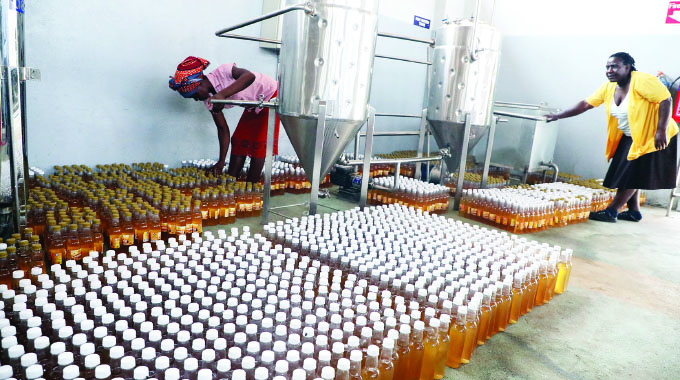
Farai Dauramanzi recently in Mwenezi
In most rural set-ups in Zimbabwe, women are the most affected by the effects of climate change as they are left to look after the family in the countryside while men travel to the cities and across the borders in search of greener pastures.
Nonetheless, the adding of value to natural resources such as mapfura/marula and madora/mancimbi in Masvingo’s Mwenezi District is helping women to fight climate change in the perennially dry region.
Mwenezi District has a total population of 209 327 of which 112 314 are females while 97 013 are males.
The recent processing of wild fruits, mapfura fruits, which are abundant in Mwenezi but used to be worthless until the opening of the mapfura Industrial Park in Rutenga by President Mnangagwa last year, has brought relief to women in the district as they are now cashing in on the abundant natural resource.
Villagers who supply mapfura to the Mapfura Industrial Park reportedly supply over 100 000 tonnes of the fruit and cashing in over US$5 million dollars per season.
Crop production in Mwenezi has not been profitable as the area falls under farming region 4 and 5 which receives insignificant rain.
Most farmers in the region engage in livestock production and also grow traditional grains.
This is however becoming difficult as pastures are deteriorating rapidly due to the effects of climate change.
Mwenezi District agronomist, Mr Jemitias Denhere said there was a drastic shift in the rainfall patterns due to climate change which has seen the area receiving less than 300mm of rainfall from the previous averages of 450mm per annum.
“The rainfall patterns in Mwenezi District are now erratic making traditional grains and livestock production difficult. Cattle raring used to be the backbone of this region but grazing land is being affected and we are now experiencing cattle poverty deaths around October, November, and December,” said Mr Denhere.
However, the opening of the Mapfura Industrial Park and the coming in of other players who buy the mapfura fruits has come as a blessing to many women in Mwenezi.
The women are now reaping enormous rewards from selling the indigenous fruits which is mostly used for the production of juices, alcoholic beverages, cosmetics, edible oils, and stock feeds.
Mwenezi Rural District Council’s executive officer for agriculture and environment Mrs Kudzai Sirewu said that the value addition of natural resources especially mapfura had helped many women to mitigate the effects of climate change.
“There are various companies that come to buy the fruits from groups in the area and this is going a long way in improving the women’s lives.
“Most women are now able to afford basic commodities and sending their children to school using proceeds from the fruits.
“Though climate change is affecting the area, we are happy that those who are involved in the harvesting of the natural fruits are now realising huge benefits,” explained Mrs Sirewu.
One of the women who supply mapfura fruits to the Mapfura Industrial Park plant, Mrs Jane Matutu from Village 1 Old in Chief Neshuro’s area said the commercialisation of the abundant natural resource had greatly improved her life.
“This area is a dry region and as women, we cannot engage in any form of crop production and this makes our lives very difficult.
“The commercialisation of the mapfura fruit is now helping a lot of women as we are getting good returns. I bought a bed, which I did not have, using my proceeds from selling Mapfura to the plant,” said Mrs Matutu.
Another woman who is also the village head of Bonda Village 10 in Limpigia Range, Mrs Loyce Dube thanked applauded Government for encouraging the value addition of natural resources for the betterment of communities.
“Our area is in a dry region which makes crop farming difficult and we are grateful to Government for setting up the mapfura plant which has gone a long way in mitigating the dire effects of climate change among women in this area.
“The selling of mapfura has also helped in reducing cases of Gender Based Violence as most women are now working for themselves and not bothering their husbands for money to buy basics and even sending their children to school,” said Mrs Dube.
The fruits are not only benefiting women buts some men have who used to rely on livestock production are also now into mapfura harvesting during the rainfall season.
Mr Julius Masukume of Rineti Village 8 is one of the livestock farmers who have also diversified their business to maximise returns.
“I used to shun harvesting mapfura, but I have since changed my mind after realising the value of the natural fruits. I had some cattle which died due to lack of grazing land and am now full time into harvesting and selling mapfura during the rainy season,” said Mr Masukume.
Some women from Masvingo are also benefiting from selling mopane worms (madora/mancimbi) which are harvested in some parts of Mwenezi.
Mrs Promise Sibanda who lives in Bubi, an area that is at the border of Masvingo and Matabeleland South said that she earns a living from selling madora/mancimbi which she harvests in her field.
“Climate change has greatly affected our farming activities but, people in this area have been spared due to the availability of mancimbi which we harvest during December and March. We preserve them by drying them so that we sell them throughout the year.
“Sometimes we even travel to faraway places such as Gwanda to maximise our catch. Selling mancimbi has accorded me a decent lifestyle and I no longer feel the effects of climate change,” said Mrs Sibanda.
Meanwhile, in Mbire another district which is in climatic region 5 and faces similar climate change issues such as Mwenezi, women in the area are engaged in activities such as livestock production, bee keeping, fish farming and green gardens which are meant to help women fight the effects of climate change.
Mrs Rose Kayupe of Nenyasha livestock project in Mbire said that a number of women in her area had ventured into bee-keeping because it was climate smart.
“Bee-keeping has proved to be a lucrative business as it does not require expensive inputs,” she said. “A number of women do not have access to capital and cannot afford other major businesses, but with bee keeping one can start with as little as three beehives.
“We used to grow crops but the yields were low due to poor rainfall. Now we produce honey and sell to other people even in Harare and get meaningful profits. Some of our group members have more than 40 bee hives and these realise high yields and one can buy goats using the proceeds.”
In other countries such as Mozambique, some women have managed to combat the effects of climate change through programmes such as the, “Expanding Women’s Role in Agricultural Production and Natural Resource Management,” to combat climate change and improve food security in Mozambique.
*This story was funded by the Women in News SIRI Real Grant Project



 Online Reporter