Online Reporter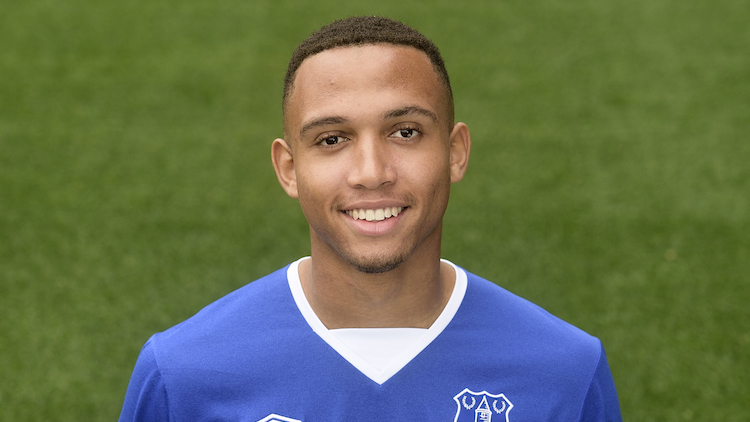
SEVERAL established African teams ,like Nigeria, did not qualify for the 2026 FIFA World Cup despite an expanded format.
The Africa Cup of Nations, which begins this weekend, offers a different challenge and a chance to build.
For a number of countries that missed out on the 2026 World Cup, the 2025 Africa Cup of Nations (AFCON) which kicks off tomorrow in Morocco, not only offers a swift chance at a measure of redemption but also a chance to start re-building and preparing for the global tournament when it next comes around in 2030.
Teams such as Nigeria, Burkina Faso, Cameroon, Zimbabwe, Benin, Sudan and others will stay home next summer, even though Africa saw its allocation at next summer’s World Cup expand to nine automatic places, up from five in 2022. They will, however, all be in Morocco.
There are 24 teams competing at AFCON, meaning that competition is fierce. But success in the next few weeks — whether that means lifting the trophy or just getting out of the group stage — will at least put smiles back on the faces of fans.
“It’s massive,” Zimbabwe international Brendan Galloway, who plays for Plymouth Argyle in England, told DW. “We are really looking forward to it. We worked so hard in the qualifiers, we had a tough group. So to qualify, we are excited to get there. Hopefully, a lot of Zimbabweans can join us and support us.”
Being placed with Egypt, the most successful AFCON nation with seven titles, as well as South Africa and Angola, teams that have — unlike Zimbabwe — World Cup experience, means that it is going to be tough. Getting out of the group stage for the first time would be a major step in the right direction, especially as Zimbabwe, banned by FIFA in 2022 due to government interference, was unable to compete at the last AFCON.
“We have a tough group, but we are excited about our chances of progressing. The next step is that we want to qualify for the World Cup,” said Galloway. “We had a disappointing campaign but we learned a lot of lessons from that. If we do ourselves proud, we can build confidence going into the next World Cup qualifying and really have a go.”
That is the plan for many nations according to Stephen Constantine, former head coach of Sudan and Rwanda.
“Teams must prepare to use AFCON as a pre-World Cup interview of sorts,” Constantine told DW. “If you can regularly qualify and make it to the last eight on a regular basis you are laying the foundations for a run at qualifying for the World Cup.”
Looking to 2030 World Cup and beyond
Burkina Faso came a lot closer to the World Cup than Zimbabwe, winning six games out of 10 in qualifying but finishing second behind Egypt.
Despite collecting more points overall than Nigeria, the Stallions did not make the playoffs as one of the four best runners-up because the withdrawal of Eritrea led to the African federation (CAF) not counting results against the bottom placed teams in each group. It meant that the team missed out to Nigeria because it scored one goal too few.
“A successful tournament will make everyone feel better,” Vincenzo Annese, the Technical Director of the Burkina Faso federation, told DW. “It can be a good step forward, we can move forward to qualification for the 2030 World Cup which would be amazing for our future.”
The team reached the final of the 2013 tournament and the Italian believes it can return to such heights.
“We have a lot of talent,” he added, referring in particular to 16-year-old Muhammad Zongo, signed in December by English Premier League powerhouse Chelsea.
There was also an encouraging showing at the Under-17 17 World Cup in November when the team reached the quarter-finals.
World Cup failure can be hard to recover from.
There has been chaos in Cameroon with former Barcelona, Inter and Chelsea striker Samuel Eto’o, now the head of the federation, firing Marc Brys as head coach while the Ministry of Sports insisted that the Belgian was still in place.
That is one reason why Annese believes Nigeria can go all the way.
“Nigeria have amazing players like Morocco and Algeria and have a very good squad.”
He expects Nigeria to improve as the team has time to train and build cohesiveness in a tournament situation.
“In World Cup (qualification), there was a lack of organisation. AFCON can be a good way for them to stay more days together as they are an international team and is not easy to be all together, tighter and build together for the future.”
The Super Eagles are already rebuilding and there is perhaps more at stake for Nigeria than any other team.
Coach Eric Chelle knows what he must do in the coming weeks.
“The target of Nigeria at this year’s AFCON is to win.” Nasiru Jibril, deputy technical director at the Nigeria Football Federation told DW. — dw.com