Chronicle Editor
It is no accident but a political design that every country out there in Europe, America, and Asia that takes itself seriously has its own Africa summit. Politically and economically, there is no full existence for any power out there without some relationship with Africa, it seems.
That necessary need for Africa out there is what brought slavery, imperialism, and colonialism upon us. It could have happened that the world out there came, engaged with, and related with Africa equitably and respectfully. But what we got instead of a harmonious encounter and relations with the continent was conquest by evil powers from out there.
One can only wonder what the world was going to be like if Europe, America, and Asia, landed peacefully in Africa and began cultural exchange and trade with the people of the continent. One can only imagine what kind of Africa we were going to have if conquest, imperialism, and colonialism did not happen to us. What kind of world we were going to have if Africa was not conquered remains an artefact of the fertile imagination and a missed opportunity.
Even as I am an academic that must guard against thinking in terms of naïve utopias and fantasies, I am tempted to imagine that without conquest and domination, Africa was going to be some kind of economic, political, and cultural paradise where all the other parts of the world met to experience power, peace, and prosperity.
Africa is the cradle of humanity, after all. It was going to make sense if we were going to be the capital of all things good under the sun, the capital city of the planet of a kind. But here we are, wounded and very much sorry for ourselves. Every other continent must now wake up every morning to show pity and charity to Africa. Every meaningful country out there has donor organisations and agencies designed specifically for Africa.
There is a whole international industry that employs multitudes of aid and humanitarian professionals for the continent of Africa, and this is made to look so normal and natural. Not only that, but Africans are, not in so many words, blamed for their condition and the condition of their continent. That Africa was conquered, her resources looted, the labour of her people stolen, and her land monopolised by strangers is really not in the syllabus of world history. Africans are treated as people who are a problem and not people who have a problem. Decolonially thinking and speaking, this must change.
My intervention today is not another mourning ceremony for Africa but an attempt to highlight the condition of coloniality that envelopes Africa. It is not another account of Afropessimism but a search for decolonial Afro-optimism. Looking at the history, condition, and position of Africa in the world is a serious decolonial business. It might be our turn as Africans to be explorers that journey to understand the world out there and the evils that might be lying in wait for us. We have been wounded after all. Critiquing the world system and proposing an alternative one is our vocation, perhaps.
The fight over Africa
I really believe that all the geopolitics and geoeconomics that occupies superpowers out there concerns Africa. For instance, the United States of America foreign affairs policy of containment was mainly designed to contain the Soviet Union and block the spread of its military, economic, and political influence in Africa.
Superpowers battled for the control of African countries as spheres of influence. Superpowers do not sleep thinking and acting about Africa and the wealth that it holds but has not come to own. In 1979, one L H Gann and one Peter Duignan of Oxford university and Standford University, respectively, wrote a book titled: Africa Between East and West. In this offending book the two scholars, full of themselves and many other things, marvelled at the human diversity, biodiversity, and the sheer geography of Africa.
One of their observations was that Africans do not know each other as well as they are understood and known by Europeans and Americans.
To these two smart guys, South Africa was a piece of Europe in Africa that needed to be protected from Africanisation. Africa, otherwise, was closed to itself but open for control and consumption by the world out there. For the powers out there, Africa is food itself.
The gifted Singaporean diplomat and scholar, Kishore Mahbubani, has written a lot about the global competition for supremacy that has pitted the USA in the West against China in the East.
In the book; Has China Won: The Chinese Challenge to American Primacy, Mahbubani made telling observations about the geopolitics and geoeconomics of the present world. The troubling but true observation, amongst many, that Mahbubani makes is that between the US and China the winner will be the one that manages to win over Africa economically and politically.
The fight of the civilisations
In his good book; The Writing on the Wall: China and the West in the 21st Century, Will Hutton observes that when the superpowers fight they do not only look forward to victory but also look back to their history as great powers and civilisations that have something to defend and civilisational gifts to give to the world, especially Africa.
This is as if an Empire or a civilisation is not itself or is it anything if it has not conquered or charmed Africa. In terms of world supremacy and domination, a power is not a power if it has not captured, controlled, or dominated Africa. This domination does not always come dressed in its true clothes and colours as domination, but it comes robbed in enchanting pretences like the civilising and modernisation missions of yesterday.
The tragedy of all this is that Africa cannot de-link from or quit the world because it is part of it. So African thinkers and leaders have the philosophical and political homework to liberate Africa from the world without losing the place of the continent as a part if not the centre of the world. Former South African President, Thabo Mbeki’s African renaissance debate is more important today than it ever was before. Decoloniality might just be that philosophy that will recover Africa and restore it to its rightful place as the African civilisation amongst other civilisations.
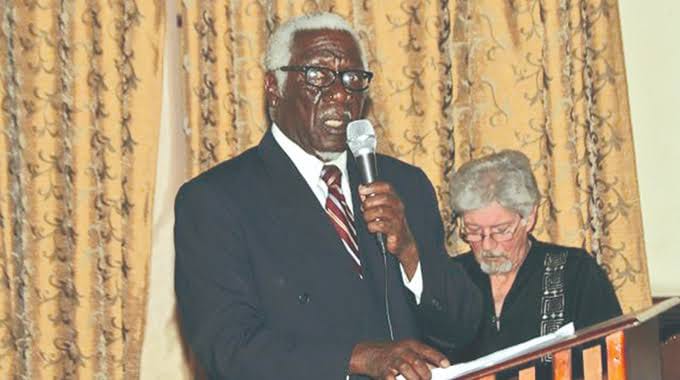
ν Cetshwayo Zindabazezwe Mabhena writes from the University of the Witwatersrand, Johannesburg, in South Africa. Contacts: [email protected]



 Online Reporter