admin
admin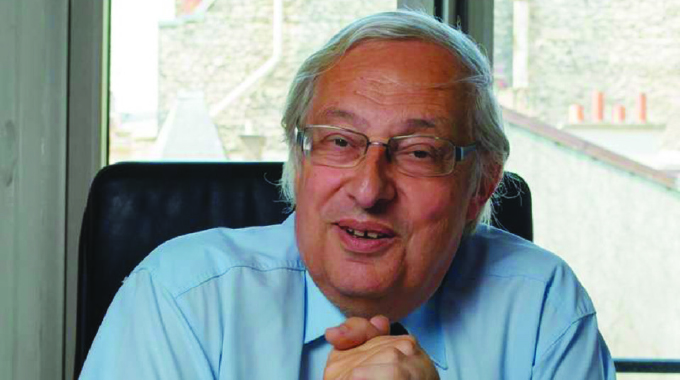
Bertrand Badie, emeritus professor at Sciences Po Paris and author of many acclaimed books, refutes the old-fashioned view of international relations. In an era of profound change, he argues we are seeing the growth of global governance. Interview by Hichem Ben Yaïche and Nicolas Bouchet
Q: You recently published the thought-provoking Rethinking International Relations. Can we rethink these relations, when everything seems to be going so wrong?
A.One of the difficulties lies in the human tendency to consider that everything is the same as before. It is a classic reflex to go from the known to the unknown, and to think that what we are facing is similar to what we have known before. Yet several fundamental breaks have been consistently overlooked. None of them has been seriously explored, hence the flaw in current foreign policies.
The first rupture is decolonisation. It has not been sufficiently taken into account even though it has profoundly modified the international system. The arrival of new states and therefore new and specific histories, societies and economies has upset an international order which, until a few decades ago, was only regional and which has suddenly become global.
We used to think that international relations took place in Europe. The United States itself became an international power when it intervened in Europe after the First World War. It is already a major break to find oneself projected into a world now made up of emerging powers from Africa, Asia and South America. Different histories are emerging, as well as a trivialisation of the ‘tectonics of societies’, i.e. societies that meet, exchange or tear each other apart on a large scale and in diversity.
The second great rupture that has not really been taken into account is that of globalisation. This entirely new order is leading us for the first time in history to a single world where everyone is “on the same boat”. With the possible exception of the Palestinians and a few other pariah peoples, all the peoples of the world now belong to the same international system of which they are official members.
This changes everything: a Central African whose country has a GDP per capita of about $600 per year and a Luxembourger whose GDP per capita is $110 000 per year are now side by side.
These enormous differences mean that social issues have become major issues in international relations, even surpassing the importance of traditional military issues.
Similarly, globalisation has created something we do not know how to analyse: a growing interdependence between economies, societies, cultures and means of communication. The old concept of sovereignty must therefore be questioned.
Q: You have just mentioned Africa. What will happen to it? Is a new order emerging in Africa too?
A. For more than 60 years, Africa has been a perfect example of the failure of power. This is the great lesson, which has been somewhat overlooked, and from which we must learn all the consequences. First of all, power was defeated by decolonisation.
The weakest, i.e. the colonised peoples, defeated the strongest, i.e. the colonial powers, which were well versed in the art of war but were defeated in Algeria, Madagascar, Kenya and Cameroon. Similarly, all the post-colonial wars that have subsequently occurred in Africa, and there are unfortunately many of them, are not the result of classic power rivalry, but of new factors.
African wars are very rarely inter-state wars, i.e. they are not born of a dispute between states.
There have been a few, for example between Mali and Burkina Faso or the Sand War between Algeria and Morocco. But most of the time they are wars of social decomposition, a new phenomenon that we do not know how to face.
At the root of the Sahelian or Congolese conflict is not power rivalry but the failure and decomposition of societies and social and political institutions that have plunged these countries into a logic where impotence is the law much more than power.
This shows how urgent it is not to fight the enemy, which has been the history of Europe for centuries, but to establish a real governance that removes the risk of belligerent disorder. This is something that decolonisation has not succeeded in establishing.
Q: Do we have the time to do all that? You are talking about gigantic issues that require time and above all a lot of resources.
A. Europe took about five centuries to build, from the end of the Middle Ages to the stabilisation of the European map. And we must consider that this was only definitively completed in the 20th century. Can we blame the Africans for not having done in 50 years what the Europeans took five centuries to do?
The first thing we need to do is to recognise the way forward. We are told that Africa’s misfortunes are due to strategic manipulation or terrorist actions. But these are epiphenomena, linked to “entrepreneurs of violence” who take advantage of a situation and factors of disorder that are infinitely more profound!
We must know how to discover, beyond this, the roots of the African crisis, that is to say, this lack of political governance but above all of social governance. Everything has to be redone, starting with land tenure. One of the most serious causes of the wars and conflicts in the Sahel is the collapse of the traditional land tenure system, which is supposed to manage the distribution of resources, which are unfortunately becoming increasingly scarce, particularly due to desertification.
Precisely because the work to be done is long, it is essential to start right away. Nothing is more absurd than to use the pretext of the length of time to never start! All this implies an effort of reinvention that decolonisation has blocked by proceeding by mimicry.
In The Imported State, I highlighted the fact that it is not by copying Western countries that Africa will get by. The first to say this were the great liberators of Africa and the great pan-Africanist thinking of Nkrumah, Lumumba or Kenyatta.
They made it clear that Africa’s path was not to imitate Western nation states but to discover forms of governance that corresponded to its history. Without this effort, Africa will reproduce the dialectic we know, where failed states can only react by reinforcing their authoritarianism and militarisation. This exacerbates conflicts rather than resolving them. We need to break this vicious circle and embark on a policy of reinvention. It will take time, but I believe that Africans are highly capable of doing this work.
Q: In the Africa-France relationship, one has the impression that France has a blurred vision. Fears structure the visions of politicians. How did this come about?
A. You are quite right. That’s why I regularly say that decolonisation was a failure. It was carried out according to a model that does not correspond to the reality I have described. France, like the former colonial powers in general, wanted to maintain in the post-colonial period a certain number of advantages gained from colonisation. The perpetuation of these so-called neo-colonial or clientelistic models has had a pernicious effect on both sides.
A phrase that always makes me react in French political discourse is that France has ‘special responsibilities’ in Africa. I naively asked a French politician why France had ‘special responsibilities’ in Africa more than Guatemala or Bolivia. This person answered that this formula was due to the long history of the French presence in Africa.
He wanted to refer to the colonial tutelage of yesteryear, which we are trying to perpetuate, as my African friends feel. Over time, this tutelage has become unbearable in the symbols, practices and philosophy of these relations.
Indeed, the great challenge of French foreign policy is to know how to talk to those who were not in the pre-war club. France, like its fellow countries, has never known how to talk to the emerging countries, i.e. China, Brazil, India, Indonesia or South Africa. But neither does it know how to talk to the former colonised countries, i.e. to create a real partnership.
By this I mean not only equal, because that word is overused, but also practical.
Talking to the other, taking into account that they have their own choices, their aspirations, their history and their interests. Knowing how to discuss this, as we know how to do with Germany and, for a time at least, with Russia: we should use the same grammar in our relations with the Central African Republic or the DR Congo. – New African.



 Online Reporter