Richard Muponde-Zimpapers Politics Hub
AS Africans prepare to celebrate Africa Day on May 25, the continent must abandon ceremonial complacency and prioritise broad economic emancipation and integration to claim its rightful place as a global economic powerhouse.
This year’s African union theme, “Assuring Sustainable Water Availability and Safe Sanitation Systems to Achieve the Goals of Agenda 2063,” underscores the centrality of resources to development, yet exposes Africa’s enduring failure to transform its vast natural wealth into industrial power.
Water, like cobalt and lithium, remains underexploited, symbolising a continent trapped between potential and paralysis, long on rhetoric but painfully short on execution. The commemoration must therefore become a rallying point for economic urgency, not a ceremonial echo of past victories.
From OAU liberation ideals to AU economic mandate
Africa Day commemorates the 1963 founding of the Organisation of African Unity, championed by visionaries such as Ghana founding President Dr Kwame Nkrumah, Ethiopian Emperor Haile Selassie and Tanzanian founding father, Dr Julius Nyerere, who envisaged a continent free not only politically but economically. Their struggle was not merely about flags and anthems, but about dismantling systems of exploitation and building self-sustaining economies.
The transition to the African Union in 2002 was intended to shift from liberation politics to economic transformation. Yet Africa remains structurally dependent, exporting raw commodities while importing finished goods, a contradiction that mocks the sacrifices of its founding fathers and exposes a dangerous stagnation in achieving genuine sovereignty. Political independence without economic control has proven hollow, leaving Africa vulnerable to external manipulation and internal stagnation.
Agenda 2063: Ambition without urgency
Agenda 2063 promises a prosperous, integrated and industrialised Africa, but progress remains sluggish and uneven. At the 36th Ordinary Session of the AU Assembly in Addis Ababa, President Mnangagwa said:
“Africa cannot continue exporting its wealth in raw form while importing poverty in finished products. Agenda 2063 must be a living instrument of industrialisation, innovation and beneficiation. Without urgent implementation, it risks becoming a monument to unfulfilled ambition rather than a roadmap to prosperity. The time for declarations has passed; what is required now is bold execution anchored on unity and self-belief.”
Also, Rwandan President Paul Kagame, speaking at the World Economic Forum on Africa, emphasised that “Africa must stop underestimating ourselves and overestimating others.”
“Africa’s transformation will not come from outside; it must be driven from within. Integration is not a choice but a necessity if we are to compete globally and deliver prosperity for our people. Fragmentation is our greatest weakness,” he added.
These warnings underline a painful truth, Africa’s challenge is not a lack of vision, but a lack of urgency and coordinated action.
Exploitative Global North relations and manufactured instability
Africa’s economic stagnation is deeply tied to an exploitative relationship with the Global North, where trade systems perpetuate dependency and inequality. Resource-rich regions such as the Democratic Republic of Congo have been plagued by conflicts linked to external interests seeking control over strategic minerals. These conflicts are not accidental; they are symptoms of a global system designed to keep Africa weak and extractable.
Sanctions imposed on Zimbabwe and sustained economic pressures on South Africa further illustrate how emerging African economies are constrained when they challenge entrenched global power structures. These measures are often justified under political pretexts but have clear economic consequences, stifling growth and limiting sovereignty.
Meanwhile, the Global North’s fixation on geopolitical conflicts in the Middle East creates a rare strategic vacuum. Africa has an opportunity to reposition itself as a decisive global player, yet continues to hesitate, constrained by fragmentation and lack of unified economic strategy.
China, zero tariffs and the Global South opportunity
China’s zero-tariff policy for African exports offers a significant opening, but it is not inherently transformative. Without strategic negotiation, it risks accelerating the export of raw materials rather than fostering industrialisation. Africa must insist on technology transfer, infrastructure development and local value addition as core conditions of engagement.
Speaking at the Forum on China-Africa Cooperation, South African President Cyril Ramaphosa said:
“Africa’s partnerships must be shaped by mutual respect and shared benefit. We welcome cooperation that builds our industrial capacity and empowers our people. Trade must no longer be defined by extraction, but by transformation that leaves lasting value on the continent.”
Partnerships with the Global South present a more balanced alternative, anchored in mutual respect and shared development goals, but only if Africa negotiates collectively and assertively. Otherwise, even well-intentioned partnerships risk reproducing old patterns under new labels.
Beneficiation and the New Scramble for Africa
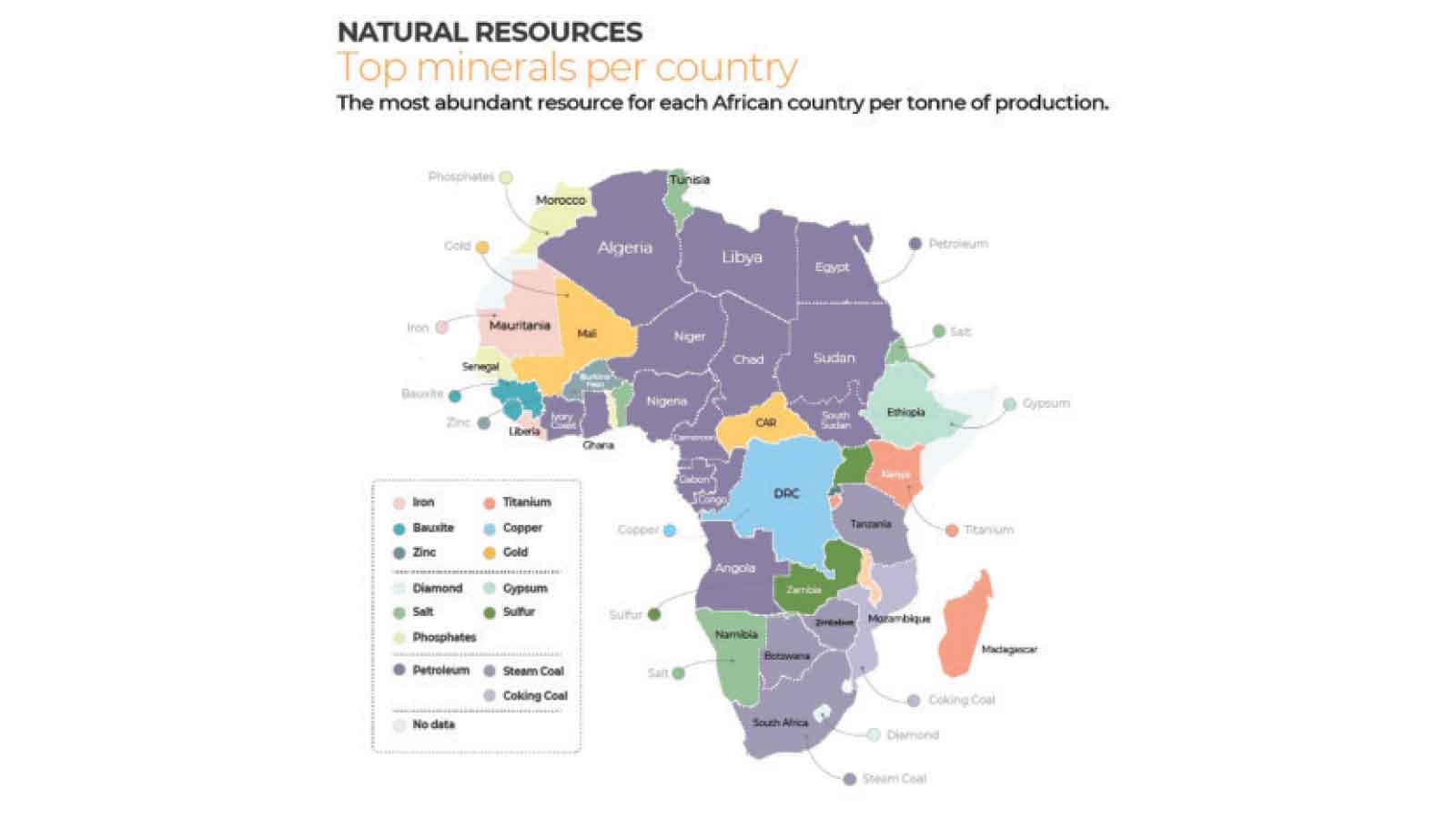
Africa’s vast reserves of cobalt, lithium and rare earth minerals have triggered a new global scramble, driven by the demands of the digital and green economy. These resources power electric vehicles, renewable energy systems and advanced technologies, placing Africa at the centre of the 21st-century economy.
Yet the continent captures minimal value from these resources, exporting them in raw form while others reap the benefits of processing and manufacturing. This imbalance is not merely economic; it is a continuation of historical exploitation in a modern context.
Beneficiation is therefore no longer optional; it is a strategic imperative. It represents the difference between dependency and sovereignty, between poverty and prosperity. Without it, Africa will remain a peripheral player in a global economy powered by its own resources. With it, the continent can build industries, create employment and redefine its economic trajectory.
Internal weaknesses and the cost of inaction
While external exploitation is undeniable, Africa’s internal failures cannot be ignored. Poor infrastructure, limited intra-African trade, governance challenges and policy inconsistency continue to undermine progress. Initiatives such as the African Continental Free Trade Area hold immense potential, yet remain underutilised due to lack of coordination and political will.
At the African Development Bank Annual Meetings, the bank’s former president Dr Akinwumi Adesina remarked:
“Africa must move from being a continent of raw material exports to a continent of industrial production. We cannot build wealth by exporting jobs and importing finished goods. The path to prosperity lies in value addition, regional integration and strategic investment in our own capabilities.”
This blunt assessment highlights the cost of inaction, lost opportunities, persistent poverty and continued marginalisation in the global economy.
Reclaiming Africa Day as a platform for economic accountability
Africa Day must evolve into a platform for measuring economic progress, not merely celebrating historical milestones. It should demand accountability on industrialisation, integration and trade transformation. The vision of the OAU’s founders and the ambitions of the AU require a decisive break from dependency and a bold embrace of economic sovereignty.
The continent stands at a crossroads, endowed with immense natural wealth, a youthful population and growing strategic relevance.
Yet these advantages will remain meaningless without decisive action. Africa must leverage its resources, negotiate from a position of strength and insist on partnerships that promote mutual benefit and respect.
The message is clear and uncompromising, Africa must either industrialise and integrate or remain trapped in a cycle of extraction and marginalisation. The era of excuses has expired. Africa Day 2026 must mark not just another anniversary, but the beginning of a relentless march toward economic conquest and global relevance.