admin
admin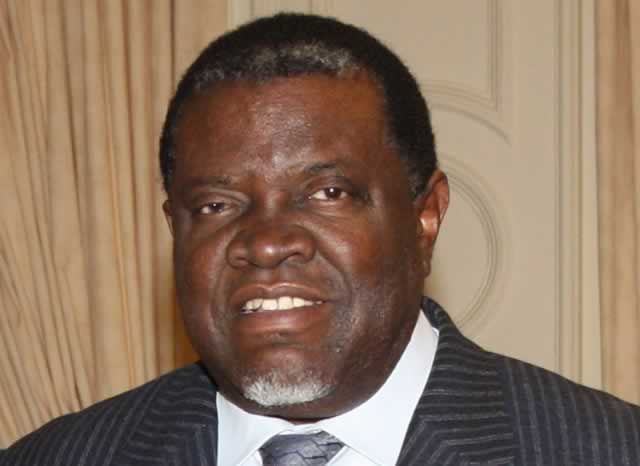

Christopher Farai Charamba Correspondent
Since its inception in 2002, the ICC has opened investigations into nine situations and publicly indicted 39 people, all of them African. This has led critics of the institution to argue that the ICC has an agenda against the African continent.
The International Criminal Court, which was supposed to be a global bastion of justice, has an unpleasant aura around it, and the world is fast rejecting it.
In particular, Africa, a continent with the highest number of signatories to the founding Rome Statute, is drifting away after noticing the dangerous whiff around the institution which has been converted into a political instrument targeting Africa and the developing world.
This week, the government of Namibia approved the recommendation of the ruling swapo party to pull out of the court, a development that came after swapo’s South African counterpart, ANC, passed a similar resolution.
Namibia signed the Rome Statute in 2002, which means the country had committed itself to cooperating with the ICC.
It has, like many African countries, in the intervening period, seen the court discrediting itself.
Having seen enough, Namibia called out the discredited court whose only notable supporter in the region is Botswana, which, as already seen in its diplomatic actions, suffers from a severe strain of identity crisis.
Namibian President Hage Geingob is now urging fellow African countries to pull out of the ICC stating that it is failing to live up to its mandate.
It is to be recalled that in a speech he was supposed to give at the African Union summit in South Africa earlier this year but was not delivered, Geingob said the ICC should stay out of the domestic affairs of countries such as Kenya.
“Some people are saying we are the ones who created the ICC. However, when one creates something to be an asset but later on it becomes an abomination, you have the right to quit it since it has ceased serving its intended purpose,” Geingob said.
“No institution or country can dictate to Africans, who and by whom they should be governed. The ICC must therefore stay out of Kenya’s domestic affairs,” he added.
Namibia is now making modalities and technical issues which need to be addressed first before formalising its withdrawal from the discredited court. It is clear that African countries have growing disillusionment with the ICC which continues to drive an agenda against the continent particularly African leaders.
Although Zimbabwe is not a state party to the ICC, President Mugabe in his capacity as the African Union Chairperson also recommended that African countries withdraw their membership of the ICC.
Since its inception in 2002 the ICC has opened investigations into nine situations and publicly indicted 39 people, all of them African.
This has led critics of the institution to argue that the ICC has an agenda against the African continent. The AU does not recognise the court and is in the process of establishing its own judicial institution, the African Court of Justice and Human Rights.
Those who argue in favour of the ICC say the cases referred to the court such as those in the DRC, Uganda or Mali were done by those respective nations. There are three ways in which a case ends up at the ICC.
The first is that a state can turn over an individual for trial if it, the state, agrees to do so. This option is available particularly if the state does not have the means or strong judicial system to ensure justice is done.
The second scenario known as proprio motu, a special prosecutor at the ICC can begin a trial if they deem there were crimes committed in the territory of a signatory under the Rome Statute. Kenya and Cote d’Ivoire are examples of this.
The third and final way by which a case can end up at the ICC is if it is referred to it by the United Nations Security Council. Libya and Sudan are such examples.
The irony in the cases referred to the ICC by the UNSC is that permanent members of the Security Council like the USA are not state parties to the Rome Statute.
In fact, the American Service Members Protection Act permits the US president to authorise military force to free any US military personnel held by the ICC.
What is good for the goose is apparently not good for the gander as the Americans have shown. The ICC is a blatant example of Western hypocrisy and African states should reject its subjugation.
Despite growing disillusionment with the ICC and a move to turn around by South Africa and Namibia, other African countries refuse to join the continent’s growing sentiment and instead are offering their support to the ICC.
South Africa, earlier this year, was criticised for refusing to arrest Sudan President Omar Al-Bashir, who was attending an AU summit and allowing him to leave the country.
The SA government was scorned for failing in its duties as an ICC member and the opposition party, the DA, even sought to impeach Jacob Zuma over the incident.
In 2012, faced with a similar dilemma, Malawi cancelled the AU Summit after making it explicitly clear that should President Bashir set foot in their country he would be arrested and sent to The Hague.
Botswana is another country which has set itself against the African grain and chosen to side with the ICC. Recently president Ian Khama, who is the sitting SADC chairperson, reaffirmed his commitment to the ICC.
The question is what does this mean for regional and continental relations when countries are turning away from the Western-sponsored ICC while others continue to affirm their support for it?
The divided opinion on the ICC is detrimental to the development and the security of the continent. As more SADC countries move towards withdrawing from the ICC, the regional body should take a common decision to do so as a bloc.
Botswana makes that unlikely anytime soon.
Botswana has a bilateral Immunity Agreement with the US regarding the ICC in which it bound itself not to hand over any US citizens to the court unless instructed by the UN Security Council or by the USA.
One, however, should not be surprised by the actions of Botswana which willingly offered itself up to the British as a protectorate in 1885 fearing conquest by expansionist South Africa at the time. The relationship between Botswana and the West is long standing and has become very costly to the rest of the region.
A clear regional agenda and position regarding such international concerns needs to be set in order to guarantee the security of the continent and further push the regional developmental agenda.
What is certain is that the ICC does not have Africa’s interests at heart and is in fact hypocritical as it has never sought to scrutinise Israeli crimes in Palestine or USA and British crimes in Iraq and Afghanistan.
Africa as whole should withdraw from the ICC but in doing so should not abandon the principles of justice and human rights.
It is imperative for African states to strengthen their judicial systems as well as improve their human rights record if they are to withdraw from the ICC and criticise its mandate.
The African Court of Justice and Human Rights should be given autonomy to carry out its work. No individual should be seen as above the jurisdiction of the court if it is to be effective.


 Online Reporter