Chronicle Editor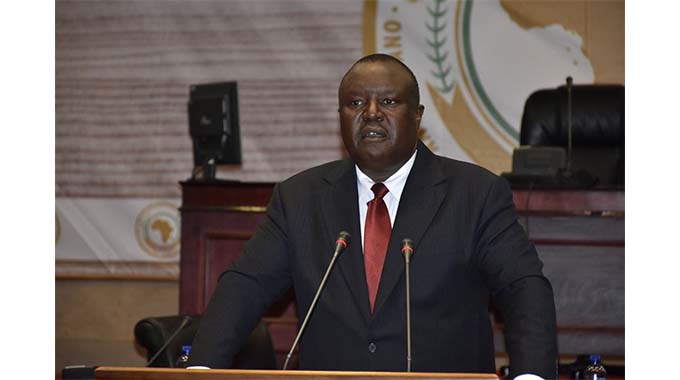
Sikhumbuzo Moyo, Senior Reporter
NATIONAL Speakers of Parliament from African countries will be in Midrand, South Africa early next month as part of the Pan–African Parliament’s (PAP) initiative to have the Malabo protocol ratified.
Since the drafting of the protocol in 2014, only 14 member states have appended their signatures out of the required 28.
President of PAP, Chief Fortune Charumbira said unless the required number of signatures is achieved, the Malabo protocol will not be effective.
In June 2014, the African Union (AU) Assembly of Heads of State and Government meeting in Malabo, Equatorial Guinea, adopted the Protocol on Amendments to the Protocol on the Statute of the African Court of Justice and Human Rights and called on AU member states to sign and ratify it.
The Protocol extends the jurisdiction of the yet to be established African Court of Justice and Human Rights (ACJHR) to crimes under international law and transnational crimes. The original plan for the ACJHR was a court with two sections – a general affairs section and a human rights section. The Malabo Protocol introduces a third section, the international criminal law section.
If the Malabo Protocol comes into force, the ACJHR will have jurisdiction to try 14 crimes namely genocide, crimes against humanity, war crimes, the crime of unconstitutional change of government, piracy, terrorism, mercenarism, corruption, money laundering, trafficking in persons, trafficking in drugs, trafficking in hazardous wastes, illicit exploitation of natural resources, and the crime of aggression. The international criminal law section of the ACJHR will serve as an African regional criminal court, operating in a manner akin to the International Criminal Court (ICC).
“In the next two weeks, all the speakers of Parliament from the continent will be in Midrand, South Africa, discussing issues to do with this ratification of the Malabo protocol. Ninety percent of our jurisdictions on the continent ratify protocols through Parliament, so we will be engaging with the Speakers, give them the profiles of who has signed and who has not signed and ask them to ratify. Beyond that we will engage Foreign Ministers because in most countries, any ratification to be tabled in Parliament comes from the Ministry of Foreign Affairs which initiates then parliament puts it on the Order paper,” said Chief Charumbira during a virtual press conference on Friday.
He said PAP has been holding workshops in all the five regions of the continent in an effort to motivate member states to ratify.
“It appears we are somehow stuck. Since 2014, we have 14 ratifications out of the required 28 and unless we get to that number, the Malabo protocol will not be effective.
There seems to be some stagnation. I want to be open with you, there are countries that think they are not yet ready, that Africa is not ready to move in that direction,” he said.
Chief Charumbira said engagements with various stakeholders will continue so as to exert pressure on parliaments to ratify the Malabo protocol.


 Online Reporter