admin
admin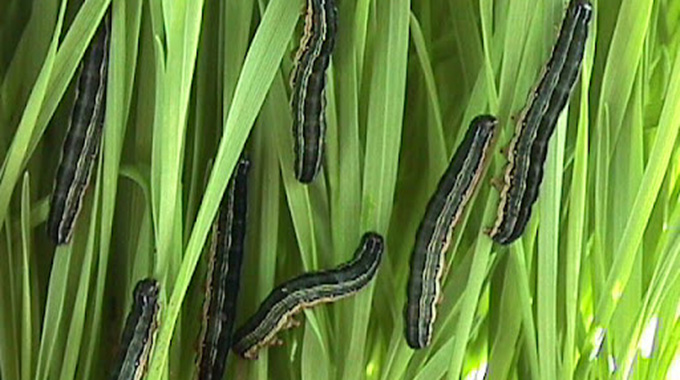
Precious Manomano Herald Reporter
African armyworm has been reported in seven districts of the country’s four provinces damaging 192,5 hectares of maize, 69,3 hectares of sorghum, less than one hectare of finger millet and 32 hectares of pastures with authorities warning the public around the country to be on the lookout for the pest.
Reported cases are from Mashonaland East province in Mudzi district, Mashonaland Central (Mbire), Mashonaland West (Zvimba, Sanyati and Makombe) and Midlands (Gokwe North and South).
The Department of Migratory Pests and Biosecurity Control Director Mr Shingirayi Nyamutukwa said there are enough chemicals, adding that people should report cases to avoid losses.
“Crops are vulnerable to these African Armyworm. They move in great numbers and once they feed on the whole plant, there is no possibility of regrowing. We are encouraging scouting so that we are able to control the pests. We may fail to meet our target,” he said.
So far, the department has assisted 234 households that have reported cases of the African Armyworm.
The department is distributing chemicals for armyworms free of charge and farmers are encouraged to report to the nearest Agritex offices.
Mr Nyamutukwa said farmers should be scouting daily to avoid losses.
In a recent interview, Tobacco Farmers’ Union Trust president Mr Victor Mariranyika said there is a need to create awareness campaigns so that every farmer becomes aware of the situation.
“Farmers should be educated hence awareness programmes are effective when dealing with such issues. Agritex officers should also be working with farmers in identifying areas where African armyworms prefer. We applaud the effort done by the Government so far to secure enough chemicals in preparation for the disaster,” he said.
The African armyworm has been a challenge to farmers in Zimbabwe. The pest originates from Zambia, Uganda or Tanzania and is carried by strong winds from one area to another.
The armyworm is the larvae stage of a moth that is common in Southern Africa. The moth is easily identified by the colour of its wings which are dark brown with black spots, while hind wings are white with dark edges. The migratory moths travel in multitudes and cover long distances during the night. They can cross national boundaries within a short period while being driven by winds.
Experts note that the moths follow humid areas and lay eggs at a speedy rate.
The armyworm is so destructive and it is a serious threat to food security. Problems of the armyworm have been reported for decades every cropping season.



 Online Reporter