admin
admin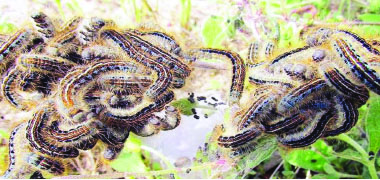
Precious Manomano Herald Reporter
There are adequate chemicals to fight the African armyworm, which broke out in Mbire, Mashonaland Central Province recently, the Department of Migratory Pests and Biosecurity Control has said.
Farmers have been urged to continue scouting for the pests and advise authorities in a bid to protect their crops.
The first African armyworm outbreak in Mbire, saw at least 26 hectares of sorghum, maize and pastures being destroyed.
The pest rapidly breeds in wet conditions.
Director for Migratory Pests and Biosecurity Control, Mr Shingirayi Nyamutukwa, said the African armyworm was under control.
He added about 422 households in Mbire have so far received chemicals to control the pests.
Mr Nyamutukwa said they were monitoring areas such as Chisumbanje, Mutare and Beatrice where some moths were recorded.
“We assure farmers that so far, we have managed to control the situation of African armyworm. Extension workers are also working with farmers to monitor the situation.
“In terms of chemicals we have them in stock. So far Beatrice has recorded the highest number of moths, but we are on the ground monitoring the situation,” said Mr Nyamutukwa.
Last week, the department also warned that moth catches continue to be recorded in Mashonaland West and there is high possibility of more African armyworm outbreaks occurring in other parts of the country.
Tobacco Farmers’ Union Trust president Mr Victor Mariranyika said there was need to create awareness campaigns so that every farmer is actively on the lookout.
“Farmers should be educated; hence awareness programmes are effective when dealing with such issues.
“Agritex officers should also be working with farmers in identifying areas where African armyworms prefer.
“We applaud the efforts done by Government so far to secure enough chemicals in preparation for infestation,” said Mr Mariranyika.
Problems of the armyworm have been reported for decades during every cropping season.
The African armyworm occasionally breaks out in Zimbabwe, with the pest attacking cereals like maize, sorghum and millet.
The caterpillars move in large numbers causing losses of up to 100 percent.
They originated in Zambia, Uganda and Tanzania, and are carried by strong winds from one area to another.
The migratory moths travel in multitudes and cover long distances during the night.



 Online Reporter