Nqobile Bhebhe, Zimpapers Business Hub
AFRICAN capital markets must accelerate regional integration through cross-border trading platforms, regulatory cooperation and partnerships to unlock long-term financing, widen investor participation and channel institutional savings into productive investments across the continent.
This comes as financial markets increasingly recognise that fragmented national exchanges limit the ability of businesses to access deeper pools of capital, with regional connectivity emerging as a critical driver of investment, economic growth and financial inclusion.
Speaking at the inaugural Financial Markets Stakeholder Summit in Bulawayo, Kenya Association of Stockbrokers and Investment Banks (KASIB) director Mr Ewart Salins said African exchanges needed to move beyond geographical boundaries and establish stronger trading and regulatory linkages.
He said Zimbabwe and Kenya faced similar challenges in mobilising long-term capital, broadening participation and positioning their financial markets to benefit from regional investment flows.
“We come to Bulawayo to learn as much as to share. Kenyan intermediaries are asking the same questions as Zimbabwean ones: how to raise long-term capital, widen participation and connect our markets to the region,” he said.
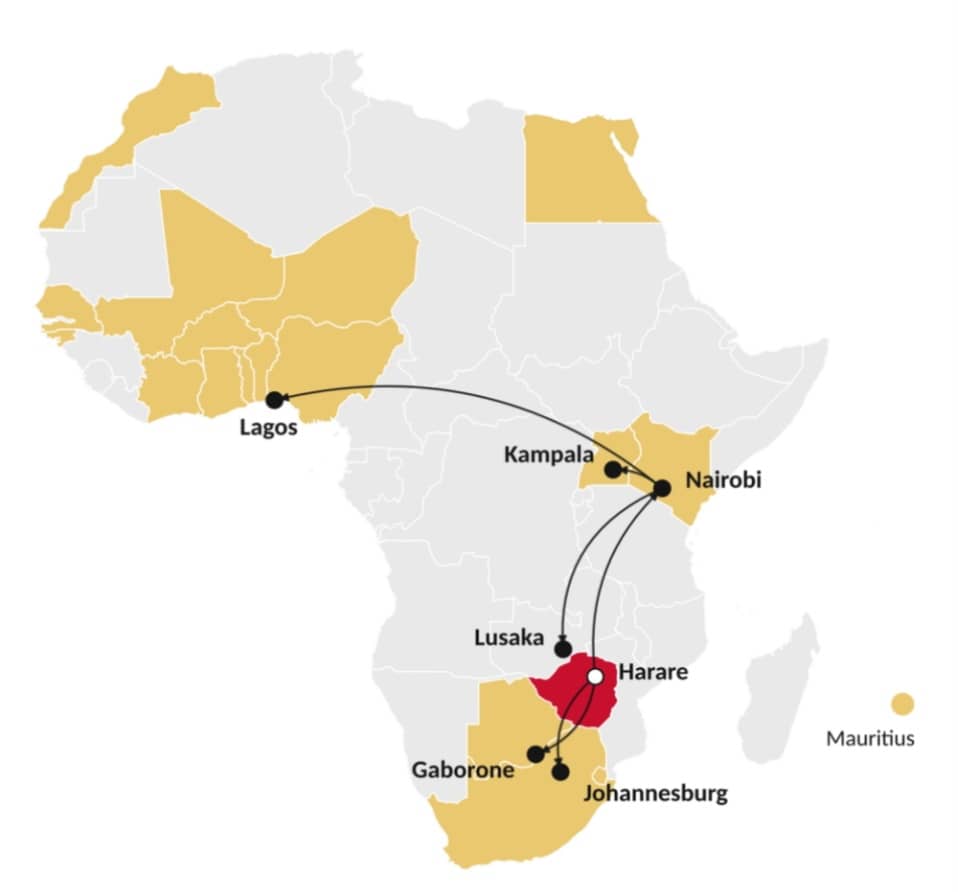
“Imagine a business in Bulawayo raising capital in Nairobi, Johannesburg, Gaborone and Lagos: listed at home, traded across the region and owned by pension funds, unit trusts and mobile savers across the continent.”
He added: “The next chapter of African capital markets will be defined by the markets that connect us, not the borders that separate us.”
Mr Salins said interconnected exchanges could transform how businesses raise capital by allowing companies listed in one country to attract investors from several African markets.
The proposed integration would create opportunities for Zimbabwean companies to access a wider investor base beyond the domestic market, potentially improving capital mobilisation, liquidity and the attractiveness of local listings.
For investors, cross-border connectivity would expand investment choices, allowing pension funds, asset managers and individual investors to diversify their portfolios across different African economies without facing unnecessary market access barriers.
Mr Salins outlined practical measures that could accelerate this process, calling for Zimbabwe’s inclusion in the African Exchanges Linkage Project (AELP) and the activation of live cross-border trading under its second phase.
“Bring Zimbabwe into the African Exchanges Linkage Project (AELP) and move Phase 2 from connection to live cross-border trades.
“Finish the Southern African Development Community (SADC) exchanges’ order router and link it to the AELP, so one broker reaches both.
“Agree mutual recognition of products and intermediaries between Kenya’s Capital Markets Authority and Zimbabwe’s Securities and Exchange Commission,” he said.
The recommendations point to the importance of building an integrated financial market architecture that allows brokers, investors and listed companies to operate across jurisdictions with greater efficiency.
The AELP, an initiative designed to connect African securities exchanges, provides a framework for facilitating cross-border securities trading and improving access to investment opportunities across participating markets.
However, achieving meaningful integration requires more than technological connectivity.
Harmonised regulatory frameworks, mutual recognition of market participants, efficient settlement systems and investor protection mechanisms are equally important in building confidence in cross-border transactions.
Stronger regional partnerships could provide an additional avenue for mobilising domestic and international savings to finance business expansion, infrastructure development, industrialisation and other productive sectors.
Mr Salins spoke in his capacity as director of KASIB, the umbrella body representing stockbrokers and investment banks licensed by Kenya’s Capital Markets Authority to trade on the Nairobi Securities Exchange.
The association represents the sell-side of Kenya’s capital markets, sets standards of conduct for its members and works with the National Treasury, Parliament, the Capital Markets Authority and the Nairobi Securities Exchange on the development of the country’s financial markets.
His remarks come as Zimbabwe’s capital markets players seek to deepen the role of the Zimbabwe Stock Exchange and Victoria Falls Stock Exchange in mobilising investment and supporting the country’s broader economic transformation agenda.
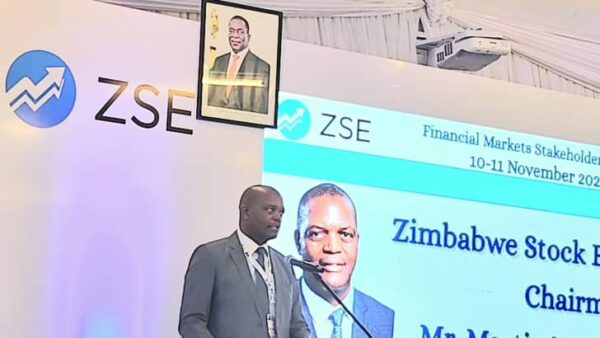
The two-day inaugural Financial Markets Stakeholder Summit, jointly hosted by the ZSE and VFEX in Bulawayo, brings together policymakers, regulators, issuers, investors and financial intermediaries to discuss the future of the country’s investment landscape.