admin
admin

Leonard Ncube in Victoria Falls
AFRICAN countries should urgently invest in developing local Internet exchange points for easy control and monitoring of their own cyber connectivity, a senior Government official has said.
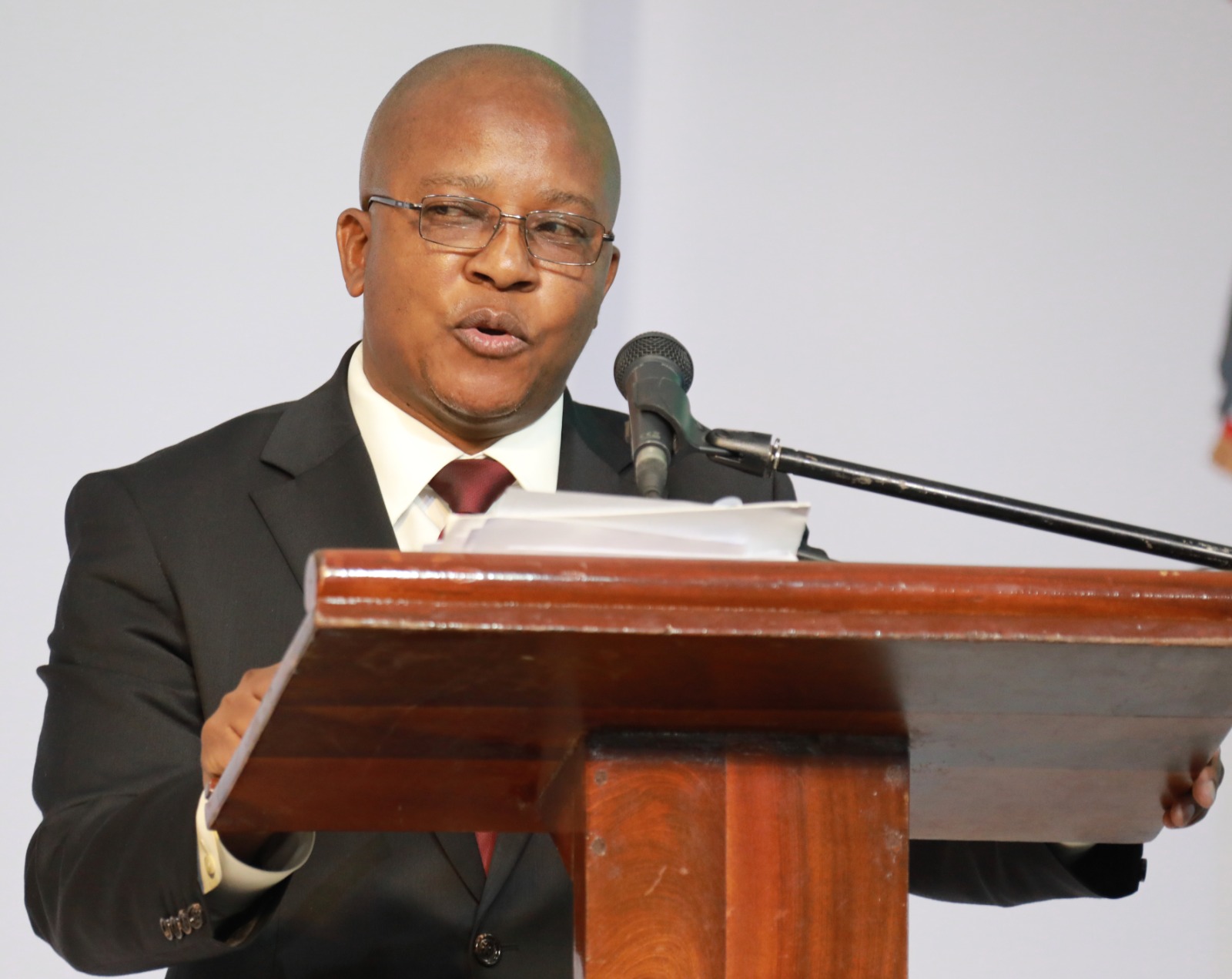
Permanent Secretary in the Ministry of ICT, Postal and Courier Services Engineer Samuel Kundishora made the remarks while officially opening the International Telecommunications Union (ITU) Regional Economic and Financial Forum here on Tuesday.
Eng Kundishora said African nations were paying huge sums of money for internet connectivity to servers, which are hosted elsewhere when individual countries can actually invest in national and regional servers.
He said this could also reduce cyber-crime and enhance security as they would have control over local traffic of internet activity.
“The current set up is such that when you send an Internet message it has to first go out of the country to the domain server before coming back to IP of the receiver. That process of going out of the country costs a lot of money at international level hence we need to start thinking of Internet exchange points at national level,” said Eng Kundishora.
The establishment of national servers would mean Zimbabwe will be hosting its own domain through the “zw” server, the same way South Africa, Botswana or Zambia can rely on localised “za”, “bw” or “zm” respectively.
Eng Kundishora said once this is achieved at national level, focus can then shift to regional level for similar benefits.
He said such national or regional Internet exchange points will be focal points where traffic will be accessed.
He said the idea was in line with goals of the African Union, which wants local Internet traffic to remain internal.
The Permanent Secretary said now was time for African countries to collaborate and start thinking of how to operationalise the idea.
“We shouldn’t be talking about international Internet traffic. Now we should think of how we can operationalise national Internet exchange points. We need to be innovative and use this platform to share country experiences and make recommendations,” he said.
The conference, which started with a two-day meeting of practitioners in the Information Communication Technologies (ICT) sector from Africa and beyond, continues to Friday with closed meetings of ITU-T Study Group 3 Regional Group for Africa (SG3RG-AFR), a body made up of regulating authorities from selected member states.
Addressing the meeting, Eng Kundishora implored Africa to seriously partake in the global digital revolution, which he said is a powerful tool for development.
He said Africa needs to self-introspect and move at the same pace with the developed world in terms of embracing ICT hence the need for collaboration to tackle challenges facing the continent such as high cost of international internet connectivity, economic impact of over the top services, by-pass fraud, and high costs related to convergence and roaming.
Earlier, ITU representative Dr Lara Srivastava called on regulating authorities to be bridges and not roadblocks to ICT development adding that there should be collaboration among members.
Postal Telecommunications Regulatory Authority of Zimbabwe (Potraz) is co-hosting the conference with ITU.
@ncubeleon


 Online Reporter