Muchaneta Chimuka
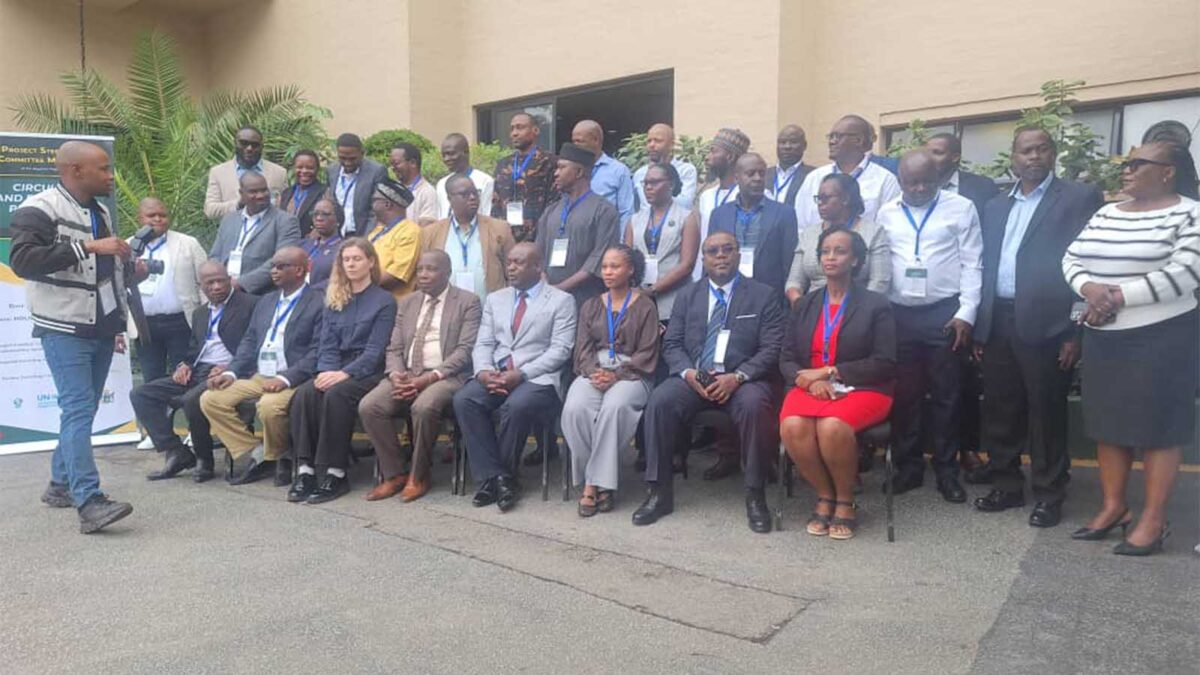
The Regional Project Steering Committee of the Circular and Persistent Organic Pollutants (POPs)-Free Plastics in Africa Project (GEFID 11049) has held its third conference in Zimbabwe, bringing together five participating countries to strengthen efforts to manage plastic waste and protect human health and the environment.
The participating countries are Kenya, South Africa, Uganda, Nigeria and Zimbabwe, which are working together to reduce the release of hazardous substances associated with plastic waste.
The project brings together the Environmental Management Agency (EMA), the United Nations Environment Programme (UNEP) and the Basel Convention Coordinating Centre for Training and Technology Transfer for the African Region (BCC-Africa).
The partners were commended for their continued technical and financial support of the initiative, which reflects a shared commitment to safeguarding human health and protecting the environment for present and future generations.
Speaking during the conference, the Permanent Secretary in the Ministry of Environment, Climate and Wildlife said plastic pollution remained one of the most pressing environmental challenges facing African countries.
“Across Africa, plastic waste continues to pollute our rivers, soils, and urban environments, while threatening biodiversity, livelihoods, and sustainable development.
“Even more concerning is the presence of Persistent Organic Pollutants in plastics, which pose serious risks to human health, ecosystems, and food safety.”
“This project reflects our collective determination to transition from a linear “take-make-dispose” model towards a circular economy in which plastics are designed for reuse, recycling, and safety. It seeks to eliminate hazardous chemicals from the plastics value chain while promoting innovation, creating green jobs, and expanding opportunities for our people, particularly women and youth,” he said.
He said Zimbabwe is proud to host this important meeting as the nation remains fully committed to the objectives of the Stockholm Convention on Persistent Organic Pollutants, the Basel Convention, and the broader national vision for a clean, safe, and healthy environment, and that these commitments are firmly aligned with Zimbabwe’s Vision 2030 and the National Development Strategy 2.
EMA’s Director of Environmental Management Services, Mr Steady Kangata, said the discussions will strengthen regional cooperation and meaningfully advance sustainable plastics management across Africa.
“African communities can prevent plastic waste from harming the environment and public health by separating waste at the source, joining recycling and reuse projects, avoiding banned or single-use plastics, and disposing of waste properly rather than dumping or burning it,” he said.
“The Environmental Management Agency (EMA) promotes these actions as part of a circular economy to cut down the large share of waste sent to dumpsites and protect local ecosystems and health.”
The Centre Basel Convention Coordination for the African Region in Nigeria’s executive director, Professor Gilbert Adie, said rapid population growth, urbanisation and industrial growth, the construction boom, improved lifestyles, and unsustainable consumption patterns have all contributed to the growing solid waste problem in Africa.
“All the waste that we dispose of on the earth’s surface will end up consumed by human beings as it spills into our water system and farms, and we end up having disease burden such as cancers and other respiratory problems. As Africans, we are fast killing ourselves due to poor solid waste disposal,” he said.
BCCC – Africa’s regional project manager, Professor Percy Onianwa, said every person has the right to a clean and safe environment that is not harmful to health; hence, community awareness and involvement are key in fighting unwarranted environmental littering.
Solid waste management is governed by the Environmental Management Act (Cap 20.27), Statutory Instrument 6 of 2007, Environmental Management (Effluent and Solid Waste Disposal) Regulations, and Statutory Instrument 98 of 2010 (Plastic Bottles and Plastic Packaging) Regulations.
The conference concludes on Thursday with visits to local industries such as Proplastics Limited Company to witness the waste recycling process, among others.