admin
admin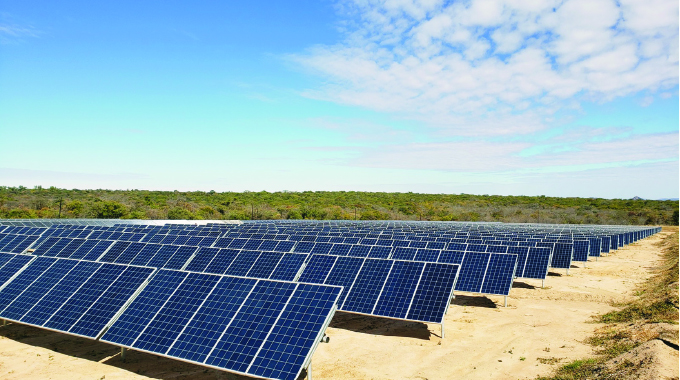
NEW YORK. — Africa’s off-grid solar industry has been turned into an asset class for the first time, bundling contracts for thousands of the sun-powered rooftop electricity systems to sell as bonds.
Dutch investor Oikocredit International and Persistent Energy Capital LLC, a New York-based merchant bank, jointly decided to try to replicate the US model of securitising residential solar panels.
They are working with the London-based developer BBOXX Ltd.
“I worked in commercial banking in the US for several years and was involved in the securitisation of residential solar, specifically SolarCity,” said David ten Kroode, renewable energy manager at Oikocredit, which is based in Amersfoort, Netherlands.
“We thought it was an interesting model that could be replicated in Africa.”
The International Energy Agency estimates that there are 1,2 billion people on the planet without access to energy.
Off-grid power systems have been touted as an efficient way of electrifying rural areas of Africa and Asia, rather than laying expensive transmission lines to extend national grids.
Rooftop solar panels can power a few light-bulbs and small appliances such as a television, fan and mobile phone charger, bringing electricity to many households for the first time.
The US solar bond market has attracted about $560 million in investment, according to Bloomberg New Energy Finance.
SolarCity was the first company to securitise a portfolio of solar leases in 2013.
The second-largest US solar company by market value has raised $450 million from sales of notes backed by monthly payments for its rooftop solar systems, data compiled by Bloomberg showed.
Oikocredit, BBOXX and Persistent Energy are working in Kenya and Rwanda, with plans to expand to Pakistan and Nigeria next.
The first issue bundled 2 500 active contracts for solar energy in rural Kenya, raising 52 million Kenyan shillings ($500 000).
The notes have an interest rate of 21 percent and an average maturity of 2,5 years.
“It has essentially taken a niche market and made it mainstream for both customers and investors, structuring it in a way that is understandable to institutional investors,” Mansoor Hamayun, chief executive officer of BBOXX, said by phone.
The next issue is planned for March 1, tripling the size of the first.
The companies aim to raise $16 million this year by issuing every 90 days.
“In the next five years, we want to have 6 million customers in at least 10 countries,” Hamayun said.
“This would require financing up to $2 billion.” — Bloomberg.



 Online Reporter