Chronicle Editor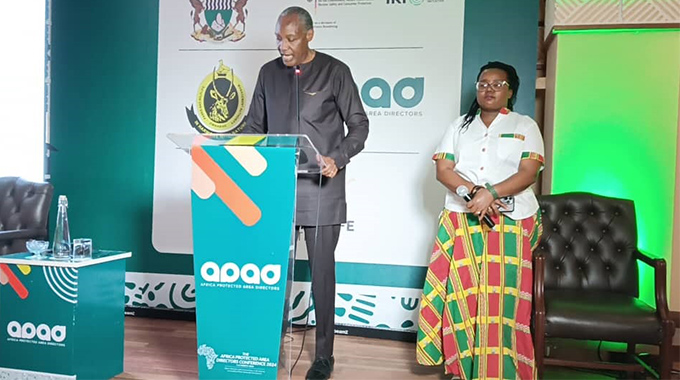
Leonard Ncube [email protected]
THE African Wildlife Foundation (AWF) has urged policymakers to put conservation at the center of decision-making.
Speaking at the 2nd Africa Protected Area Directors (APAD) Conference here, AWF chief executive Mr Kaddu Sebunya said the foundation was rallying the world around a new conservation vision for Africa with a promise for a future where progress comes not at the expense of wildlife and their habitats but because of them.
The 1st Africa Protected Area Directors virtual meeting was held just before the Covid-19 pandemic.
Mr Sebunya said AWF is the oldest and largest, pan-African international conservation organisation whose vision focuses on Africans leading for wildlife, Africans amicably living with wildlife, and Africans caring for wildlife.
“In leading for Wildlife, we intentionally influence Africans to make decisions that put conservation at the center of development.
“In living with Wildlife – we purposefully scale conservation models and strategies that restore and secure ecosystems by negotiating how people and wildlife share space and benefit from each other and in caring for wildlife – we steadfastly protect at-risk wildlife and their habitats as part of larger ecosystems,” he said.
He implored countries to abide by the conservation agenda and roadmap in the form of the Kigali Call to Action.
“We at AWF are dedicated to walking with each of you to achieve your national goals that ultimately deliver for us all. This is a rallying call to leverage this conference to tell authentic and inclusive conservation stories that speak to who we are as a people,” said Mr Sebunya.
He said it was essential to observe the pivotal role that protected area directors play in the larger environmental landscape.
“Their role is not just about protecting isolated pockets of wilderness; it is about integrating conservation efforts into every aspect of our lives and communities.
“Protected area management transcends mere environmental protection; it is about fostering holistic development that benefits societies across various economic sectors, including agriculture and health.
“Let’s consider, for instance, the Dancing Fountains in Dubai, which hosts approximately 80 million visitors annually, or the Eiffel Tower in Paris, drawing over 7 million visitors each year. Let’s juxtapose these figures with the potential of natural wonders like Kilimanjaro in Tanzania or, more significantly, Victoria Falls here in Zimbabwe. Let’s channel our efforts towards harnessing the immense potential of natural wonders like Kilimanjaro in Tanzania or, indeed, Victoria Falls here in Zimbabwe.
He said there is a need to invest in sustainable tourism practices and conservation efforts through collaboration and an integrated landscape management approach, which considers the interconnectedness of people and nature, and provides the blueprint for sustainable conservation on our planet.
Mr Sebunya called for accountability and enactment of policies that protect wildlife and habitats.
He said traditional knowledge and stewardship of the land are invaluable assets in conservation efforts hence the need to empower and engage African traditional stakeholders, recognising their role as custodians of natural heritage.
Mr Sebunya paid tribute to all stakeholders involved in conservation and supporting the conference.



 Online Reporter