Online Reporter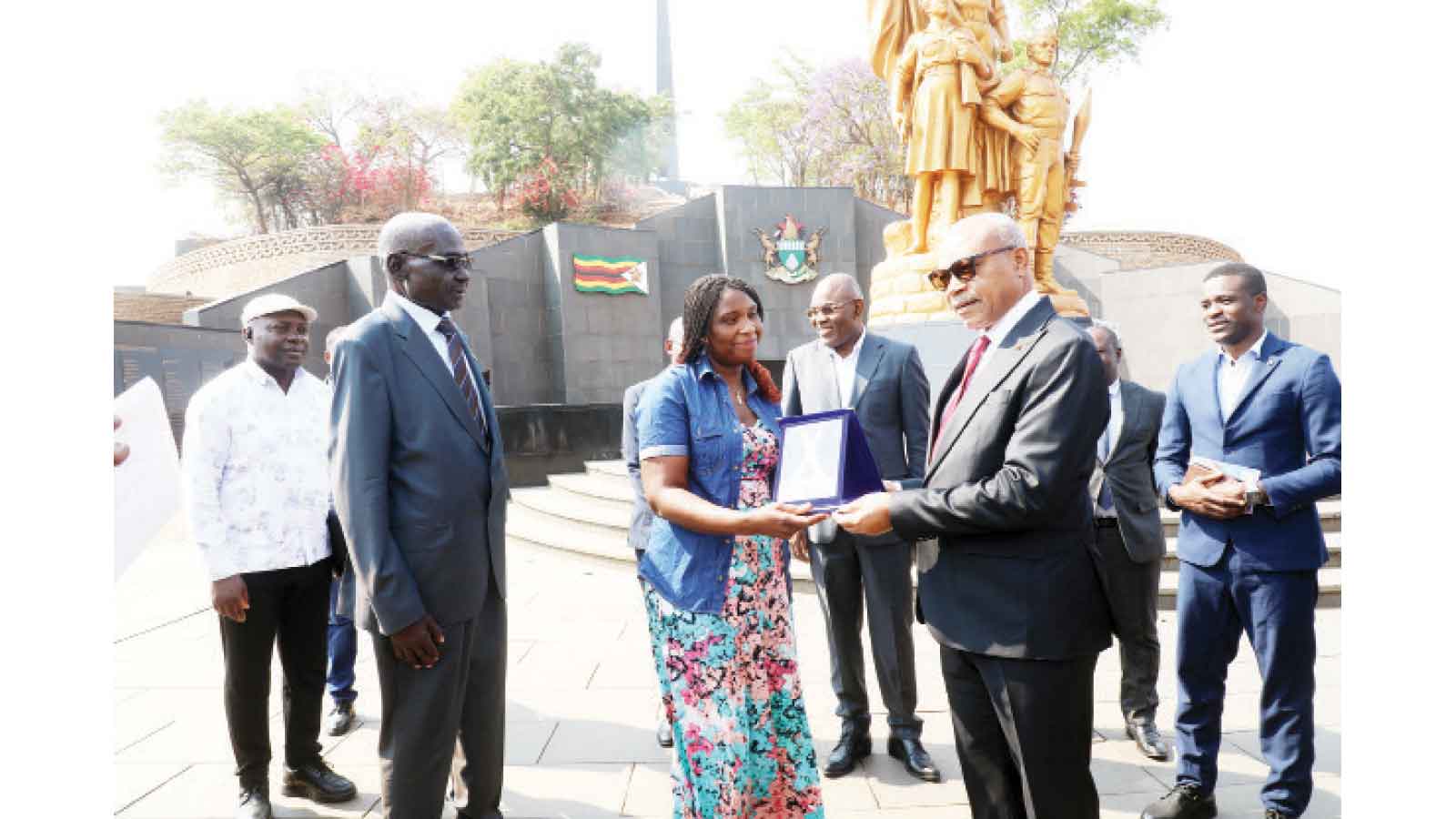
Joseph Madzimure
Zimpapers Politics Hub
AFRICAN youth have been challenged to appreciate their history as that will shape their future, visiting Angolan Defence Minister General (Rtd) Lucio Gonçalves Amaral said after he toured the National Heroes’ Acre and the Museum of African Liberation yesterday.
He commended the sacrifices made by Zimbabwe’s heroes and heroines to liberate the country and said he had also gained a deeper understanding of Africa’s history.
The Minister was accompanied by the Deputy Minister of Defence, Brig-Gen (Rtd) Levi Mayihlome, and Angolan Ambassador to Zimbabwe, Mr Baltazar Diogo Cristóvão.
Minister Gonçalves Amaral commended Zimbabwe for its contribution to peace and stability in the region.
“I was quite impressed with what I saw at the National Heroes’ Acre. This is the best way to honour those who sacrificed for the country; they deserve such a highest honour,” said Minister Gonçalves Amaral.
He laid a wreath at the Tomb of the Unknown Soldier earlier.
During his visit to the Museum of African Liberation, he watered a tree dedicated to Angola, symbolising African unity and shared heritage.
Minister Gonçalves Amaral urged African youth to defend the legacy left by their forefathers through patriotism.
“The African youth should know more about their history so they can be aware of their past.
“They should study history so they can understand the past, reflect on the present, and anticipate the future. I would also say that media influence on young people should be reduced, because these things are built through great sacrifice such as the liberation of our states and our nations,” the Minister said.
He said young people should understand that the freedom they enjoy today was achieved at the cost of the bloodshed and deaths of many young people in Africa.
“They should not think that by snapping their fingers everything will fall from the sky. Everything requires hard work, and above all, they must be resilient. Let there be resilience, so that our continent can move forward and, most importantly, so that we are all united for a better Africa,” he emphasised.
He challenged the youth to know their history — to learn and study their story.
“By understanding where we came from, we can reflect on what is happening now and better project the future of our population.”
He said the freedom they are experiencing now came from the bloodshed of brothers and sisters who sacrificed their lives.
He implored the youth to work hard and be resilient in order to continue developing the country, particularly in Africa.
Turning to the Museum of African Liberation, he commended Zimbabwe for designing such a project in Southern Africa.
“I am happy with the nation for idealising this project, which is a project not only for the people of Zimbabwe, but is a project that will immortalise all African heroes, mainly those who are part of our region, who gave their lives in order for our countries to be free,” he stated.
Angola, he said, will play its role in supporting the Museum of African Liberation to tell the African story.
“We will find ways to illustrate, in the space that will be provided to us, so that we can rewrite our history. Since Angola has a section here, it means we will contribute by sharing our history of the liberation struggle. We will also highlight how Angola helped other countries achieve freedom — countries that, at the time, had not yet gained independence,” he expressed.
Angola, as an internationalist country, will always share and reaffirm its position of helping those in need.