Mashudu Netsianda, [email protected]
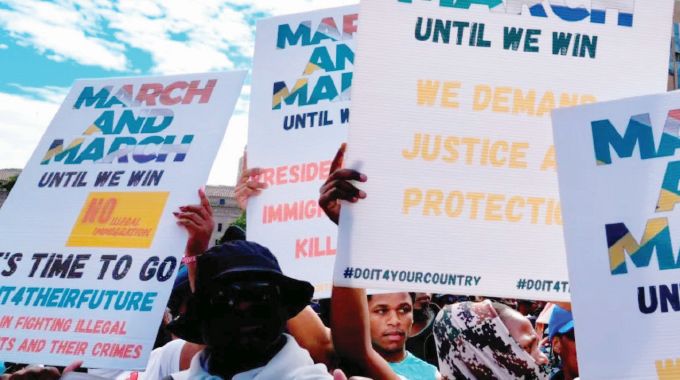
THE recurring outbreaks of xenophobia — or more accurately, Afrophobia — in South Africa should concern every African who believes in the vision of a united continent. Every time shops owned by foreign nationals are looted, migrants are driven from their homes or workers are targeted because of their accents or nationality, Africa suffers a setback that extends far beyond South Africa’s borders.
Few countries have contributed more to the world’s understanding of human dignity than South Africa. It gave Africa and the world one of its most celebrated philosophies — Ubuntu, a principle captured in the phrase: “I am because we are.”
Ubuntu teaches that a person’s humanity is shaped and affirmed by the humanity of others. It recognises that dignity is not reserved for people of a particular nationality, ethnicity or social standing. South Africa’s Constitution is similarly rooted in the values of human dignity, equality and freedom. Together, these principles remind us that our shared humanity matters more than the documents we carry or the borders that separate us.
Every act of violence against fellow Africans stands in direct opposition to those values. It suggests that African solidarity has limits and that the bonds forged through centuries of shared history can be forgotten when economic hardships arise.
What makes the situation particularly painful is that many Africans separated by modern borders were once part of the same communities, kingdoms and cultural groups before colonial powers divided the continent. Today’s African states may be sovereign nations, but many of their people remain linked by language, culture, ancestry and family ties that existed long before the colonial era.
The borders that define Africa today were largely drawn during the Berlin Conference of 1884-85, when European powers partitioned the continent with little regard for the people who lived there. Families, communities and ethnic groups found themselves separated by lines drawn on maps by foreign governments.
The Limpopo River may divide Zimbabwe and South Africa geographically, but it has never erased the deep historical and cultural ties between communities on both sides of the border. Venda communities in Zimbabwe and South Africa remain connected through language, customs, traditional leadership structures and family relationships that have endured for generations. Families continue to live across Beitbridge and Limpopo Province, maintaining relationships that existed long before modern borders were established.
The same is true elsewhere in the region. Tsonga communities span South Africa and Mozambique, while Tswana communities are found across Botswana, South Africa and Zimbabwe. Sotho communities also maintain strong cultural ties that stretch across national boundaries. For many of these people, crossing a border is not an international journey in the conventional sense. It often means visiting relatives, attending cultural ceremonies, conducting business or maintaining family connections.
To describe fellow Africans from neighbouring countries as complete strangers ignores these historical realities. In many cases, those targeted during xenophobic attacks share cultural roots, ancestry and traditions with the very communities attacking them.

Africa’s liberation history offers another reminder of this interconnectedness. During apartheid, many African countries opened their borders and their hearts to South Africans fleeing oppression. Zimbabwe, Zambia, Mozambique, Tanzania, Angola and Botswana, among others, provided sanctuary, training facilities and diplomatic support to liberation movements.
That solidarity came at a cost. Several countries faced military attacks and economic pressure because they chose to support South Africa’s struggle for freedom. Yet they stood firm because they understood that the liberation of South Africa was inseparable from the liberation of Africa itself.
Thousands of South Africans found refuge across the continent. Communities shared scarce resources and welcomed exiles, not because it benefited them economically, but because they believed in justice and freedom. That spirit of solidarity should continue to inform how Africans treat one another today.
None of this means that South Africans are not entitled to raise concerns about unemployment, crime, immigration policy or pressure on public services. These are legitimate issues that deserve serious discussion. Every sovereign nation has the right to protect its borders and enforce its immigration laws.
What is dangerous, however, is the temptation to turn migrants into convenient scapegoats for problems whose causes are far more complex. Blaming foreign nationals may provide a simple explanation for unemployment, poverty or poor service delivery, but it rarely addresses the underlying challenges.
Perhaps the greatest tragedy is that many of those being targeted are not strangers in any meaningful historical sense. They come from communities whose relationships long predate colonial borders. To attack a person simply because they crossed a border is, in some cases, to attack someone whose ancestors shared the same land, culture and history as your own.
Equally troubling is the political rhetoric that often accompanies debates around migration. In recent years, some political parties and pressure groups have made undocumented migration a central issue in their campaigns. Former President Jacob Zuma’s uMkhonto weSizwe (MK) Party is among those that have called for stricter immigration controls and greater prioritisation of South Africans in employment and public services.
Democratic societies must allow robust debate on immigration. Governments have a duty to secure borders and uphold the law. However, political leaders also carry a responsibility to ensure that public discourse does not demonise entire nationalities or ethnic groups.
When migrants are repeatedly portrayed as the cause of unemployment, crime, housing shortages or economic decline, the distinction between political messaging and public hostility can quickly become blurred. Several civil society organisations and human rights groups have warned that inflammatory language risks legitimising vigilantism against foreign nationals.
While individuals are responsible for their own actions, leaders must recognise that words spoken from political platforms can influence public attitudes and behaviour.
When angry crowds chant “abahambe” and demand that foreigners leave, Ubuntu gives way to fear. When African-owned businesses are destroyed, Ubuntu is replaced by exclusion. When children are bullied because their parents come from Zimbabwe, Mozambique, Malawi, Nigeria or elsewhere, Ubuntu is betrayed.
Afrophobia undermines the very philosophy that helped South Africa heal after apartheid. Ubuntu teaches that another person’s humanity enriches our own and that communities thrive through cooperation rather than exclusion.
The consequences of xenophobic violence extend beyond the immediate victims. Such attacks damage South Africa’s reputation, strain diplomatic relations and undermine efforts towards regional integration. They also threaten initiatives such as the African Continental Free Trade Area, which seeks to promote the movement of goods, services and people across the continent. Africa cannot build a common market while hostility towards fellow Africans persists.
The continent’s future depends on cooperation. Climate change, food insecurity, unemployment, organised crime and economic development are challenges that no country can tackle alone. Regional partnerships are not optional; they are essential.
The Southern African Development Community relies on trust, labour mobility and cross-border trade. Fear and violence discourage investment, disrupt commerce and harm ordinary people. Many migrants operate small businesses, move goods across borders and provide skills that local economies depend on. When violence erupts, livelihoods are destroyed and families are torn apart.
It is also important to remember that South Africa’s economy was built, in part, through the labour of migrant workers from across Southern Africa. For more than a century, hundreds of thousands of people from Malawi, Mozambique, Lesotho, Botswana, Eswatini, Zimbabwe and Zambia worked in South Africa’s mines under often difficult and dangerous conditions.
These workers helped build the mining industry that became the foundation of South Africa’s industrial and economic growth. They are not outsiders seeking to exploit the country. Their labour contributed significantly to the prosperity South Africa enjoys today.
Good neighbourliness is about more than diplomatic statements exchanged by governments. It is reflected in everyday interactions and in the understanding that the region’s economies are interconnected. The prosperity of Harare, Gaborone, Maputo, Lilongwe and Pretoria is closely linked. Trade, investment and labour mobility bind these countries together.
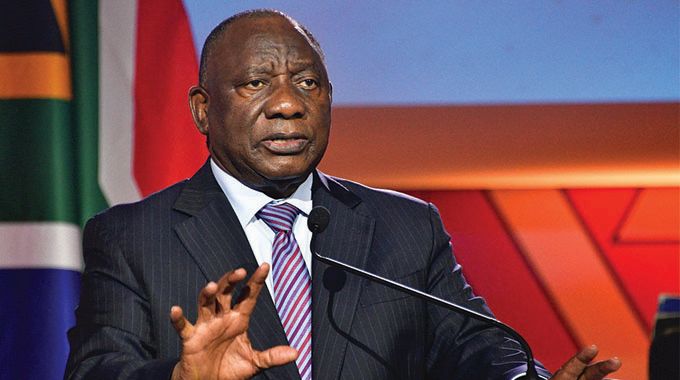
President Cyril Ramaphosa has repeatedly condemned attacks on foreign nationals and stressed that violence has no place in South Africa’s constitutional democracy.
He has consistently argued that legitimate concerns about immigration, crime and unemployment must be addressed through lawful processes rather than mob action.
His message deserves wider support. South Africa has every right to strengthen border controls, combat illegal immigration and enforce its laws. However, it has an equally important obligation to protect everyone within its borders from violence, intimidation and discrimination, regardless of nationality.
President Ramaphosa has also reminded South Africans that many African nations stood with them during the liberation struggle. That history of sacrifice and solidarity should continue to shape the country’s response to those seeking refuge or economic opportunities today.
Schools also have a role to play. Greater emphasis should be placed on teaching African history and helping young people understand the deep connections that exist across borders. Many of the boundaries shown on maps are colonial creations rather than natural divisions between people.
Africa’s challenges will never be solved by attacking neighbours. The answers lie in reviving the values that have guided African societies for generations — Ubuntu, mutual respect, hospitality and collective responsibility.
None of this diminishes national sovereignty. Zimbabwe remains Zimbabwe and South Africa remains South Africa. However, sovereignty should never be used to justify hostility towards people whose histories and identities are deeply intertwined with our own.
At a time when Africa is striving for greater integration and cooperation, xenophobia is more than a social problem. It is a betrayal of the continent’s history, its values and its future.
Africa’s liberation movements showed the world that solidarity can defeat oppression. Today’s challenge is different but no less important. The continent’s future will not be secured by building higher walls between neighbours. It will be secured by building stronger bridges of trust, cooperation and shared prosperity.
An African should not become a foreigner in Africa simply because a colonial map says so.