

 Online Reporter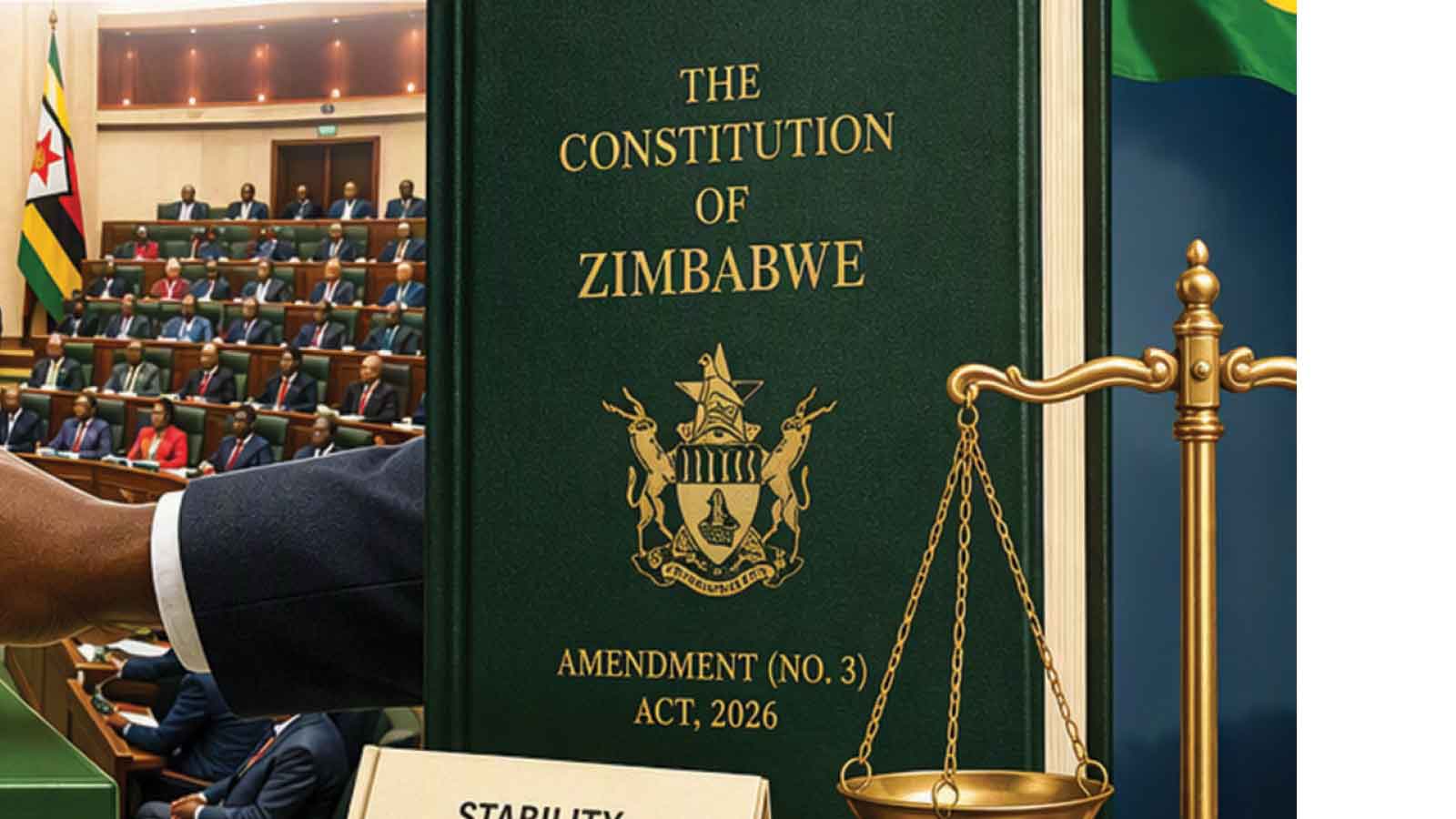
George Maponga
Masvingo Bureau
THE Attorney General’s Office successfully drafted 18 Bills and more than 100 Statutory Instruments (SIs) in the first six months of this year, giving legal traction to the Government’s drive to ensure long-term sustainable growth as the country continues its march towards becoming an upper-middle-income society by 2030.
Among the 18 Bills was the landmark Constitutional Amendment Bill No. 3 (CAB3), which is now the Constitutional Amendment Act No. 3 (CAA3) following its enactment as part of the country’s Constitution. This came after President Mnangagwa assented to the Bill following its passage through the National Assembly and Senate.
Attorney-General Mrs Virginia Mabiza praised the legal service milestones achieved by her office in the first half of the year, while challenging her staff to raise their performance to deal with the new imperatives and realities brought about by the enactment of CAA3 and the legal needs of returning citizens from South Africa, which is currently experiencing xenophobic tensions.
She was addressing staff during the 2026 Mid-Term Strategic Planning Review Workshop at Clever’s Resort on the shores of Lake Mutirikwi.
Mrs Mabiza also challenged her team to prepare to extend legal services to tens of thousands of Zimbabweans returning home in the wake of the ongoing immigration crisis in neighbouring South Africa.
She noted that it was particularly pleasing that her office had diligently delivered on the task assigned by Government to draft CAB3, which is now part of the Constitution, with its enactment effecting far-reaching changes to the country’s governance architecture.
“We need to be fully alive to the new imperatives and realities in light of what is currently happening and what is defining the AG’s Office in 2026. We need to understand these imperatives and realities as we introspect and strategise.
“We have to look at these realities against the background of resource constraints. Our resources are never sufficient, but we have to come up with a strategic plan and a strategy on how to deal with the new law (CAA3), and how to support our citizens who are being repatriated from South Africa,” said Mrs Mabiza.
The Attorney-General said her office had delivered a solid performance after successfully drafting Bills and SIs in the first half of the year, adding impetus to Government’s Vision 2030 goal of attaining upper-middle-income status.
“A total of 18 Bills and 101 Statutory Instruments were drafted. Four Bills were assented to by the President and became law, while 17 remain before Parliament,” she said.
“Notably, the Office drafted a landmark amendment in the form of the Constitution of Zimbabwe (Amendment) Act No. 3. At its core, the Act seeks to strengthen governance systems that shape everyday life for Zimbabweans, reinforce democratic institutions and constitutional systems that citizens depend on, while aligning the legal framework with best practice in progressive jurisdictions.”
The Attorney-General defended CAA3, describing it as a harbinger of long-term stability, which is essential for the country to achieve its Vision 2030 aspirations.
“The Act modernises the constitutional architecture while honouring the core principles of the 2013 Constitution, ensuring that change serves continuity rather than disruption.
“The Act advances institutions that work better for citizens, political inclusivity that gives more Zimbabweans a voice, and the long-term stability needed for families and businesses to thrive,” said Mrs Mabiza.
“Together, these reforms align Zimbabwe with resilient constitutional standards emerging across contemporary Africa and strengthen the path towards Vision 2030 of a prosperous upper-middle-income society built on strong, trusted institutions.”
Mrs Mabiza commended the improving performance of her office, saying this was reflected in a higher performance score last year compared to 2024.
“This review sits on solid ground. Our 2025 performance score rose to 4,31, a 2,8 percent improvement on the 4,14 recorded in 2024.
“That step, modest in appearance, is significant in substance. It is proof that discipline compounds, consistency pays, and the standards we hold ourselves to are beginning to show in the numbers.
“For that, I extend my sincere gratitude to every one of you for your daily, often unheralded, contribution that keeps this Office on course towards our 2030 vision of excellence in the provision of legal services to the Government of Zimbabwe.
“This is key to contributing towards the national vision of a prosperous and empowered upper-middle-income society by 2030,” she said.
Mrs Mabiza said the tangible and measurable results recorded by the Attorney General’s Office in the first half of the year should be sustained to ensure continued growth.
She said Section 8 of the newly enacted CAA3, which elevated the qualification threshold for the Attorney-General to that of a Supreme Court judge, was a major boost as it reinforced the office’s seniority, legal authority and independence.
Significant progress was also recorded in case management, with 918 cases spanning labour, civil and constitutional matters attended to during the first six months of the year.
Several favourable rulings were secured, including those relating to CAB3, Mrs Mabiza added.
She also revealed that her office attended to 250 matters across Government during the first half of the year, while 147 memoranda of agreement were reviewed and approved over the same period.
The Attorney General’s Office also produced 36 Presidential and Cabinet papers during the period, which Mrs Mabiza said demonstrated an improvement in the quality of legal advice provided by her office.
She further highlighted progress in institutional capacity building, evidenced by achievements such as a comprehensive job evaluation exercise and targeted skills development programmes.
Mrs Mabiza said the Attorney General’s Office must continue to serve Zimbabweans despite resource constraints, noting that the number of files closed and Bills drafted remained key indicators in measuring the integrity of the country’s justice delivery system. The strategic planning review workshop presents an opportunity to define clear deliverables and realistic timelines that will help the Attorney General’s Office end 2026 on a stronger footing.


 Bongani Ndlovu