admin
admin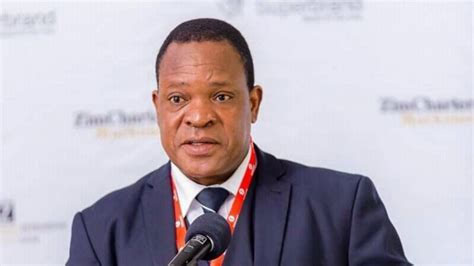
Mukudzei Chingwere Herald Reporter
Agricultural production in the midst of climate change will be advanced in ways to ensure consistent food security in the country, whether it rains or not, as part of the developmental trajectory towards an upper-middle income economy by 2030, Lands, Agriculture, Fisheries, Water and Rural Development Minister Dr Anxious Masuka said recently.
Dr Masuka noted that Zimbabwe had come a long way from a position of hunger and food insufficiency through strategic planning by the Government and nutritional improvement was the next frontier for the authorities.
Authorities are on record that President Mnangagwa is priming the Government to go a step further and make sure that the available food is not only enough, but of the best quality and nutrition.
Policies by the Government to promote agriculture have seen the country remain on track to achieve food security, self-sufficiency, wheat self-sufficiency as well as nutrition security by 2025.
The quest for self-sufficiency in maize production saw overall output go up from 907 629 tonnes in 2020 to 2,7 million tonnes in 2021, well more than NDS 1 targeted levels of 1,8 million tonnes.
Government interventions towards drought-proofing agriculture saw resilience in production during the 2021-2022, with 1,5 million tonnes and the 2022-2023 farming season with two million tonnes harvested.
Minister Masuka said fortunately, El Nino this year is so strong that by most scientific accounts it cannot get stronger, so it must begin to weaken with a La Nina season, increasing the risk of heavy rainfall and flooding, expected in 2024.
“That having been said, we must continue to consolidate the climate-proofing agenda. At the household level we must continue to emphasize the successful intensive conservation agriculture methods, Pfumvudza/Intwasa,” Dr Masuka.
“We must ensure that what is grown by the farmer is not determined by what they want, but by the requirements of that agro-ecological zone. If we do so and put the right crop in the right region, and use conservation farming methods then at the household level we would have assured the nation that that household will be food secure.
“Then at the national level, we must accelerate dam construction, we must ensure that we accelerate irrigation rehabilitation, and we must equally ensure that we accelerate irrigation expansion.“We are targeting 350,000 hectares of summer irrigation that will give us a minimum of 1,8 million tonnes of maize for human consumption. This season we had something in the region of about 80 000 hectares available for irrigation for maize which means that we still have a very large deficit.”
Government was now luring investment in irrigation development and Zimbabwe would soon host a conference to push that agenda.
“In the next two months or so, the Government will organise an international conference to accelerate investments in irrigation development,” said Dr Masuka. “We think on this path we will be able to get the 350 000 hectares in the not too distant future and assure this nation of perennial food security whether it rains or not.”



 Online Reporter