

 admin
admin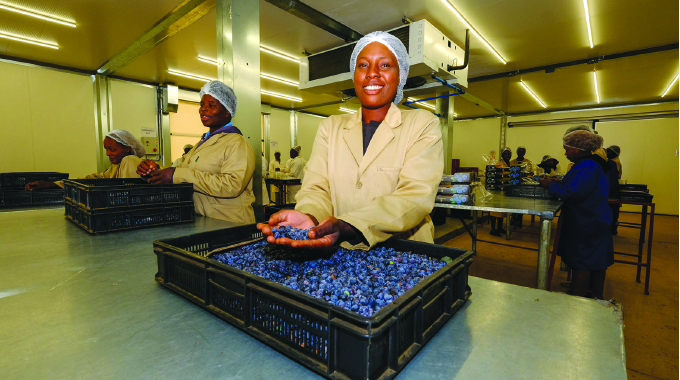
Edgar Vhera
Agriculture Specialist Writer
ZIMBABWE’S agriculture sector has managed to withstand the test of external shocks of climate change, Covid-19 and the geo-political disturbances in Eastern Europe to record notable success stories in the 2021/22 season.
This was disclosed by Ministry of Lands, Agriculture, Fisheries, Water and Rural Development permanent secretary Dr John Basera at the Ministry’s strategic planning workshop in Gweru yesterday.
“The past season had its own challenges, largely captured as the 3Cs challenges: Climate Change, Covid-19 and Conflict. Notwithstanding all these limitations, I must say, the sector had a good measure of performance across the livestock, horticulture and some crops,” said Dr Basera.
The wheat and flour self-sufficiency mantra are very possible as between 380 000 and 400 000 tonnes are likely against an annual demand of 360 000 tonnes, a record 13 months of wheat supply from local production.
Not to be outdone was tobacco whose output in volume terms increased by one percentage point yet in value terms increased by 10 percent to US$650 million. Export earnings from tobacco are likely to reach US$1 billion.
Reliance on rain-fed agriculture saw maize production for the 2021/22 falling by about 43 percent compared to the 2020/21 season, amplifying calls for mechanisation. Soya beans output grew 15 percent to 82 028 tonnes in 2021/22, with sugarcane production estimated to increase by three percent from the 2020/2021 value.
Within the horticulture sector, as the Government puts into motion the Horticulture Recovery and Growth Plan (HRGP), blueberry production increased to 5 000 tonnes in 2021 earning the country US$7 million against US$4 million in 2020 marking a 93 percent increase.
Pecan nuts production increased significantly by 348 percent from 85, 3 tonnes last season to 374 tonnes in the 2021/22 season.
Coffee production increased by 12 percent from 608 to 681 tonnes in the 2021/22 season while apple production increased by 17 percent from 4 032 to 4 708 tonnes obtained in the 2021/22 season. Irish potato production increased by 19 percent from 447 867 tonnes in the 2020/2021 season to 592 779 tonnes this season. Further positive growth is anticipated as a result of the Potato Value Chain Financing Initiative led by AFC Land Bank.
To give credence to the resurgence of the horticulture sector the volume of horticulture exports rose from 110 million kilogrammes achieved in 2020 to 129 million kilogrammes in 2021 representing a 17 percent growth.
“In the livestock sub-space, we have witnessed reduction in mortality rates from 11,1 to 8,86 percent as well as tick-borne disease related deaths by almost 50 percent year on year. The national beef herd increased from 5 478 648 cattle in 2020 to 5 509 983 in 2021. Intensive dipping as well as the blitz tick grease programme under the Presidential Livestock Scheme culminated in these unprecedented feats,” said Dr Basera.
“National average beef cattle off-take increased from nine percent in 2020 to 10 percent in 2021 with a 2024 target of 15 percent. The beef carcass weight increased from 154 to 168 kilogramme from 2020 to 2021 against the targeted of 220 kilogrammes.
“Overall pork production increased by 12 percent from 14 347 to 16 074 tonnes in 2021 against a national target of 22 000 tonnes by 2025,” continued Dr Basera.
“Initiatives such as foot and mouth disease (FMD) control, disease surveillances, dip tank rehabilitation, livestock traceability and veterinary diagnostic services are crucial touch points in the livestock growth and recovery plan (LRGP), pointed out Dr Basera.
“The dairy sub sector is on a strong rebound and as of August 2022, at least 59 million litres had been produced signifying a 17 percent year on year increase from 51 million the same time last year. Milk powders imports dropped by over 3,7 million kilogrammes to 5,1 million kilogrammes by August, 2022,” commented Dr Basera.



 Online Reporter