admin
admin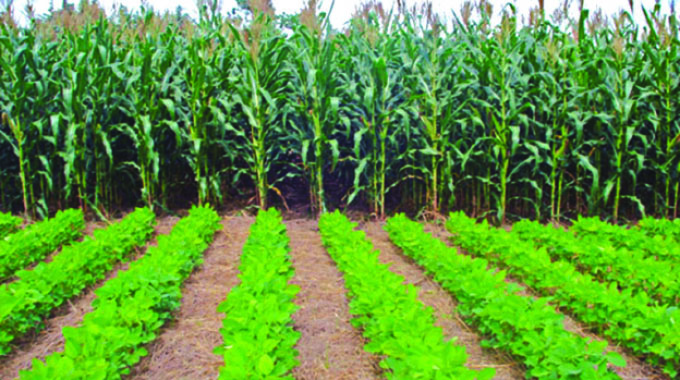
Since the advent of the Second Republic, President Mnangagwa’s Government has implemented a number of interventions to transform the country’s agriculture sector.
The Agriculture and Food Systems Strategy (AFSTS) (2020-2024) was launched by the President in August 2020, with a view to:
- Assuring the nation of perennial food security, away from episodic and weather-depended food security;
- Reducing and eventually eliminating imports, through localisation of value chains;
- Diversifying and increasing exports;
- Enhancing value addition and beneficiation;
- Increasing employment creation and;
- Uplifting rural livelihoods, leaving no one and no place behind.
The agriculture sector’s gross value was US$5,62 billion in 2020 and the national target was to develop a US$8,2 billion agricultural economy by 2025. The first half of the strategy period saw the rapid transformation of the sector through the following AFSTS anchor plans:
- Agriculture Recovery and Growth Plan;
- Horticulture Recovery and Growth Plan;
- Livestock Growth Plan;
- Accelerated Irrigation Rehabilitation and Development Plan;
- Agriculture Information Management System and
- Fisheries and Aquaculture Development Plan
These six plans created the requisite enabling policy and regulatory environment for sustained public and private sector investments and enhanced partner support for accelerated crop, livestock and fisheries development.
Climate change remained a constant threat to the implementation of the AFSTS, while the worldwide Covid-19 pandemic’s negative impact unfolded during 2020 and lasted till early 2023.
Latterly, during the plan, the geopolitical conflict in Eastern Europe negatively impacted supply chains and disrupted food, fuel and fertiliser production and supply. The Covid-19 pandemic also led to significant business and supply chain disruptions.
The exchange-rate induced price volatility and higher than expected inflation in the country increased production costs.
The high cost of production’s pass-through effects on other nodes of the value chain, led to higher food, feed and oil prices especially in the first half of 2023.
Zimbabwe’s agriculture remains vulnerable to climate-induced shocks (e.g. drought, floods, heat waves), therefore climate-proofing agriculture, at both small-holder and large-holder levels, has been prioritised.
The adoption and popularisation of the sustainable intensive conservation farming model called Pfumvudza/Intwasa, and agro-ecological tailoring of crops, for all communal and old resettlement farmers, has led to the attainment of household food security.
Despite the yoke of sanctions, Zimbabwe’s agricultural sector has been transformed by both strong state, investment and strong state facilitation of private sector participation in agricultural development.
Despite the many seemingly insurmountable challenges, the implementation of the AFSTS led to rapid development of the agricultural sector. The agricultural sector grew by 4,1 percent in 2020, 17,5 percent in 2021 and 6,2 percent in 2022. Resultantly, the nation was food self-sufficient since 2020/2021.
Going forward, a firm foundation has been laid for assured and perennial food sovereignty; increased export growth; enhanced aggregation, value addition and beneficiation; agro-industrialisation; increased employment and the upliftment of standards of living of the predominantly rural population.
Vision 2030 of a prosperous and empowered upper middle income beckons and is achievable. The philosophy “Nyika inovakwa nevene vayo, igotongwa nevene vayo, igonamatigwa nevene vayo” is clearly demonstrable in the agricultural sector, with the land reform programme forming the basis for sustainable agri-economic development.
Authoritatively and irreversibly contributing to building Zimbabwe, “brick by brick and stone upon stone”, the agricultural sector has shown that equitable development, leaving no one and no place behind, is possible.
There is a strong agricultural development-rural industrialisation-rural development nexus. This has led to the expanded Ministry mandate to include rural development in mid-2021.
Fisheries and aquatic resources development were illuminated, with the mandate for these also being given to the Ministry in early 2021. The Rural Development 8.0 paradigm comprising of a cocktail of measures that are outcome – based and impact – oriented to improve the livelihoods of the predominantly rural population, was launched in 2021.
Zimbabwe has a diverse agricultural sector and enviable resource endowments (land, favourable climate, human resource capital) to support over 25 crop and nine livestock value chains.
An inclusive stakeholder approach, involving both the public and private sectors, has provided a basis and foundation for accelerating value chain transformation by entrenching responsibility and accountability.
The private sector is required by policy to ensure that at least 40 percent of the annual raw material requirements are met from value chain financing of production by farmers.
Zimbabwe’s agricultural sector has four categories of farmers. Firstly, the 1,8 million rural households (3 million beneficiaries), some 62 percent of the population. They are predominantly subsistence farmers. The second category, being the 360 000 old resettlement and A1 farmers, who are surplus-oriented farmers. The third category, being the 23 000 A2,” commercial farmers”.
And the fourth category, are the large-scale commercial farmers/corporates.
The AFSTS focused on transforming communal farmers from subsistence farmers to become surplus-oriented farmers, transforming A1 and old resettlement farmers to become commercial farmers, and transforming A2 farmers to become perennially successful entrepreneurs.
Much was accomplished, but much more needs to be done.
Agriculture as a business mindset must be inculcated in farmers at every level of production to catalyse agricultural transformation at both space and scale.
Agricultural financing in the post-land reform era has presented challenges. Innovative non-collateral based lending and a new financial architecture to provide financing for all farmer categories were developed.
Key financing models to facilitate the growth of specific value-chains were developed along four channels/tracks.
Firstly, the government funded Climate-Proofed Productive Social Investment (Pfumvudza /Intwasa Programme) model aimed at supporting vulnerable households to produce grains to attain household food security (and surplus for sale) with a standardised input package of seed, fertiliser and chemicals for 3,5 million beneficiaries, comprising 3 million rural (1,8 million households) and 500 000 peri-rural beneficiaries.
This investment replaced the Production and Social Protection subsidy model of the past. Second, the National Enhanced Agricultural Productivity Scheme (NEAPS), an institutionalised government-guaranteed financing model which provides credit to A2 farmers.
This was formerly, and colloquially, known as Command Agriculture.
Thirdly, the private sector value chain financing model, where commodity off-takers are obliged by a government policy under the Agriculture Recovery Plan to fund the production and purchase of at least 40 percent of their annual raw material requirements.



 Online Reporter