admin
admin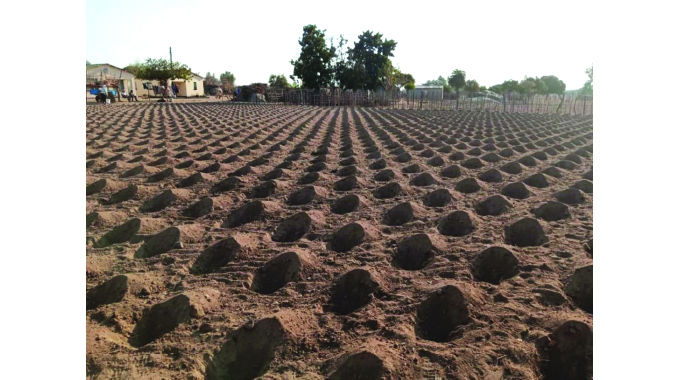
Fildah Gwati
FARMERS who heeded Government’s advice on agro-ecological matching and grew crops suitable for their regions have a chance to score decent yields despite the drought currently ravaging the country.
This comes as many farmers switched from conventional farming methods to climate-proofed practices such as Government’s Pfumvudza/Intwasa programme and the adoption of drought-tolerant traditional grain crops that can withstand long dry spells.
In a recent X (formerly twitter) post, Lands, Agriculture, Fisheries, Water and Rural Development permanent secretary Professor Obert Jiri observed that farmers who embraced agro-ecological matching, Pfumvudza/Intwasa and traditional grains cultivation were assured of good yields this season, despite the minimal rainfall received by the nation.
“Crops belonging to farmers who embraced agro-ecological matching are faring better than those that were produced without paying attention to the agro-ecological requirements specific for different regions,” said Prof Jiri.
The decision by Government to encourage the adoption of this farming method was meant to address policy-induced and household-induced droughts along with the provision of climate-proof interventions. Embracing agro-ecological matching therefore marks the first step towards achieving food security and reducing dependency on maize only for subsistence.
The implementation of the strategy has been on the increase in the cultivation of traditional grains, especially in the Southern provinces of the country.
Recent reports from the Ministry of Lands, Agriculture, Fisheries, Water and Rural Development show that the hectarage for sorghum increased by 27 percent from 319 759ha in the 2022/23 season to 405 116ha this term. Similarly, the area dedicated to pearl millet cultivation has seen a 7, 5 percent increase from 180 666 hectares in the 2022/23 season to 194 232ha this season. Overall, the cumulative area dedicated to maize and traditional grains cultivation accounted for 99, 6 percent of the target covering approximately 2 349 921 hectares.
“The condition of the traditional grains was much better than maize highlighting Government’s progress and success in eliminating policy-induced drought. Progress was also made in reducing household-induced drought, a phenomenon where households still prefer maize in agro-ecological regions 4 and 5 where it does not do optimally. The combination of household-induced drought and weather-induced drought has the deadly effect of wiping away crops leading to food dependence, hence the Government’s modification of social welfare access to include climate-proof interventions by farmers,” explained the report.
The crop condition in the northern regions of the country was generally described as fair to good. However, in the southern regions, the crop condition was predominantly poor, likely due to the prolonged dry spell lasting more than 28 days. Some crops have temporarily wilted, while others are showing signs of permanent wilting.
“Under the Pfumvudza/Intwasa initiative, which emphasises conservation agriculture practices, the crop condition remains fair to good. Farmers participating in this programme anticipate higher yields compared to those using conventional tillage methods,” added the report.
There are currently 2 645 tonnes of sorghum and 9 204 tonnes of pearl millet (excluding stocks held by the Grain Marketing Board (GMB) and the private sector) that are in stock.



 Online Reporter