Louis Mondo
All for Transformation
The greatest opportunity presented by Artificial Intelligence is not simply to make existing jobs more efficient, but to empower citizens to create entirely new business models, industries and sources of national wealth.
In an increasingly intelligent global economy, the prosperity of nations will depend not only on their ability to produce skilled graduates, but also on their capacity to transform knowledge, creativity and technology into commercially viable solutions.
For Zimbabwe, this presents an opportunity to accelerate the transition from a predominantly job-seeking society towards an entrepreneurial nation driven by innovation, productivity and enterprise development.
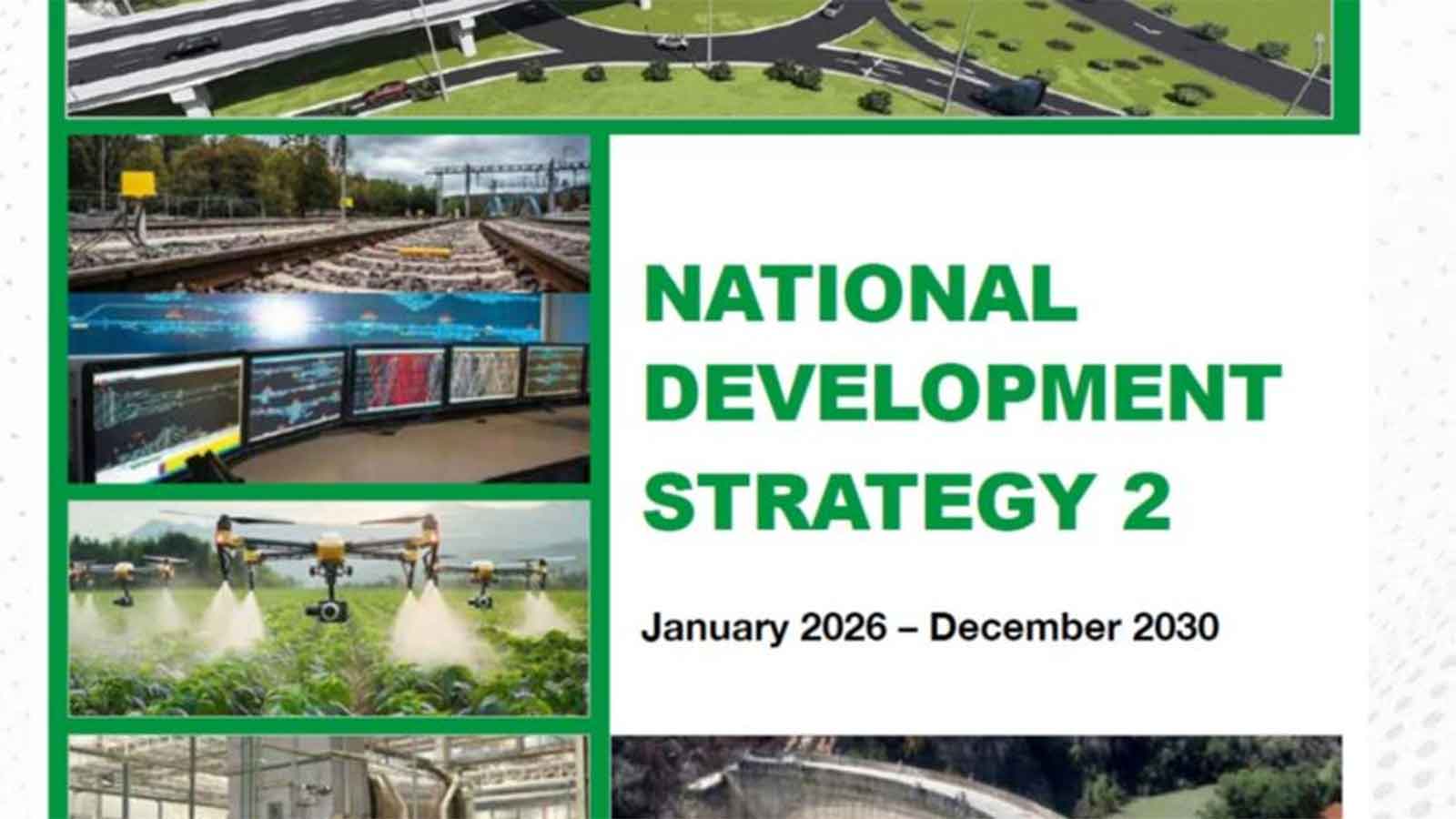
Zimbabwe has already established important foundations for this transformation through Vision 2030, the National Development Strategy 1 and 2, Education 5.0, the Heritage-Based Education philosophy and its broader digital transformation agenda. These initiatives recognise that education, research and innovation must contribute directly to industrialisation and economic development. The emergence of AI provides an opportunity to accelerate this vision by enabling Zimbabweans to develop solutions that address national challenges while creating businesses capable of competing in regional and international markets.
The Africa Skills Week, hosted by Zimbabwe earlier this month, further underscored the critical importance of equipping Africa’s workforce with practical, future-ready skills and competencies to drive innovation, enhance competitiveness and support sustainable economic transformation. Its relevance extends beyond preparing young people for employment to developing the creativity, technological capabilities and entrepreneurial confidence required to establish sustainable enterprises.
Zimbabwe is building on this momentum by placing AI-enabled entrepreneurship at the centre of its national skills development and industrialisation agenda.
Traditionally, establishing a business required considerable capital, specialised expertise and access to expensive infrastructure. AI is progressively reducing some of these barriers. A young entrepreneur can now use intelligent tools to conduct market research, develop business plans, design products, create marketing materials, manage customer relationships and analyse financial performance. Activities that previously required several specialists can increasingly be undertaken by small teams supported by AI technologies.
This development is particularly significant for Zimbabwe, where entrepreneurship already plays an important role in economic activity. The country’s informal businesses, small and medium enterprises, agricultural producers and emerging technology companies provide a foundation upon which an intelligent entrepreneurial economy can be built.
The strategic opportunity is to strengthen these enterprises through technology, formalisation, innovation and access to markets.
Agriculture offers one of the clearest examples. Zimbabwe’s agricultural transformation can be accelerated through AI-powered advisory services that provide farmers with information on weather patterns, crop diseases, soil conditions, irrigation requirements and market opportunities. Young entrepreneurs can establish businesses that deliver these services through mobile applications and local-language digital platforms. Such enterprises would simultaneously improve agricultural productivity, create employment and strengthen national food security.
In manufacturing, AI can help small enterprises in new product design and development, production planning, quality control and inventory management. A furniture manufacturer in Glen View 8 Furniture Complex, for example, could use intelligent design tools to develop customised products, estimate material requirements and market finished goods beyond traditional geographical boundaries. The result is not merely technological adoption, but the transformation of small workshops into increasingly competitive manufacturing hotspots.
Tourism and the creative industries present another opportunity. Zimbabwe possesses significant cultural heritage, historical attractions, artistic talent and internationally recognised tourism destinations. Entrepreneurs can use AI to develop multilingual tourism platforms, digital heritage experiences, personalised travel services and creative content for international audiences. A young entrepreneur in Victoria Falls could build a technology-enabled tourism business that connects local experiences with global customers, creating additional value from the country’s natural and cultural assets.
Similarly, Zimbabwe’s extensive network of small retailers and informal traders can benefit from AI-enabled financial management, customer analytics, inventory forecasting and digital commerce. Intelligent business tools can help entrepreneurs understand purchasing patterns, manage cash flows and identify profitable market opportunities. When combined with accessible digital payment systems and affordable connectivity, these technologies can support the growth of more productive and financially sustainable enterprises.
However, building an entrepreneurial nation requires more than providing access to AI applications. It demands a deliberate transformation of the education system, business environment and national innovation ecosystem.
Education 5.0 provides an important foundation by emphasising teaching, research, community service, innovation and industrialisation. The next stage is to deepen the integration of AI literacy, entrepreneurship, computational thinking, design thinking and practical problem-solving across educational institutions. Learners should increasingly graduate not only with academic qualifications, but also with the ability to identify economic opportunities, develop prototypes, establish enterprises and commercialise innovations.
Universities, polytechnics and vocational training centres are progressively becoming centres of enterprise creation. Innovation hubs and industrial parks are providing environments where students, researchers, industry practitioners and investors collaborate to develop commercially viable solutions. Academic success should increasingly be measured alongside tangible outcomes such as patents, start-ups, products, industrial partnerships and employment opportunities created.
Equally important is the development of a supportive entrepreneurial ecosystem. Innovative ideas require access to finance, mentorship, infrastructure, markets and appropriate regulatory frameworks. Strengthened collaboration among government, financial institutions, universities, technology companies and development partners to establish AI-focused innovation funds, business incubators and enterprise acceleration programmes is a strategic imperative.
Financing mechanisms should recognise that technology-based enterprises often possess valuable intellectual property and innovative business models without substantial physical assets. Appropriate seed funding, innovation grants, venture capital and results-based financing can help promising entrepreneurs progress from ideas to commercially sustainable businesses.
Zimbabwe is accelerating entrepreneurial development by identifying strategic AI projects that address pressing economic and social challenges through the AI for Impact (AI4I) Challenge spearheaded by POTRAZ. These AI projects could include national agricultural intelligence platforms, AI-enabled healthcare support systems, intelligent public service delivery platforms and digital marketplaces connecting local producers with regional and international buyers.
Such projects should be structured to create opportunities for Zimbabwean universities, start-ups and established enterprises to participate in research, software development, implementation and ongoing service delivery. This approach would ensure that national AI investments stimulate domestic innovation capacity rather than relying exclusively on imported technological solutions.
An entrepreneurial AI economy must also be built upon trusted digital infrastructure. A practical national action agenda should therefore prioritise AI entrepreneurship education, affordable digital infrastructure, innovation financing, university-industry partnerships and the deliberate use of public procurement to support locally developed solutions. Government, industry and educational institutions can establish measurable targets for AI-enabled start-ups, commercialised research, digitally transformed small enterprises and new technology-driven employment opportunities.
Zimbabwe’s greatest competitive advantage in the AI age will not necessarily be the sophistication of the technologies it imports, but the ingenuity with which its citizens apply intelligent technologies to solve real economic problems. The country possesses the human capital, entrepreneurial energy, natural resources and policy foundations necessary to build an innovation-driven economy.
The next frontier of Zimbabwe’s transformation is to turn every classroom into a source of innovation, every community into a potential centre of enterprise and every national challenge into an opportunity for indigenous solutions. In the Age of Artificial Intelligence, national prosperity will increasingly belong to societies that do not merely consume technology, but use it to create businesses, build industries and generate lasting economic and social value.
Louis Mondo
Digital Transformation and AI Governance Expert
Email: [email protected]