malvernmugadzikwa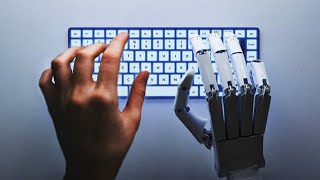
80pc of students may be submitting AI-generated assignments — Dr Tsabora
Fatima Bulla-Musakwa
FROM translating languages in seconds to composing music in an instant, artificial intelligence (AI) has become an undeniable force in people’s daily lives.
Students navigating the complexities of academia are increasingly turning to AI to make their lives easy. However, the new technology is blurring the lines between innovation or originality and intellectual dishonesty.
From customised algorithms crafting impeccable essays to sophisticated chatbots whispering answers during exams, AI is redefining the traditional notion of cheating.
For some students, gone are the days of frantic late-night cramming sessions.
“Unethical, crooked professionals”
Dr James Tsabora, a senior law academic and consultant at the University of Zimbabwe, warned of a generation of “unethical, crooked and dishonest professionals” entering the job market.
“On any written assignment, students don’t work, read; they use lots of applications to develop their assignments and AI can do that . . . it can do everything and then institutions’ plagiarism technology doesn’t pick it up,” he said. “So, to me, written assignments are not a good test for students.”
He said the impact was evident in the widening gap between students’ performance in assignments and in-class examinations.
Dr Tsabora said a significant proportion of students — upwards of 80 percent — may be submitting plagiarised or AI-generated assignments. This, he added, not only undermines the value of education but also disadvantages diligent students who rely on their own hard work.
Academic black market
However, AI is not the only culprit.
Socio-economic disparities are also fuelling another disturbing trend. Wealthier students are reportedly employing talented but underprivileged students to complete assignments on their behalf. This academic black market extends beyond fellow students.
Some reports allege that professionals are being hired to tackle dissertations, research papers and even PhD theses — a disturbing prospect for the future of various fields.
In some cases, wealthy students are accused of wooing lecturers with gifts and favours, hoping to secure better grades. This pay-to-play approach, argues some experts, could further erode the integrity of academic institutions.
“You then see a person who scored 40 out of 50 in their assignment scoring just 20 out of 50 in an exam and then you wonder,” added Dr Tsabora.
Fight back
University of Johannesburg associate professor and head of the communication and media studies department, Professor Admire Mare, said institutions are implementing policies and codes of conduct specifically addressing AI use in assignments.
Prof Mare said there was need for clear guidelines on the use of AI in learning institutions, similar to how calculators are allowed but not considered academic dishonesty.
He highlighted the importance of keeping anti-plagiarism tools like Turnitin up to date to catch these evolving cheating methods.
“You can’t really fault students for using a calculator, unless there is a policy banning that.
“Over and above this, there is need to fine-tune the use of other technologies, such as anti-fraud technologies that include Turnitin, to make sure they are up to date and able to flag academic dishonesty,” said Prof Mare, who is also a member of the International Association of Internet Researchers.
The ubiquity of AI tools, he said, means an increasing number of students are using the technology not only to circumvent doing their own work but also ensure that they submit assignments as soon as possible.
Experts note that several approaches could work to maintain the integrity of academic research. Ministry of Higher and Tertiary Education, Innovation, Science and Technology Development Permanent Secretary Professor Fanuel Tagwira said examinations should assess a student’s ability to apply knowledge, and not simply regurgitate facts.
This approach, known as Heritage-based Education 5.0, seeks to render AI-generated essays less valuable.
“When we deal with Heritage-based Education 5.0, it is now more about application of knowledge, not just remembering what was in the book. So, bringing a book will not help because you have to know how to apply that knowledge in real life.”
He added that as AI technologies evolve, methods of examining a student have also evolved from examining knowledge to examining the ability to apply knowledge.
“A balanced examination should have the application part, that is, whether the student can work the theory and apply it.
“Yes, it’s a challenge but I don’t think it’s insurmountable.”

Dr Fay Chung, co-founder of Women’s University in Africa, emphasised the importance of regular discussions and tutorials in addition to essays.
These interactive sessions, she said, allow professors to gauge a student’s true understanding beyond pre-written content.
Safeguarding standards
The Zimbabwe Council for Higher Education (ZIMCHE), the body tasked with maintaining academic integrity in Zimbabwean learning institutions, says it is on top of the situation. The council’s chief executive officer, Professor Kuzvinetsa Dzvimbo, said there are water-tight systems to keep cheating in check.
At all institutions, he said, there are highly qualified academics at departmental level responsible for overseeing student’s research projects and dissertations, ensuring adherence to university regulations.
He outlined a multi-tiered escalation process within the university structure, ultimately reaching ZIMCHE’s Higher Education Quality Assurance Committee, which comprises esteemed academics from various universities.
This committee ensures that these issues are addressed at the highest level.
“At every institution at departmental, faculty and supra-institutional level, discussions are taking place on how to make sure that academics can pick that up,” he said.
“As ZIMCHE, we even have a committee called the Higher Education Quality Assurance Committee where all these issues coming from different universities are discussed.
“Our chairperson is a very senior vice chancellor and accomplished academic.
“So, when we go to our Higher Education Quality Assurance Committee, when those issues come up, we take them to our council and it has vice chancellors from other universities, and our chairperson is a highly accomplished academic.
“So, we have in the system, right to the top of ZIMCHE, been looking at these issues.”



 Online Reporter