Patrick Chitumba in GWERU
THE late Air Chief Marshal Josiah Tungamirai’s contribution to transforming the Air Force of Zimbabwe after independence has been hailed as a lasting legacy, with his leadership credited with breaking racial barriers and laying the foundation for the development of local aviation skills.
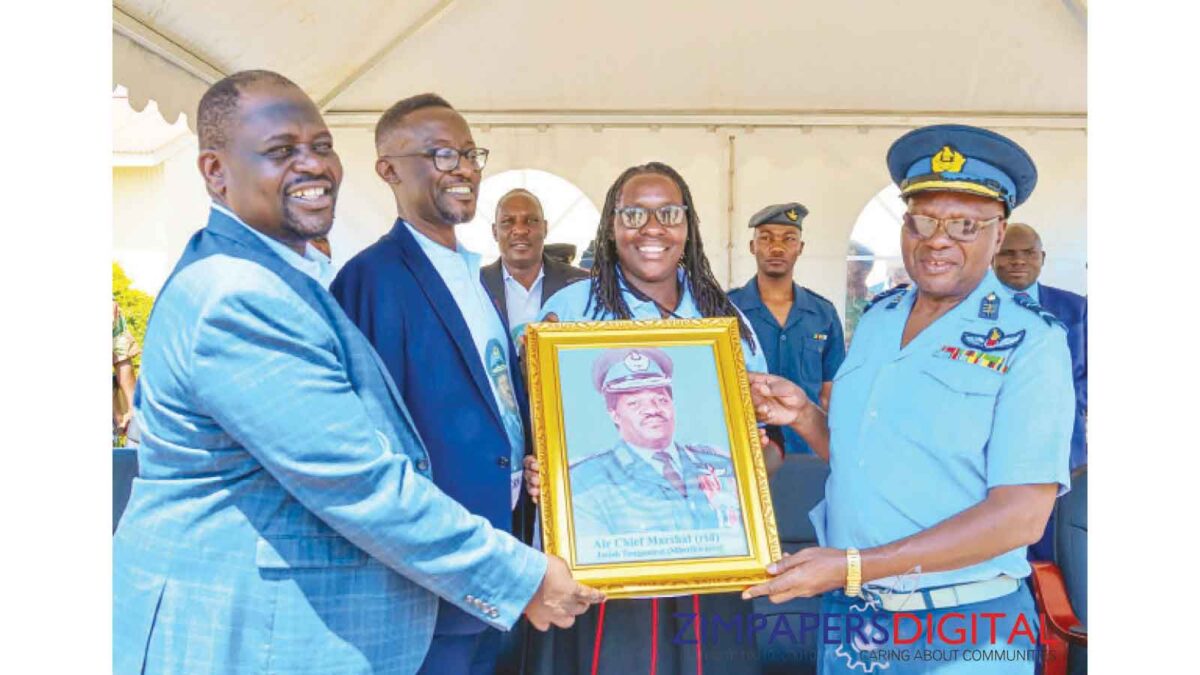
This was highlighted yesterday at the official naming ceremony of Josiah Tungamirai Air Force Base and the unveiling of a plaque bearing the base’s name.
Through Statutory Instrument 139 of 2017, former Thornhill Air Force Base was renamed after Air Chief Marshal Tungamirai, Zimbabwe’s first black AFZ Commander and a liberation struggle stalwart.
AFZ Commander Air Marshal Jacob John Nzvede said the renaming recognised the late national hero’s role in shaping the institution after independence, particularly his efforts to integrate personnel and develop local pilot-training capacity.
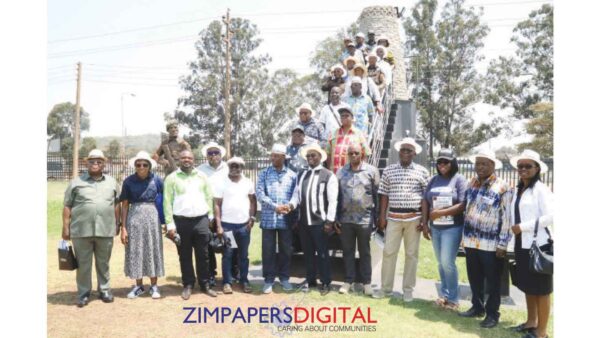
The ceremony was attended by members of the late Air Chief Marshal Tungamirai’s family, senior AFZ officers and other guests.
Air Marshal Nzvede said the renaming of military cantonments and bases in honour of distinguished national figures was part of the Second Republic’s initiative to recognise Zimbabweans who had made significant contributions to the country.
He said although the Air Force had embraced the new name and moved its operations from Thornhill following the renaming exercise, the official commissioning of the entrance arch and unveiling of the plaque had remained outstanding.
“This was and remains a proud moment of the Air Force of Zimbabwe. As such, we immediately embraced the new name of the base. However, what remained outstanding was the official commissioning of the arch at the base entrance,” said Air Marshal Nzvede.
He said yesterday’s ceremony formally completed the process and gave official recognition to the base’s name in honour of the national hero.
Air Marshal Nzvede said Air Chief Marshal Tungamirai’s contribution went beyond becoming the first black AFZ Commander in January 1986, as he played a critical role in shaping the institution following independence in 1980.
He said the late national hero was instrumental in addressing racial imbalances within the Air Force, particularly resistance to the induction of qualified personnel from the liberation struggle.
Following his transfer from the Zimbabwe National Army to the AFZ in December 1982, Tungamirai worked to integrate personnel and strengthen the institution.
In demonstrating leadership by example, he underwent pilot training and qualified in October 1984.
Air Chief Marshal Tungamirai’s commitment to personal development was also reflected in his academic achievements, having graduated with an Honours Degree in History from the University of Zimbabwe in 1984 and a Master’s Degree in War and Strategic Studies in August 1987.
Air Marshal Nzvede said under Air Chief Marshal Tungamirai’s leadership, the AFZ inducted pilots who had trained in various countries during the liberation struggle while establishing structures for the local recruitment and training of pilots.
He said these initiatives helped lay the foundation for the professional Air Force Zimbabwe has today.
“Today, we are a proud and loyal Air Force of Zimbabwe with a history of professionalism and gallantry. Credit for this goes to the late Air Chief Marshal Josiah Tungamirai and his successors who have continued to maintain the high standards required to defend Zimbabwe’s airspace and territorial integrity,” he said.
Air Marshal Nzvede said Air Chief Marshal Tungamirai served the Air Force with distinction until his retirement in 1992 and was recognised for his meritorious service.
Among the honours bestowed on him were the Grand Commander of the Zimbabwe Order of Merit and the Gold Star Medal for distinguished and dedicated service to the AFZ.
Born Thomas Mberikwazvo in Gutu, Masvingo Province, on October 8, 1948, he later became known as Josiah Tungamirai during the liberation struggle.
He joined the liberation struggle in the late 1960s and rose through the ranks of the Zimbabwe African National Liberation Army (ZANLA), becoming one of its senior political and military figures.
At independence in 1980, Zimbabwe faced the major task of integrating former liberation forces and former Rhodesian security personnel into national institutions.
Air Chief Marshal Tungamirai became part of this historic military transition, serving in the Zimbabwe Joint High Command and contributing to the integration process.
His military career subsequently took him to the AFZ, where he was transferred in December 1982 as Chief of Staff at the rank of Air Vice Marshal.
After retiring in 1992, Air Chief Marshal Tungamirai ventured into politics, serving as a Member of Parliament before becoming Minister of State for Indigenisation and Empowerment.
He died on August 25, 2005, aged 56, and was declared a national hero.
Air Marshal Nzvede said the newly commissioned entrance arch and plaque should serve as a lasting reminder of the national hero’s contribution and inspire future generations in their service to the country.
“May the name of the late Air Chief Marshal Josiah Tungamirai continue to inspire us and future generations to serve our nation with honour, courage and distinction,” he said.
The late Air Chief Marshal Tungamirai’s daughter, Ms Retina Mberikwazvo, said the renaming of the base in his honour was a great source of pride and humility for the family, describing it as recognition of his hard work, honesty and dedication to the country.
She said the family was deeply grateful to Government and the AFZ for the honour bestowed on the late Air Chief Marshal, whose contribution would continue to inspire generations.
“We are greatly honoured and humbled as a family by what the Government of Zimbabwe has done to honour us and our dear departed Air Chief Marshal Josiah Tungamirai. I believe this is one of the greatest honours we have received as a family, in recognition of his hard work, resilience and honesty,” she said.
Ms Mberikwazvo described her father as a humble and dedicated man whose legacy would remain an important lesson for present and future generations.
“He was a dedicated man, a very humble man and an honest man. He was a great teacher and a role model for our generation and generations to come. I am greatly humbled by what the Air Force of Zimbabwe has done,” she said.
The late national hero’s eldest son, Mr Thomas Tungamirai, said the renaming would help preserve his father’s liberation war legacy and ensure that his contribution to Zimbabwe’s independence remained part of the country’s national consciousness.
He said attaching his father’s name to a major military installation would make his history more visible and encourage people to learn about the sacrifices made during the liberation struggle.
“Sometimes there are articles in newspapers and books about our history, but when you put a name on something, it creates greater awareness. Anyone, whether they are part of the Air Force, a visitor or just someone walking by, will be prompted to think about Josiah Tungamirai and his contribution to the liberation of this country,” he said.
Mr Tungamirai said the liberation struggle was not an easy undertaking, adding that his father was among those who fought hard to secure Zimbabwe’s independence.
He said the new name should inspire young Zimbabweans, particularly members of the Air Force, to uphold the values of commitment, discipline, dedication and excellence.
“Young people, especially those in the Air Force, can aspire to become something. It takes commitment, dedication and discipline, and you have to strive for excellence,” he said.
He said the honour would also give future generations of his family an opportunity to appreciate their grandfather’s contribution to the country.
“My children can come and see it, and their children can also come and see it. It will remain a lasting reminder of what he contributed to this country,” he said.
Mr Tungamirai also called for other military bases still carrying colonial-era names to be renamed in recognition of outstanding Zimbabweans who contributed to the country’s history.