Online Reporter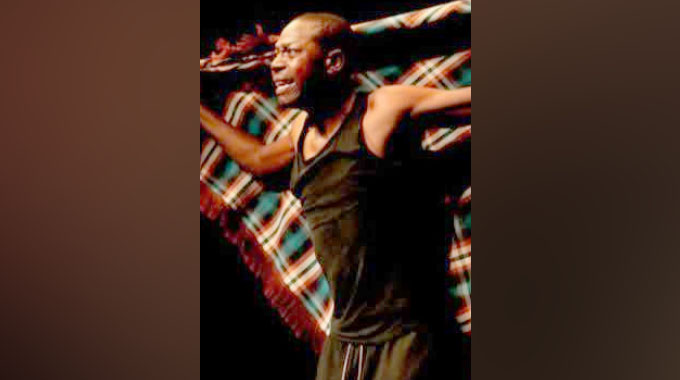
Bruce Ndlovu, Sunday Life Reporter
WHEN the new season of the popular Amacala series debuts on television, it will mark a triumphant milestone for a production that has weathered numerous storms to leap from web platforms to the small screen.
Getting to this point has been a long journey.
Amacala has amassed over 70 000 subscribers on YouTube and millions of views, successfully spreading its message against child marriage and promoting the empowerment of the girl child.
But there have been setbacks.
For example, the series was once commissioned by Moja Love, but the producers could not secure the finances required for an 18 episode season. Now, as it finally premieres on ZBC, the upcoming season will be bittersweet. It will be the last time audiences experience the artistry of acting legend Aleck Zulu, who passed away shortly after filming the latest episodes.
On television, where memorable performances can be etched into viewers’ minds, some moments transcend the script.
For writer and director Raisedon Baya, watching Amacala Reloaded is no longer just about storytelling — it is about remembering a man whose presence once filled every frame with life.
Zulu, a veteran of stage and screen, did not know his final performance would serve as a farewell. Neither did those around him. Yet, as Baya reflects, there is something hauntingly fitting about Zulu’s exit — doing what he loved most.
“When we were making it, it was not a painful experience. I think it is painful now, when you watch it and see Zulu. It was almost like a farewell performance. He was in his element. He was having a good time,” he said.
That ease and joy defined Zulu — not just as an actor, but as a human being. Long before the cameras rolled, he was, in Baya’s words, a natural entertainer.
“For those who did not know him, Aleck was a comedian before anything else. He loved making people laugh — on set, behind the cameras, even on the way to the set. He was always wonderful to be around.
“On days when he was not there, everyone was more serious, and people missed him. We would say, ‘If Aleck were here, we would be laughing.’ We did not realise it was a goodbye performance.”
As the magnitude of his loss sinks in, Baya wonders whether Bulawayo will discover another talent like Zulu anytime soon.
“It is only now that you ask yourself: are we ever going to find someone to replace him? Someone so natural in the talent he offered? But that is life. Those who worked with him were blessed to see him perform as naturally as he wanted.
We had our moments and like all relationships, sometimes there were surprises we did not want. But it was good working with him.”
Zulu’s presence — and absence — now lingers in “Amacala,” a project that has itself undergone a remarkable evolution.
What began as a modest short film grew, piece by piece, into a phenomenon that captured audiences far beyond its original scope.
“The idea of the relaunch is that we did Amacala about four years ago and it was very popular. It started as a short film, then we made part two, part three, part four and then stopped. Later, broadcasters — including South African ones — showed interest. Moja Love contacted us, but they wanted a full season of 18 episodes, which we could not afford. That is how we lost opportunities for the story to grow bigger.”
Despite the challenges, the chance to work with a recognised broadcaster was too good to pass up.
“Well, we now have about 70 000 subscribers and the four episodes have over two million views. Last year, we sat down with ZBC, who wanted something new from us. We convinced them we had a story to tell, though our resources were limited. We asked if it was possible to co produce and they agreed. The drama, called ‘Reloaded,’ is basically a co production with ZBC, amplifying girls’ voices.”
That collaboration marked a turning point, transforming “Amacala” from a grassroots success into a fully-fledged television series. Even as the project scaled new heights, it remained rooted in local realities, filmed across Bulawayo and its surroundings.
“We shot in Bulawayo, in some suburbs, then in Hope Fountain and also in Ntabazinduna. So, three places: Ntabazinduna, Hope Fountain and Bulawayo.”
Those landscapes now carry an added layer of meaning. In their streets and spaces lives one of Zulu’s final artistic imprints — a performance that, in hindsight, feels almost poetic in its timing.
Beyond memory and tribute, Baya also reflected on the fragile ecosystem sustaining Zimbabwean storytelling. For every success like “Amacala” countless stories never reach their full potential — not because of creativity, but because of limited resources.
“From a producer’s point of view, I would say we have beautiful stories that need to be told — stories that could change lives, stories our people want to see and hear. But our biggest challenge is lack of investment in film.
“Sometimes what is on paper and what you envision is very different from what you end up with, because of resources. You write beautiful stories, but on set you realise certain things are not possible.
“We end up watering down our stories, making them weaker. My clarion call is that we really need the corporate world, NGOs and even ZBC itself to start properly investing in local productions.”