Ray Bande Senior Reporter
PRESIDENT Mnangagwa has called on schools and tertiary institutions to align career guidance and training with national industrial needs, saying the country must produce graduates equipped to drive local manufacturing, value addition and job creation.
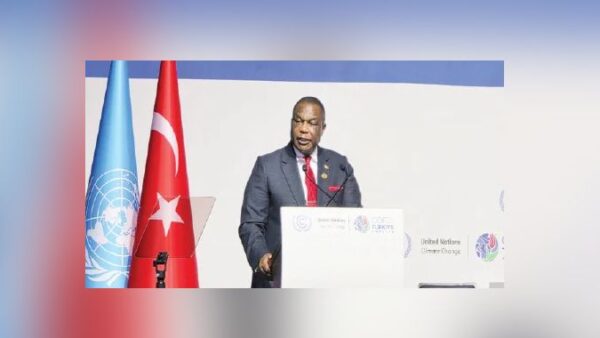
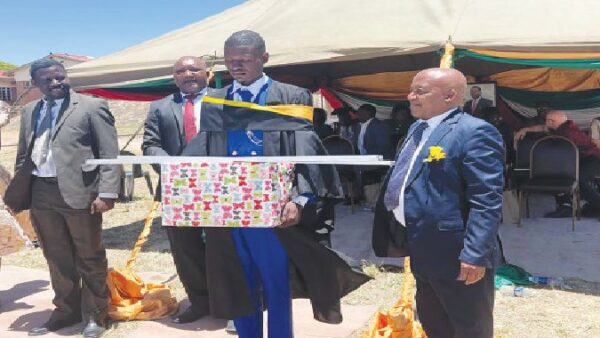
Speaking yesterday at the launch of the National Career Guidance Policy at St Theresa Mission in Rusape, the President, represented by Defence Minister Oppah Muchinguri-Kashiri, said the policy would bridge the gap between the skills educational institutions produce and those industry requires.
“The situation where industries struggle to find the skills they require, while our graduates struggle to find jobs, must thus be addressed,” he said.
“The National Career Guidance Policy is designed to close gaps by ensuring that career guidance, curricula and training provide solutions for the needs of communities and, more broadly, the economy.”
Aligned with Science, Technology, Engineering and Mathematics (STEM) and the Heritage-Based Education 5.0 philosophy, the policy seeks to equip graduates with skills to create employment, process raw materials locally and manufacture goods for domestic and export markets.
President Mnangagwa said the initiative would make career guidance a lifelong process, beginning in early childhood and continuing through school, college, university, and vocational training into working life.
He directed the Ministry of Skills Audit and Development to accelerate the establishment of a national career information system to provide real-time data on education pathways and labour-market trends, including developments in automation, artificial intelligence and smart agriculture.
The initiative, added the President, would build on the national skills audit commissioned at the beginning of the Second Republic, which helped identify gaps between the skills produced by educational institutions and those required by industry.
“Many will recall that at the advent of the Second Republic, I commissioned a Skills Audit enquiry, through the Ministry of Higher and Tertiary Education, Innovation, Science, and Technology Development.
“The outcomes of that exercise have been instrumental in unveiling what industry needs and what academia must produce,” said President Mnangagwa.
He said the acquisition of knowledge and skills should be aligned with the requirements of the country’s fast-modernising and growing economy.
President Mnangagwa said human capital development was critical to achieving industrialisation and modernisation under the National Development Strategy 2 (NDS2), which prioritises industrialisation, value addition and beneficiation.
“To achieve these goals, human capital development is one of the fundamental national priorities.
“Industrialisation and modernisation cannot succeed without developing the requisite skills and capabilities. It is in this context that we are launching the National Career Guidance Policy.
“This will in turn ensure that the national skills base as well as competencies are entrenched through grounded guidance,” he said.
The President said the policy would also strengthen the Heritage-Based Education 5.0 philosophy, which encourages graduates to create jobs, add value to local resources and develop innovations that address national challenges.
“Under this initiative, not every young person must be an employee. We are masters of our own destiny.
“The entrepreneurial and hardworking people of our beloved motherland, Zimbabwe, are creators of wealth and indeed employers of tomorrow,” he said.
The policy is expected to improve the delivery of career guidance through a National Coordinating Mechanism, professional standards, and the training, accreditation and certification of practitioners.
President Mnangagwa said the national career information system would help the country anticipate future skills requirements as emerging technologies transform the world of work.
He cited artificial intelligence, automation, digital technologies, the Internet of Things, big data and smart agriculture as some of the developments creating new career pathways.
In agriculture, he said, learners needed to appreciate the growing importance of technology, including drones, precision farming, climate-smart techniques and agro-processing.
Other sectors with emerging opportunities include renewable energy, mineral value addition and beneficiation, urban development, transport, tourism and the creative and cultural industries.
The President said the National Career Development Fund and performance-based funding for institutions would support the implementation of the policy, while provincial scorecards would assess whether young people were progressing into employment, further training and enterprise.
He encouraged young people to embrace national priorities in research, innovation, science, technology, engineering and mathematics, adding that career guidance in these fields should be strengthened from primary and secondary school levels.
President Mnangagwa also called on Government ministries, departments, agencies and local authorities to integrate career guidance into their operations.
The Ministries of Primary and Secondary Education and Higher and Tertiary Education, Innovation, Science and Technology Development would work together to ensure that schools, colleges and universities have trained practitioners and functional career guidance services.
The private sector was also called upon to open its doors to young people through internships, apprenticeships, mentorship and job-shadowing programmes.
During the event, President Mnangagwa handed over 50 laptops, four printers, 20 Starlink kits and four whiteboards to schools in the largely rural St Theresa Mission area of Makoni West Constituency.
Meanwhile, Minister of Women Affairs, Community, Small and Medium Enterprises Development Honourable Monica Mutsvangwa, who represented Information Communication Technology and Courier Services
Minister Tatenda Mavetera, underscored the importance of digital technology and the responsible use of artificial intelligence in improving service delivery and creating opportunities for young people.
She said skills development needed to be complemented by access to internet connectivity and appropriate equipment.
Through the Presidential Internet Scheme, she said, schools were being connected and equipped to enable learners to conduct research, participate in online lessons, practise coding and explore career opportunities.
The minister also highlighted Zimbabwe’s National Artificial Intelligence Strategy, saying the country intended to harness AI responsibly to improve agriculture, health, education and public services while nurturing local talent and innovation.
Skills Audit and Development Minister Dr Jenfan Muswere, Minister of State for Manicaland Provincial Affairs and Devolution Advocate Misheck Mugadza, and other senior Government and ZANU PF officials attended the event.