Online Reporter
Dalyn Chigwizura, [email protected]
ALL 2026 Lower Sixth classes will commence today across the country, with learners expected to pay school fees on a pro-rata basis. Ordinary Level results for the 2025 examination session were released on January 16, 2026, earlier than in previous years.
This has seen the school calendar commencing earlier, too.
The Acting Secretary for Primary and Secondary Education, Mr Lameck Mudyiwa, in a statement, also emphasised the opening day for Lower Sixth classes.
“The commencement date for the Lower Sixth classes is Monday, the 2nd of February 2026. Please ensure that all Heads of schools, teachers, parents and pupils are advised of this date,” he said.
“The fees payable by the Lower Sixth pupils will be on a pro-rata basis, according to the approved Term One fees for each school.”

The Acting Secretary urged all school heads to use the following formula to calculate the fees: number of days remaining in Term One 2026 × total approved Term One fees ÷ number of days in Term One 2026.
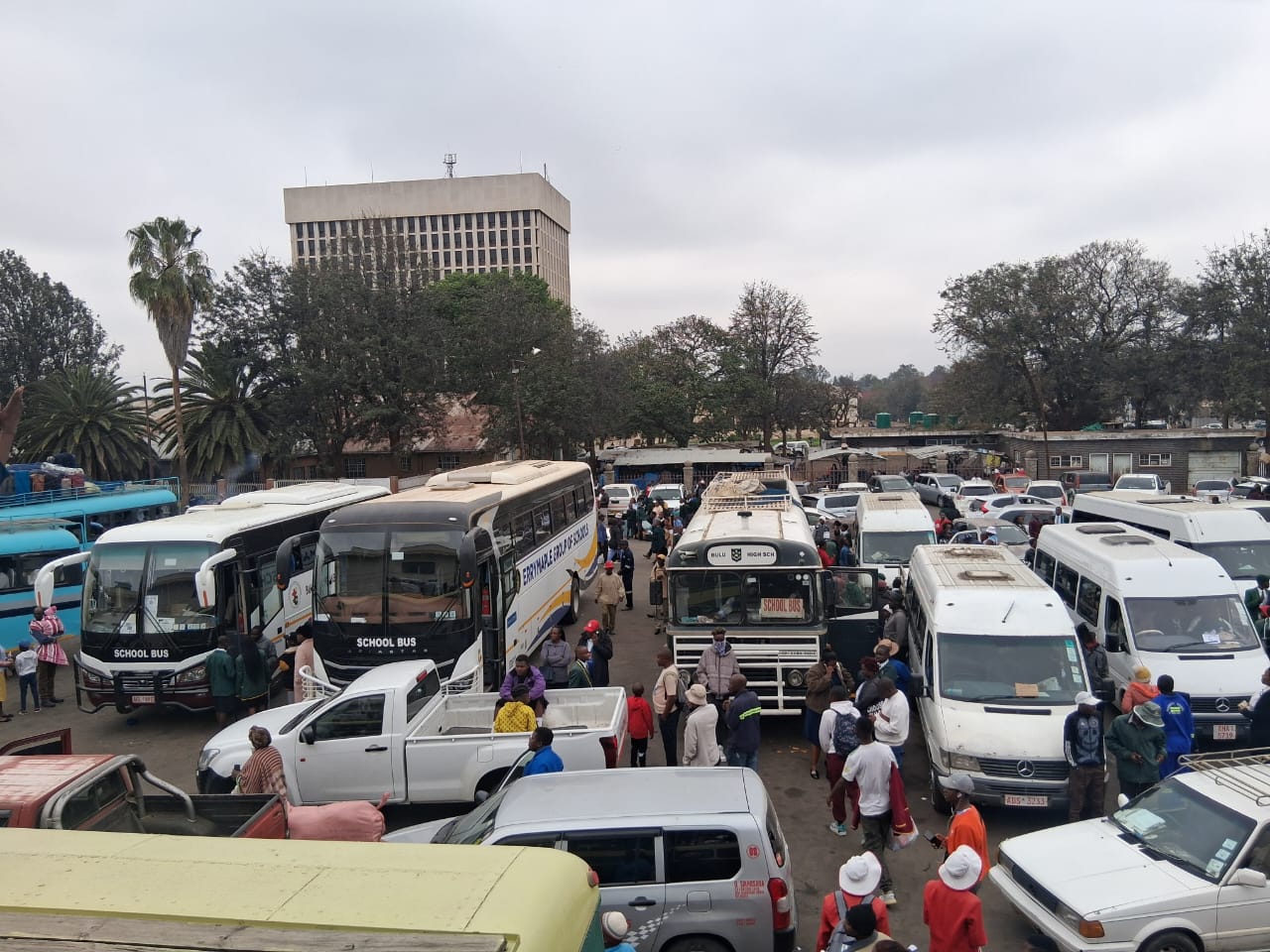
It was a busy Sunday yesterday in Bulawayo’s Central Business District as parents accompanied their children to board buses.
Lower Sixth classes this year are commencing earlier than in previous years, when they usually started in mid-March or the early weeks of April. In some cases, parents would opt for their children to start Lower Sixth in the second term, as the first term would be nearing its end.
Happy faces were seen as pupils who performed well at their Ordinary Level were ready to start a new form.
Most parents said that although the early opening date was tough this year, they were happy they managed to make ends meet. They said it was not easy since it was January and “January disease” affected them.
Educationists have called for an inclusive adaptation of the Heritage-Based Curriculum for improved standards of education in the country, with worrisome statistics revealing that some schools across the country were recording poor pass rates in public examinations starting from grade seven.
Professor Lwazi Sibanda, the National University of Science and Technology (Nust) Executive Dean and Associate Professor in the Faculty of Science and Technology Education, said it’s important for teachers to start from the basics when trying to identify a learner’s shortcomings in class.
“It’s critical for teachers to identify where their learners are lacking. For instance, if pupils have difficulties in reading, the teachers must tackle that particular problem. If a learner cannot read, it’s a serious problem because they will not pass English, Mathematics or any other subject.
“Rural schools face challenges of a lack of resources and learning materials, but we cannot let those challenges be the major reasons for 0 percent pass rates. What is key is for schools to capacitate teachers in the form of workshops and other capacity building programmes to improve their skills and interpretation of the Heritage Based Curriculum and innovative teaching methods,” said Prof Sibanda.
He also said workshops for teachers are critical for their continuous teaching and skills development.
“Devices that assist students to learn via videos, audios and visuals are now widely used in schools, including rural schools, as learners better understand what they are being taught when they can see what the teacher is talking about.
“The Ministry of Primary and Secondary Education has tried to provide soft copies of learning materials that help learners have a better understanding of what the teacher will be teaching and that is very commendable,” she said.
He added that the university has a programme where they train rural teachers by exposing them to various teaching methods, which helps them to equally teach concepts better.
Prof Sibanda believes that the right attitude can change extremely poor pass rates and turn around the fortunes of schools that are still attaining poor results.
“Learners operate at different levels of grasping and understanding what they are taught, some are academically gifted while others are not, and that is why the ministry has introduced the Heritage-Based Curriculum that appreciates that each child has a gift that must be nurtured.
“Teachers must be able to identify each learner’s strength, be it in agriculture, sports, drama or academics and nurture that gift to give each child a chance to make a better life for themselves.”
Mrs Beatrice Manjere, the Matabeleland South Provincial Education Director (PED), said the province has been making steady progress to eliminate 0 percent pass rates that are encountered in some schools.
In Matabeleland North, Provincial Education Director Mr Jabulani Mpofu believes walking distances to schools play a factor in the poor pass rates.
“It’s a challenge that requires a holistic approach and intervention measures from the Government, teachers and parents. In a lot of the schools that record zero percent pass rates, we have identified long walking distances to and from school as a major contributor to pupils performing poorly in Grade Seven examinations,” said Mr Mpofu.
In a previous interview with Zimpapers last year, Primary and Secondary Education director of advocacy and communication, Mr Taungana Ndoro, said it was encouraging to note that the number of schools recording zero pass rate has dropped drastically as a result of the various interventions by the ministry’s development partners.
“The Lupane State University, in collaboration with the Ministry of Primary and Secondary Education, is running a Teacher Professional Development programme.
“The programme is equipping teachers with effective teaching methodologies, content knowledge and assessment strategies,” he said.
Mr Ndoro said this has helped to strengthen instructional quality in the classroom.
He also said the university has contributed to curriculum alignment and resource development, which has addressed the unique learning needs of pupils in the province.