

 admin
admin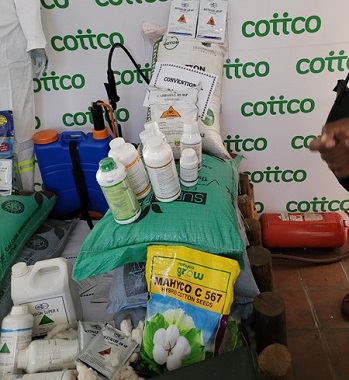
Edgar Vhera Agriculture Specialist Writer
THE Government is currently seized with completing the delivery of cotton inputs to distribution points countrywide amid revelations that inputs enough to meet the requirements of 361 400 households have since been moved to such centres.
The Cotton Company of Zimbabwe’s (Cottco) acting chief accounting officer Mr Munyaradzi Chikasha revealed this yesterday during an interview with The Herald, as he commented on the preparations for the 2022/23 cotton season.
“We have delivered enough seed for 361 400 farmers to our common inputs distribution points spread across the country. We are still receiving more seed from the Government for the 520 000 households expected to produce cotton under the Pfumvudza/Intwasa programme. Forty percent of the Compound L fertiliser requirements have so far been received with more deliveries still coming to meet our requirements,” said Mr Chikasha.
Some farmers have not yet finished potholing because of the dryness of the ground but they are expected to finish up in the coming days, thanks to the rains being received in the country.
“Because of the dryness of the ground, some cotton farmers have not yet dug the holes for Pfumvudza/Intwasa programme. Our extension officers are on the ground educating them on the benefits of this conservation agriculture practice that will enhance their yields,” continued Mr Chikasha.
Over the years Cottco has been giving farmers enough inputs to cover a hectare per household but there was no corresponding increase in yield. Some farmers were then alleged to be diverting components of the input package for other crop enterprises and/or selling them, thereby severely affecting yields.
Cotton complete input package
Cottco is awaiting the delivery of more inputs for the remaining 158 600 households to fulfil its set target of 520 000 households for this season under Pfumvudza/Intwasa.
Meanwhile, private contractors have heeded the call for them to fund the production of 40 percent of their raw material requirements and are supplying contracted farmers with the recommended minimum input packages.
Cotton Ginners Association (CGA) acting chairman, Mr Caos Nzenze said their members had started distributing inputs across the country.
“We are giving farmers the Agriculture Marketing Authority (AMA) recommended minimum input package that includes planting seed and basal fertilisers for starters. Chemicals and Ammonium Nitrate will be in the second tranche of inputs,” said Mr Nzenze.
The private contractors are expected to fund the production of a hectare of the white gold per household for those on the conventional scheme and 0, 25ha for those under the Pfumvudza/Intwasa programme.
“We are targeting between 40 and 60 percent on Pfumvudza/Intwasa and the conventional scheme respectively,” continued Mr Nzenze.
The drop in cotton yields is believed to be stemming from planting open pollinated varieties (OPV) as opposed to hybrid seed. Mr Nzenze disclosed that their members were giving OPV saying hybrid seed was expensive and required to be imported.
“We are giving the traditional Quton varieties, the hybrid seed is not available yet because it is imported and expensive. We are waiting for the Cotton Research Institute to finalise the development of the hybrid seed,” pointed out Mr Nzenze.
Meanwhile, Cotton Producers and Marketers Association chairman, Mr Stewart Mubonderi also added his voice saying input distribution had commenced and their members had started receiving theirs.
“Disbursement of cotton inputs to farmers commenced last week. AMA clerks have been deployed at the distribution points where farmers are registering and identifying their contractors to enable them to get inputs while avoiding duplication of services.
“We appeal with Cottco to start disbursing inputs in remote areas, which will be inaccessible when the rainy season commences. AMA must also be very strict and capacitated to use modern equipment to quickly detect double dipping by farmers,” continued Mr Mubonderi.
He also called upon the Government to increase the Pfumvudza/Intwasa package to farmers who have good cotton production records to capacitate them to plant even up to 5 hectares, if the production of the crop is to increase this season.



 Online Reporter