

 Online Reporter
Peter Matika and Ryan Sibanda, Chronicle Writers
GOVERNMENT has called for stronger collaboration between academia, industry, communities and development partners to transform Science, Technology, Engineering and Mathematics (STEM) education into a catalyst for innovation, industrialisation and sustainable development.
Officially opening the 6th Blended Annual Education for Sustainable Development Interdisciplinary Research Conference at the National University of Science and Technology (NUST) on Wednesday, Minister of Higher and Tertiary Education, Innovation, Science and Technology Development, Ambassador Frederick Shava, said Zimbabwe must reimagine STEM education to equip learners with the skills, creativity and innovative mindset required to thrive in an increasingly complex global environment.
The three-day conference, running under the theme, “Reimagining STEM Education for a Sustainable Future: Fostering Multi-Stakeholder Collaboration,” has brought together policymakers, academics, researchers, industry leaders, students and development partners to deliberate on the future of STEM education and sustainable development.

Amb Shava said Zimbabwe’s education system must continue evolving to produce graduates capable of developing practical solutions to national and global challenges, including climate change, food insecurity, technological disruption, environmental degradation, industrialisation and digital transformation.
“STEM education is central to building a sustainable future. Achieving this vision requires meaningful collaboration between Government, institutions of higher learning, industry, researchers, communities and our international partners,” he said.
Amb Shava said universities should strengthen interdisciplinary research and innovation so they become centres of technological advancement, entrepreneurship and economic transformation rather than institutions that merely produce graduates.
“The education systems of yesterday cannot prepare learners for the realities of the Fourth Industrial Revolution, the digital economy or the green transition. We must therefore reimagine STEM education — not simply by reforming curricula, but by transforming how we teach, how we learn, how we innovate and how we collaborate,” he said.
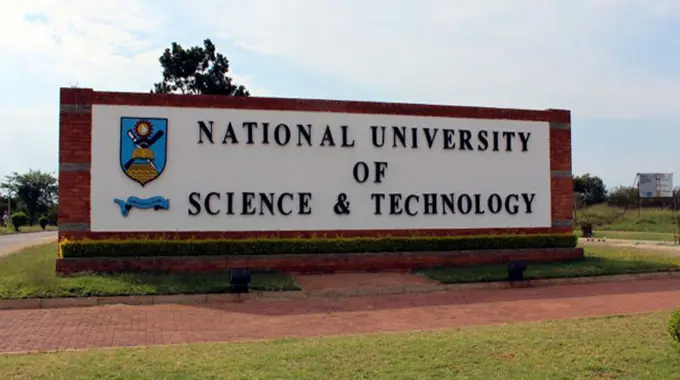
Amb Shava commended NUST for providing a platform that enables researchers, policymakers, educators and industry leaders to exchange ideas and develop innovative solutions that contribute to sustainable development.
The minister said the Second Republic remains committed to strengthening innovation-driven education in line with Vision 2030 and the country’s development agenda.
He noted that under President Mnangagwa’s leadership, higher and tertiary education has increasingly become a strategic pillar for innovation, industrialisation and wealth creation through initiatives such as innovation hubs, industrial parks, entrepreneurship education and stronger university-industry partnerships.
“These initiatives are reshaping our graduates from job seekers into innovators, employers and wealth creators,” he said.
Amb Shava said Zimbabwe was already witnessing tangible benefits from this approach through the establishment of industrial parks and innovation centres that are translating research into commercially viable products, entrepreneurship opportunities and rural industrialisation.
He urged institutions of higher learning to produce graduates who are not only academically competent but also equipped with critical thinking, digital literacy, creativity, entrepreneurial skills and collaborative problem-solving abilities.
“Our task is not only to prepare graduates for employment, but to empower them to create employment,” he said.
The minister also stressed the need to make STEM education more inclusive by encouraging greater participation of women and girls, learners with disabilities and students from disadvantaged communities.
He described an inclusive STEM ecosystem as both a moral imperative and a strategic national investment.
Amb Shava said Government would continue providing policy direction and an enabling environment, while universities generate research and innovation, industry commercialises knowledge, communities contribute practical perspectives and development partners strengthen capacity through investment.
He challenged delegates to focus their deliberations on curriculum transformation, work-integrated learning, strengthening innovation ecosystems, digital transformation, climate action and research that addresses national priorities such as renewable energy, climate-smart agriculture, biotechnology, artificial intelligence, sustainable mining, advanced manufacturing, water management and digital education.
Zimbabwe has intensified efforts in recent years to position higher and tertiary education as a catalyst for industrialisation through the Heritage-Based Education 5.0 model, which integrates teaching, research, community service, innovation and industrialisation.
Universities across the country have established innovation hubs and industrial parks to commercialise research, support start-ups and promote value addition in line with Vision 2030’s goal of transforming Zimbabwe into an upper-middle-income economy.
Amb Shava said the success of Vision 2030 would depend on strong partnerships between Government, universities, industry and communities.
“Let this conference be remembered not only for the papers presented, but for the partnerships forged, the ideas generated and the solutions implemented. Together, let us build a STEM ecosystem that empowers our youth, strengthens our industries, transforms our communities and accelerates our journey towards Vision 2030, Agenda 2063 and the Sustainable Development Goals,” he said.


